
Blockchain technology has transformed the way we think about digital transactions and decentralized applications. However most major public blockchains have one critical flaw. They expose sensitive user data including financial information, medical records and trade secrets to anyone who looks at the public ledger. This radical transparency was once considered a strength but it has become a serious obstacle for real world adoption. Midnight Network was built to solve this problem.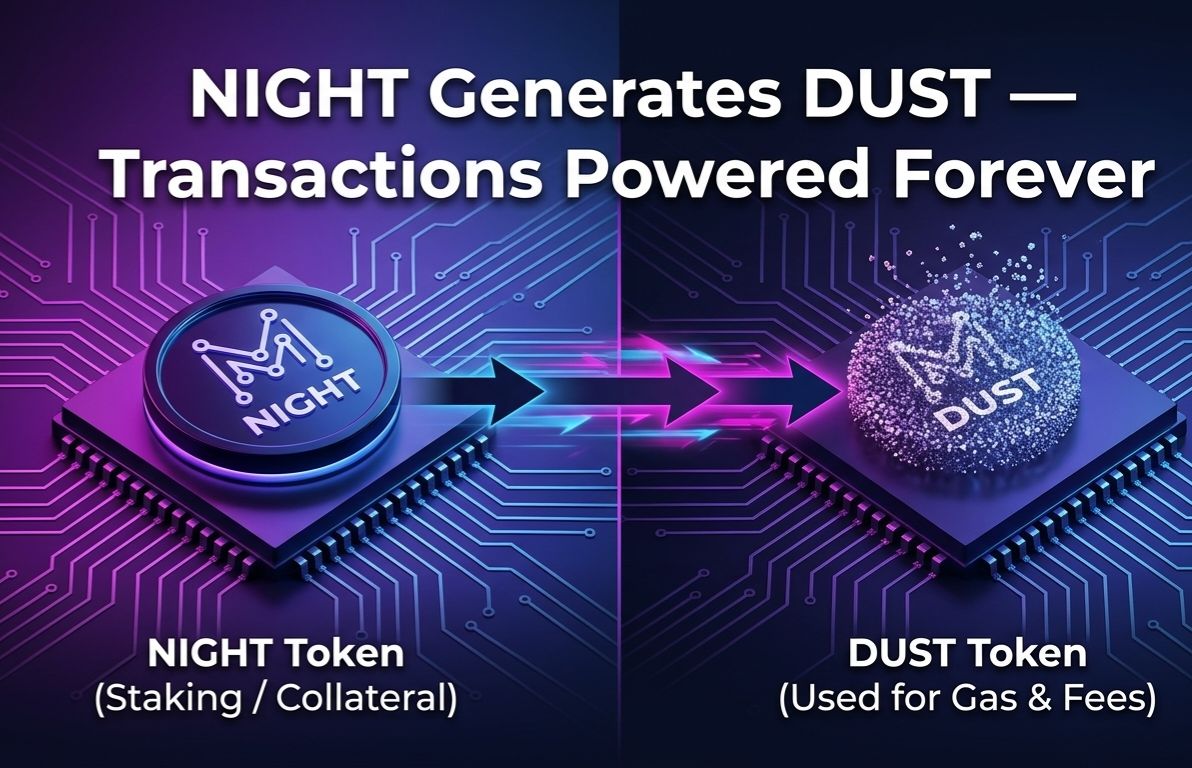
Midnight Network is a blockchain that uses zero-knowledge ZK proof technology to offer full utility without compromising data protection or user ownership. It introduces a completely new approach to how blockchains handle privacy, transaction fees and community participation. This article breaks down the core components of Midnight Network and explains why it represents a significant step forward for the entire Web3 space.
Understanding the Dual Token System
One of the most innovative aspects of Midnight Network is its dual component tokenomics system. Most blockchains rely on a single token for everything including paying transaction fees, governance and staking. This creates economic uncertainty because users are forced to spend tokens every time they transact and the cost of those transactions fluctuates with the market price of the token.
Midnight solves this with two components. The first is NIGHT which is the native utility token of the Midnight Network. The second is DUST which is the renewable network resource used to pay for transaction fees. These two components work together in a way that no other blockchain has done before.
NIGHT has a total supply of 24 billion tokens. It is non expendable meaning you never spend NIGHT to execute transactions. Instead NIGHT continuously generates DUST over time. The more NIGHT you hold the more DUST you generate and the more transactions you can execute. This relationship between NIGHT and DUST creates predictable operating costs that are not directly tied to the market price of the token.
What Makes DUST Special
DUST is not a traditional token. It is a shielded and renewable resource that exists only to enable transactions on the Midnight Network. When you use DUST to execute a transaction it is consumed and burned. But because NIGHT continuously generates DUST you always have a fresh supply as long as you hold enough NIGHT.
DUST has several unique properties that set it apart from traditional transaction fee mechanisms. It is shielded meaning your wallet addresses and transaction details are not exposed on the public ledger. It is non transferable meaning it cannot be bought or sold which protects it from market volatility. It is also decaying meaning if your NIGHT tokens are transferred your DUST balance gradually decreases to zero preventing any form of double spending.
This design protects users from MEV attacks because attackers cannot identify potential victims through shielded transactions. It also means that everyday users can interact with Midnight applications without ever needing to understand the underlying blockchain mechanics.
The Glacier Drop and Fair Token Distribution
Midnight Network believes that the initial distribution of tokens is one of the most important decisions any blockchain project can make. A fair and broad distribution ensures that no single party or group can exert overwhelming control over the network.
The NIGHT token distribution begins with the Glacier Drop which is the first of three claim phases. During the Glacier Drop 100% of the total supply of 24 billion NIGHT tokens is made available to eligible participants across eight major blockchain ecosystems including Cardano, Bitcoin, Ethereum, Solana, XRPL, BNB Chain, Avalanche and Brave.
Eligibility is determined purely through on chain data. No personal information is required to participate. Eligible addresses must hold the equivalent of at least 100 USD in native tokens of their respective network at the time of the snapshot. This requirement helps prevent bot activity and Sybil attacks.
After the Glacier Drop comes the Scavenger Mine phase which lasts 30 days. During this phase participants can claim a share of unclaimed tokens from the Glacier Drop by completing computational tasks. This phase is designed to be accessible to the general public and does not favor large mining operations.
The third and final phase is called Lost and Found. This phase gives Glacier Drop eligible participants who missed the original claim window another chance to claim a fraction of their original allocations. This phase lasts up to four years giving the community maximum time to participate.
Block Production and Incentives
Midnight Network uses a proof of stake consensus mechanism that is deeply integrated with the Cardano ecosystem. Cardano Stake Pool Operators can register to become Midnight Block Producers and earn NIGHT block rewards for validating Midnight blocks and securing the network.
Block rewards come exclusively from the Reserve which is a protocol managed pool of uncirculated NIGHT tokens. No new tokens are ever minted and no NIGHT denominated fees are collected during transactions. This ensures a sustainable and predictable reward system for block producers.
The reward system is designed to incentivize block producers to include as many transactions as possible in each block. Each block reward is split into a fixed subsidy and a variable component based on how full the block is. The fuller the block the larger the share of the variable reward that goes to the block producer. Whatever remains goes to the on chain Treasury which funds ecosystem development.
Cooperative Tokenomics and the Future of Web3
What truly sets Midnight apart from other blockchains is its cooperative approach to tokenomics. Most blockchains operate as closed ecosystems where value is trapped within a single network. Midnight breaks this pattern by enabling cross chain value creation and interoperability.
Through its capacity marketplace concept Midnight allows non NIGHT users to access the network using other blockchain tokens or even fiat currencies. DApp operators can sponsor their users transactions so that end users never need to hold NIGHT or even know they are using a blockchain. This Web2 style user experience opens Midnight up to a much broader audience than traditional blockchain applications.
The Midnight Treasury is also designed to grow and diversify over time. As the capacity marketplace develops the Treasury can receive fees denominated in multiple tokens from multiple blockchains creating a truly multichain and diversified reserve that strengthens the long term sustainability of the network.
Midnight Network is not just another blockchain. It is a carefully designed ecosystem built to bring privacy, fairness and interoperability to the entire Web3 space. With its innovative NIGHT and DUST tokenomics, fair Glacier Drop distribution and cooperative multichain architecture Midnight is positioning itself as the connecting tissue across all kinds of networks in the digital world.