What Is the Petrodollar?
The petrodollar is the $USDC U.S. dollar earned by oil-exporting countries from selling crude oil. Since the 1970s, almost all global oil trade has been priced and settled in USD, forcing every oil-importing nation to hold and acquire dollars.$BTC
How the System Was Created
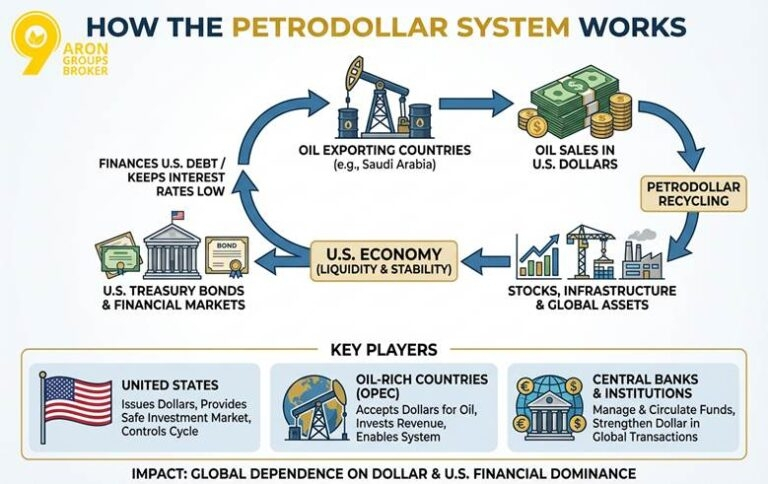
After the Bretton Woods gold standard ended in 1971, the United States needed new sources of dollar demand. In 1974, a key agreement was made with Saudi Arabia: oil would be sold exclusively in dollars, and the resulting surpluses would be invested heavily in U.S. Treasury bonds and other American assets. In return, the U.S. provided military protection. Most other OPEC members adopted the same practice, locking in dollar dominance for oil.
The Recycling Mechanism
Oil exporters receive large dollar payments → they invest those dollars in U.S. Treasuries, stocks, real estate, and other assets → this inflow finances U.S. government deficits and keeps borrowing costs low → more dollars circulate globally → the cycle repeats. This elegant loop has supported the dollar’s status as the world’s leading reserve currency for decades.$BNB
Main Benefits
For the United States:
Permanent global demand for USD
Ability to run large deficits without immediate crisis
Powerful leverage through control of the dollar-based financial system
For major oil exporters:
Safe, liquid investment options
Strong security and military partnerships with the U.S.
Pressures in 2026
Several developments are challenging the system:
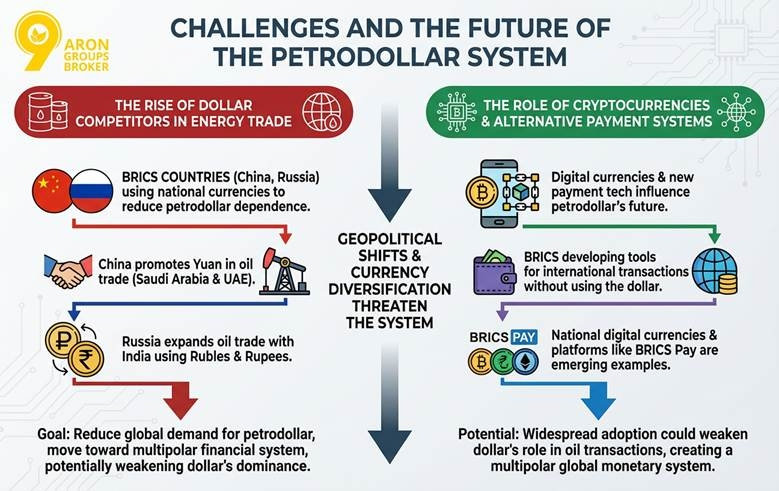
BRICS countries are increasing oil trades in local currencies (yuan, rupees, rubles, etc.)
The global reserve share of the USD has gradually declined
The long-term shift toward renewable energy is expected to reduce oil’s centrality
Saudi Arabia’s Vision 2030 strategy redirects more petrodollars into domestic projects instead of purely U.S. assets
Despite these trends, the vast majority of international oil transactions are still conducted in dollars due to unmatched liquidity, deep markets, and established infrastructure.
Why It Still Matters for Markets and Crypto
The petrodollar influences USD strength, oil price movements, global liquidity, and inflation expectations—all of which affect crypto correlations and investor behavior. Any meaningful erosion could accelerate interest in stablecoins, central bank digital currencies, or blockchain-based cross-border energy payments.
The petrodollar is not disappearing quickly, but its monopoly is no longer absolute. Network effects and inertia keep it strong for now.