
Prawie przewinąłem obok Midnight Network za pierwszym razem, gdy pojawił się na moim ekranie. Żadne migające neonowe odliczania w rogu. Żadne bezdechowe twierdzenia o milionach transakcji na sekundę. Tylko ten cichy, częściowo ukryty komentarz schowany głęboko w jakimś wątku forum, który przypadkowo otworzyłem—to musiał być 14 marca, tuż po tym, jak podgrzałem w mikrofali jedną z tych przygnębiających kanapek ze sklepu spożywczego na lunch. Prawie dalej przewijałem. Ale potem te dwa słowa przykuły moją uwagę: „blockchain pierwszeństwa prywatności.” Prawie się głośno zaśmiałem. Kto nie nazywa się teraz pierwszym w prywatności? To stało się nowym „zdecentralizowanym,” przyklejonym do każdej istniejącej białej księgi. Ale coś wydawało się inne. Cała ta sprawa niosła ze sobą dziwny, prawie uparty chłód—jakby naprawdę nie obchodziło jej, czy zostaniesz, czy nie. Tego rodzaju niezmuszona pewność sprawiła, że zatrzymałem się i naprawdę spojrzałem.
Im głębiej kopałem, tym bardziej stawało się oczywiste: Midnight nie działa w próżni. Jest całe to subtelne prąd, który przemieszcza się przez przestrzeń teraz, ledwo falując powierzchnię. Crypto wydaje się wracać w stronę prywatności i infrastruktury—ciszej tym razem, mniej performatywnie. Spędziliśmy lata pijani na idei, że publiczne księgi uratują nas wszystkich, udając, że nadawanie każdej transakcji światu w jakiś sposób nas uwalnia. Sam dałem się wciągnąć w tę fantazję na jakiś czas. Ale oto prawda, której nikt nie chce przyznać: nikt tak naprawdę nie chce, aby jego nawyk kawowy sprzed trzech miesięcy, czy szczegóły płac firmy, były na stałe wyryte w publicznej pamięci. Świat automatyzuje się szybciej niż kiedykolwiek, AI zjada wszystko, DeFi wciąż eksploduje, ale pod tym całym hałasem ludzie po prostu chcą, aby pewne rzeczy pozostały ich. Midnight wydaje się to rozumieć. To jakby naprawdę słuchał pokoju, podczas gdy wszyscy inni wciąż krzyczą na siebie.
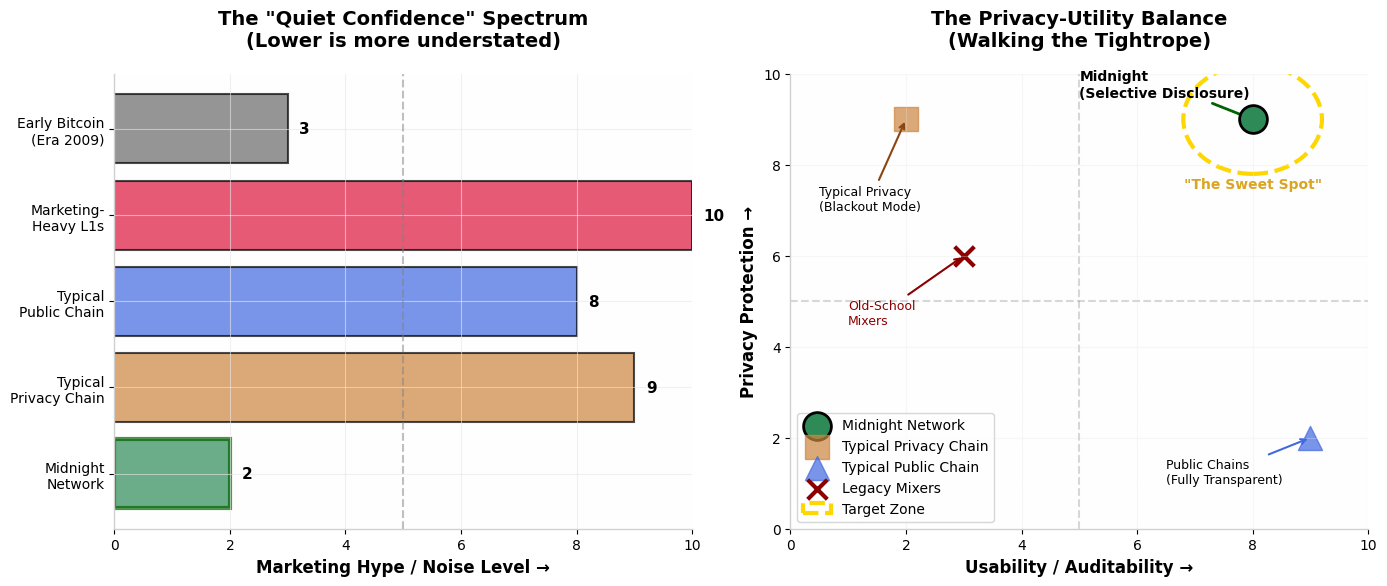
To, co mnie przyciągnęło, to to: prawdziwa zagadka nie jest techniczna—jest architektoniczna. Próbujesz zbudować coś naprawdę użytecznego, nie pozbawiając prywatności. Większość łańcuchów zmusza cię do wyboru strony. Albo wszystko jest nagie dla szybkości, albo znikasz w całkowitej ciemności, gdzie audyt staje się niemożliwy. Midnight stara się przeforsować tę igłę. Prywatność nie jest jakimś dodatkiem, który przyczepili w wersji drugiej. To strukturalne. Wykorzystują dowody zerowej wiedzy, selektywne ujawnienie—poważna kryptografia—ale dzika część polega na tym, jak niewidocznie to wszystko działa. Pamiętam, jak kiedyś zmagałem się z mieszaniem usług, i człowieku, co za ból głowy. W zasadzie ufasz jakiemuś niejasnemu pośrednikowi, że nie wyda cię—lub co gorsza, nie ucieknie z twoimi funduszami. Tutaj sama architektura wykonuje ciężką pracę. Nie ma potrzeby zaufania.
To takie odejście od zwykłego podręcznika prywatności-łańcucha. Zwykle dostajesz ściany marketingu o „zmieniającej paradygmat skalowalności” i wystarczająco dużo buzzwordów, aby się w tym utopić. Midnight, w przeciwieństwie, wydaje się prawie komicznie niedopowiedziane. Jest w tym powściągliwości osobliwa siła—jeśli technologia naprawdę dostarcza, kończysz z kręgosłupem, który może obsłużyć poważny wolumen bez poświęcania prywatności. To tak low-key, że prawie frustrujące, ale szczerze? Wolę to niż kolejny Discord pełen ludzi krzyczących o tym, jak zmieniają świat.
Oczywiście, nie ma darmowego obiadu. Technologia prywatności jest ciężka—szczególnie gdy nakładasz ją na ambitną bazową warstwę. Opłaty mogą rosnąć. Złożoność może dusić adopcję. Jeśli deweloperzy nie potrafią zrozumieć narzędzi, całe to przedsięwzięcie staje się miastem duchów, niezależnie od tego, jak elegancka jest matematyka. A potem jest regulacyjny słoń w pokoju. Ten taniec między prywatnością a zgodnością nigdy tak naprawdę się nie skończył; po prostu nauczył się nowych kroków. Wiele rzeczy wciąż może pójść na bok.
Ale patrząc wstecz, nie mogę się oprzeć uczuciu ostrożnego ekscytowania się większym obrazem. Jeśli projekty takie jak ten zaczną traktować prywatność jako podstawową infrastrukturę—wbudowaną w samą księgę, mechanizmy stakingowe, punkty kontaktowe użytkowników—wszystko się zmienia. Sieć taka jak Midnight może kończyć w tle, wspierając aplikacje, o których nikt jeszcze nawet nie pomyślał. Agenci AI, suwerenna tożsamość, nowe prymitywy finansowe—wszystko po prostu działa, z prywatnością traktowaną jak tlen, a nie drogi dodatek. To daleko od teatralnej cykli hype, która dominowała ostatnie kilka lat. Mniej teatru, więcej hydrauliki.
Może Midnight się załamuje i spala. Może zyskuje traction i staje się czymś niezbędnym. Naprawdę nie wiem. Ale to, co mi pozostało, to jak ta początkowa cisza gromadziła ciężar im dłużej w niej siedziałem. Zmusiło mnie to do przemyślenia mojej definicji „nowej generacji”. Może prawdziwa rewolucja przychodzi bez konfetti. Może infrastruktura, która naprawdę ma znaczenie, nie jest tą dominującą w twoim Twitterze teraz. Dziwna myśl, ale tak to jest.
@MidnightNetwork #night $NIGHT
