You know what actually got me paying attention to Midnight? It’s one of the only projects in this whole crypto circus that’s finally admitting out loud what we’ve all been quietly ignoring for years: total transparency isn’t a feature, it’s a liability once real humans get involved.
I’ve watched the space chase this idea that everything should be out in the open—like every wallet, every trade, every awkward little transaction is just there for anyone to screenshot and meme. Sounds noble on paper. In reality? It turns people’s lives into a public dashboard, and that model was always going to crack. Midnight feels like it was born from that exact moment of “wait… maybe not everything needs to be on blast.” And honestly, that alone makes it stand out.
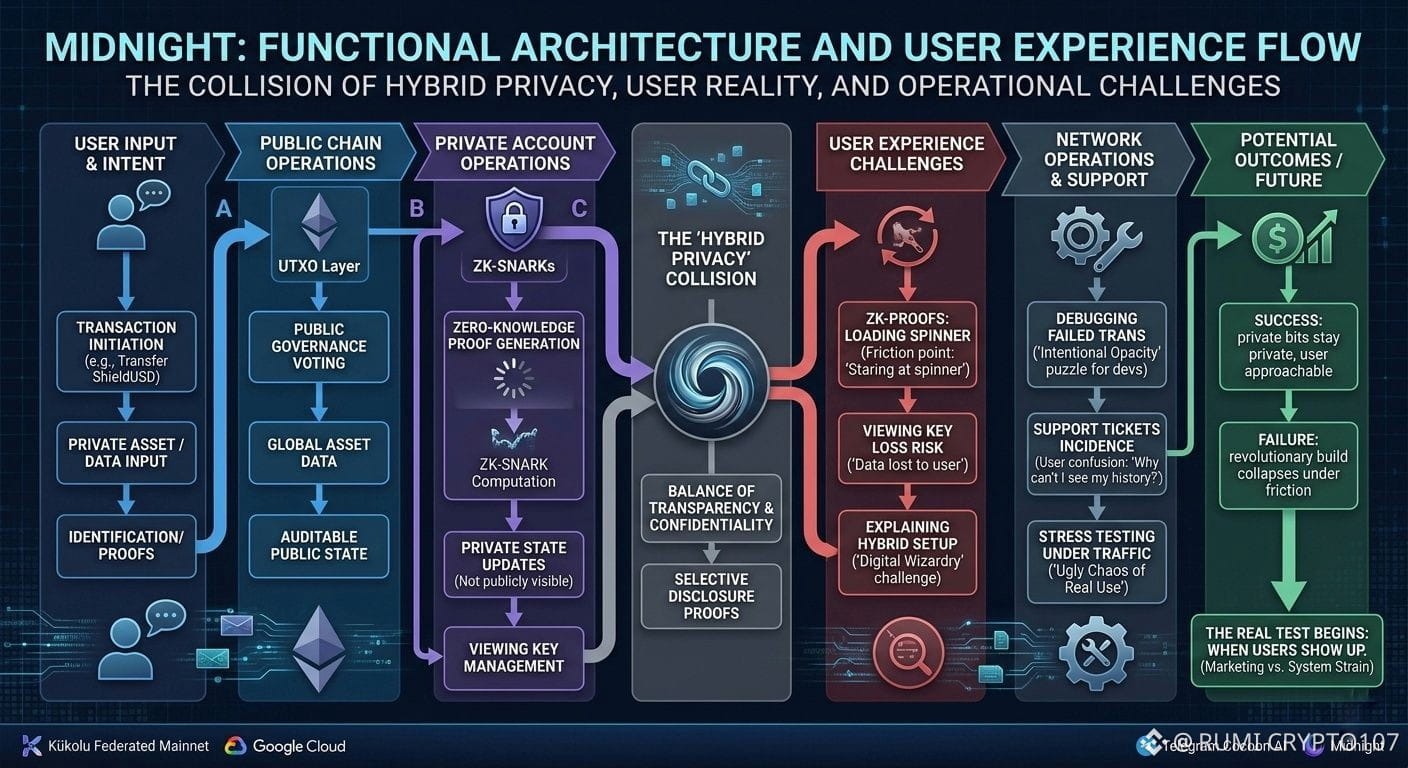
But the part that really hooked me isn’t the usual privacy sermon. It’s not the “hide it all and trust the code” routine I’ve seen a dozen times. You know how that one ends—small group of true believers calling the black box a genius move while everyone else slowly backs away. Midnight’s trying something messier, and I respect that. It wants to keep the truly sensitive stuff private, leave enough visible so the network still feels trustworthy, and actually let people reveal things when they choose to. No forced opacity, no forced exposure. Just… balance. The kind that’s way harder to pull off than it sounds.
Look, I gave up getting starry-eyed over fancy whitepapers a long time ago. Crypto’s full of them—beautiful diagrams, slick founders, the whole “this time it’s different” speech. Most of it fades the second someone actually tries to use the damn thing. What I keep coming back to with Midnight is the stuff nobody puts in the pitch deck: the moment the pretty architecture slams into actual people.
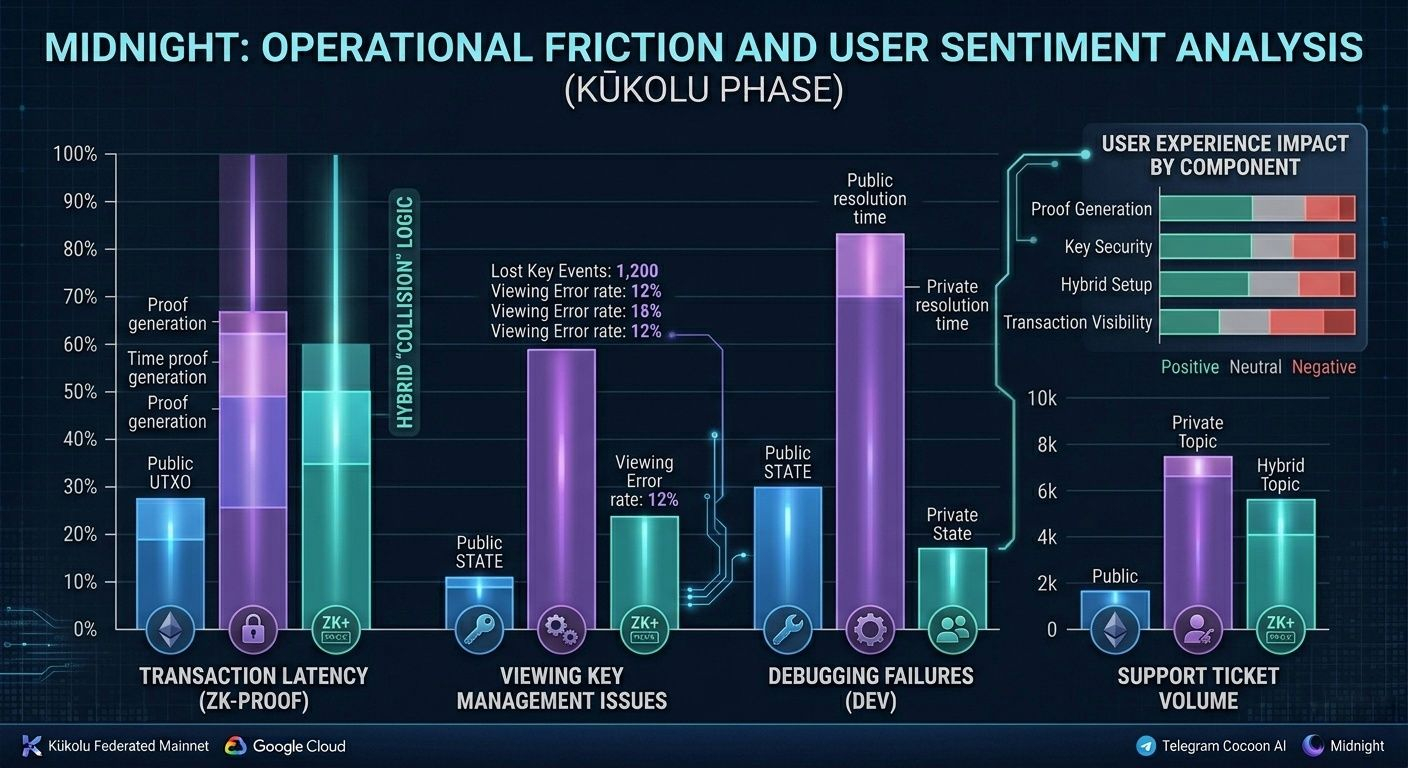
How do you even explain this hybrid setup to your average user without it coming across like digital wizardry? What happens the first time something glitches and half the debug info is intentionally hidden? Who’s stuck answering the support tickets when someone’s yelling “why can’t I see my own transaction history?” Those aren’t the sexy questions. They’re the boring, soul-crushing ones that quietly bury projects.
That’s why I’m not treating Midnight like another privacy hype train. I’m watching it like a live experiment. Can those privacy layers actually stay helpful without turning the whole network into a frustrating puzzle for devs and users alike? Will it still feel approachable when traffic picks up, when weird edge cases start piling up, when the clean theory meets the ugly chaos of real-world usage?
I’m not here to cheerlead. I’ve seen too many “revolutionary” builds collapse the minute real friction shows up—teams that mistook complicated for clever, tokens launched on top of systems that started sputtering as soon as actual humans logged in.
But if Midnight can handle that collision—if it can keep the private bits truly private without making everything else feel clunky and opaque—man, that would be something special. That would actually stick.
The marketing can say whatever it wants. The real story, the one I’m glued to, is what happens when the system starts straining under actual use. That’s where I’m looking.
#night @MidnightNetwork $NIGHT