Let's be honest — not many world leaders have been willing to say no to Donald Trump lately. Keir Starmer just did, repeatedly, and it's costing him.
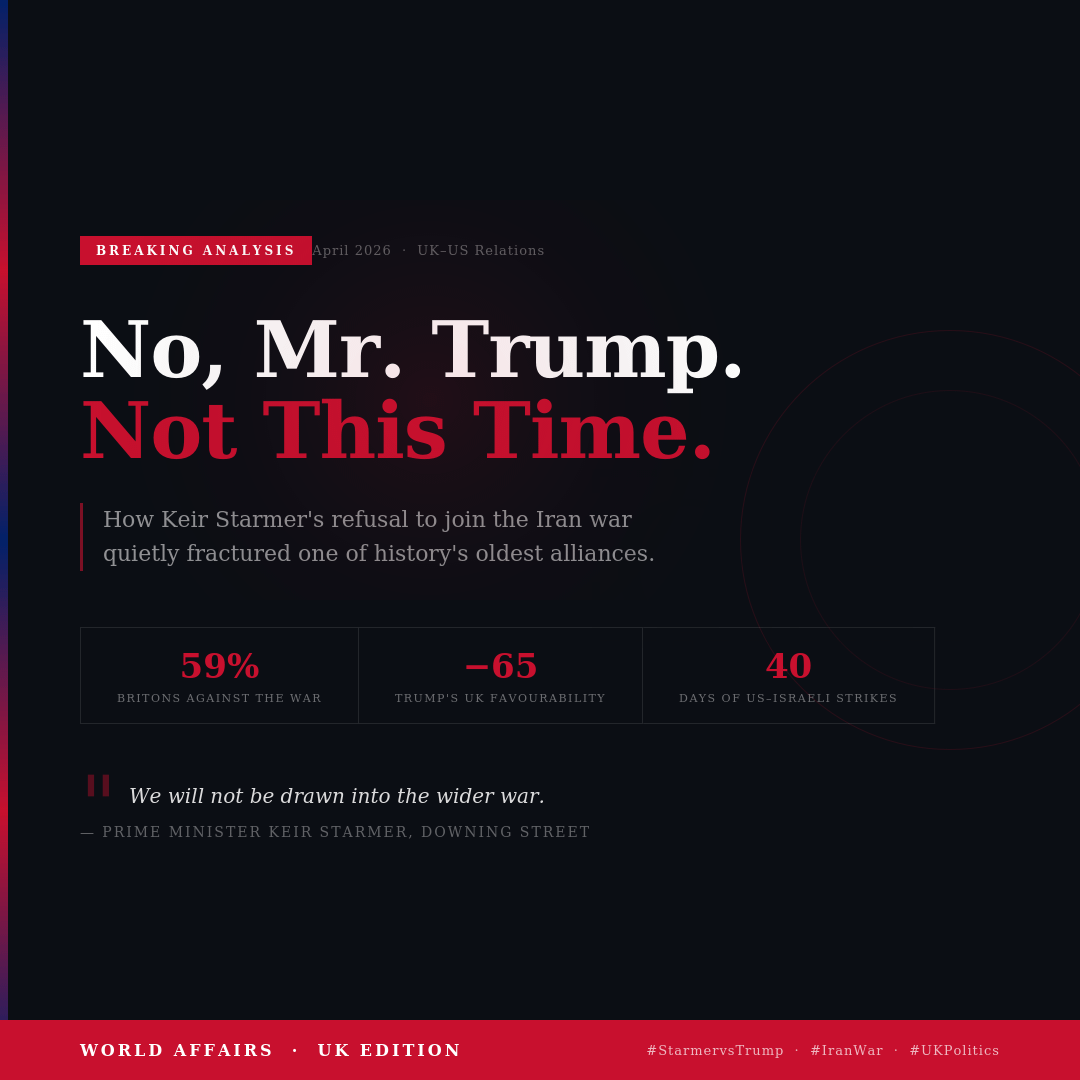
When Trump ramped up his rhetoric threatening to destroy Iran and pushed UK allies to fall in line, Starmer held his ground. He stood at a Downing Street press conference and said flatly: "We will not be drawn into the wider war." No theatrics, no lengthy press release — just a firm line drawn in public.
Trump fired back, calling Starmer out for blocking US use of British military bases in operations against Iran — something that reportedly drove a wedge between two long-standing military allies. The personal digs followed quickly. "This is not Winston Churchill that we're dealing with," Trump said, taking direct aim at Starmer's leadership.
And yet, politically at home? The insults may be backfiring on Trump. Around 59% of British people are against the US-Israeli assault on Iran, and Trump's own net favorability in the UK sits at minus 65. Being publicly attacked by one of the world's most unpopular figures in Britain isn't exactly bad for Starmer domestically.
Starmer has also used the moment to draw a sharp contrast with his rivals, pointing out that they "would have jumped into this war with both feet without thinking through the consequences."
The broader picture here is a quiet but significant shift. British officials note that their approach has changed — where they once avoided open disagreements with Washington, they are now less worried about public criticism.
Whether that holds is another question. But for now, one thing is clear — Starmer chose diplomacy over war drums, and the British public seems to respect him more for it.