
The cryptocurrency market has experienced a major shift in the past 24 hours, driven by a significant regulatory development from Japan. On April 10, Japan’s cabinet approved a landmark amendment to its financial laws, reclassifying cryptocurrencies as financial instruments—placing them in the same category as traditional assets like stocks and bonds.
This decision marks a turning point for the global crypto industry. By treating digital assets under the framework of the Financial Instruments and Exchange Act, Japan is introducing stricter oversight, including a ban on insider trading, mandatory annual disclosures for issuers, and severe penalties—up to 10 years in prison—for unregistered market participants.
As the world’s third-largest economy, Japan’s move sends a strong signal to institutional investors. Regulatory clarity of this scale often acts as a catalyst for capital inflows, increasing confidence among large financial players. It also opens the door for innovations such as crypto exchange-traded funds (ETFs) within Japan, while discussions of reducing crypto taxation—from as high as 55% down to 20%—further strengthen the country’s appeal as a crypto hub.
What Japan’s Move Means for the Market
This regulatory shift highlights a broader trend: crypto is no longer operating on the fringes of finance. Instead, it is being integrated into mainstream financial systems. For investors, this means projects with transparency, compliance, and real-world utility are likely to benefit the most.
In periods of market uncertainty, capital tends to flow toward projects that demonstrate credibility—those with working products, verified audits, and clear growth pathways. This is where newer entrants like Pepeto are attracting attention.
Pepeto: Presale Momentum Amid Market Fear
Pepeto has emerged as a presale project gaining traction even during extreme market fear. The project has reportedly raised over $8.92 million at a very early price level, drawing interest from investors looking for high-growth opportunities.
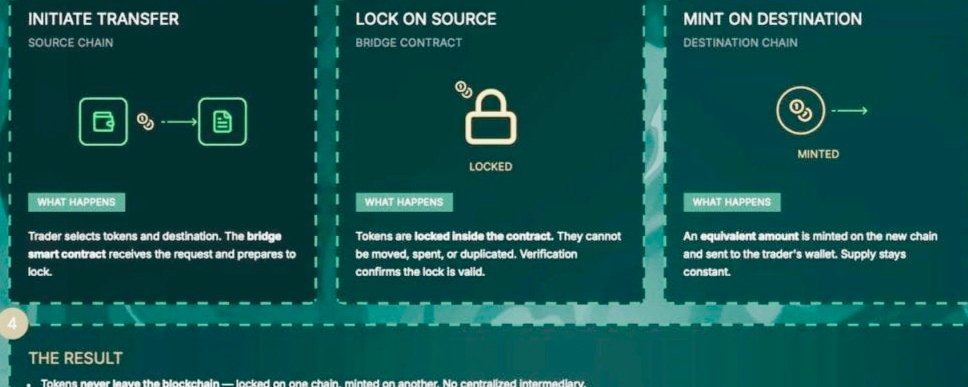
One of Pepeto’s core features is its built-in risk engine, designed to scan tokens and prevent users from interacting with potentially malicious smart contracts—a common issue in decentralized finance. Additionally, the platform offers cross-chain functionality, allowing transfers between networks such as Ethereum, BNB Chain, and Solana without fees. Its decentralized exchange, PepetoSwap, also promotes zero-fee trading.
Investor confidence has been further supported by a third-party audit and claims of experienced leadership linked to previous successful meme coin cycles. The project is also anticipating a potential listing on Binance, which is often seen as a major milestone that can significantly impact token visibility and liquidity.
Solana (SOL): Struggling Despite Market Developments
Meanwhile, Solana is currently trading around $85, significantly down from its previous high of $293. On-chain data indicates a decline in activity, with active wallet addresses dropping by approximately 11% over the past month.
Even with broader regulatory optimism sparked by Japan’s decision, Solana-based investment products, including ETFs, have seen continued outflows—totaling around $17 million over three consecutive weeks. This suggests that institutional interest alone may not be enough to drive price recovery without strong network activity.
A move above $90 could signal a shift in momentum, but for now, growth appears gradual and dependent on sustained capital inflows.
BNB: Stability With Limited Upside
BNB is trading near $607, showing relative stability compared to other major cryptocurrencies. Its value is supported by the broader ecosystem of Binance, including exchange revenues and periodic token burns that reduce supply.
However, with a market capitalization already around $88 billion, achieving exponential growth becomes more challenging. Doubling in value would require massive capital inflows—something that typically takes years rather than months.
For investors seeking high-multiple returns, this positions BNB as a lower-risk but also lower-upside asset compared to early-stage projects.
Conclusion
The past 24 hours have reinforced a key narrative in the crypto space: regulatory clarity is accelerating adoption, not hindering it. Japan’s decision to classify cryptocurrencies alongside traditional financial instruments represents a major خطوة toward mainstream acceptance.
As the market evolves, projects that combine compliance, transparency, and functional products are likely to attract the most attention. While established assets like Solana and BNB continue to consolidate, emerging projects such as Pepeto are capturing interest due to their early-stage positioning and growth potential.
Ultimately, the market is entering a phase where informed decisions—based on utility, credibility, and timing—will play a crucial role in determining investment outcomes.
#US-IranTalksFailToReachAgreement #SamAltmanSpeaksOutAfterAllegedAttack #BNB走势