
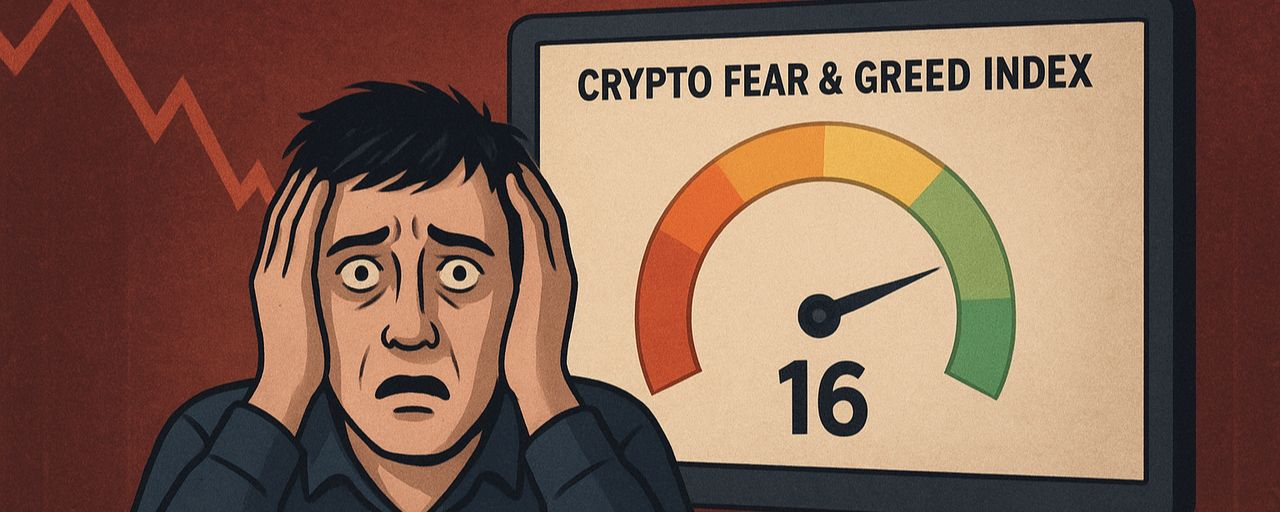
The financial landscape of 2026 has witnessed a remarkable evolution in digital assets, yet one psychological constant remains the primary deterrent for new entrants: the visceral fear of volatility. In a traditional market, a five percent move in a single day is often considered a major event that triggers news headlines and emergency board meetings. However, in the realm of cryptocurrency, such fluctuations are merely the baseline of a Tuesday afternoon. For a beginner, this lack of stability creates a sense of profound unease because it challenges the fundamental human desire for predictability and security. This guide explores the deep-seated reasons why crypto investors fear volatility, moving beyond the simple "fear of losing money" to examine the psychological, mechanical, and structural forces at play in the digital economy.
To navigate this discussion, we must first define what volatility actually represents in a decentralized market. Transitioning from a world of regulated banking to the open-source ledger means accepting that there is no "lender of last resort" or central bank to dampen price swings. Volatility is essentially a measure of the speed at which the market seeks the "true value" of an asset in the face of constant information flow. While professionals view this as "opportunity," beginners often perceive it as a "threat" to their hard-earned capital. By analyzing the facts and figures of market behavior—such as the reality that Bitcoin has experienced multiple eighty-percent drawdowns in its history—we can begin to demystify this fear. Understanding the "why" behind the panic is the first step toward transforming volatility from a source of terror into a measurable tool for wealth creation.
The Biological Blueprint of Financial Fear
Human beings are biologically wired to prioritize survival, and in the modern world, financial resources are a primary proxy for that survival. When an investor sees their portfolio value drop by twenty percent in a matter of hours, the brain's "amygdala"—the area responsible for processing fear and emotional reactions—triggers a "fight-or-flight" response. This evolutionary trait was designed to protect us from physical predators, but in 2026, it is triggered by red candles on a trading screen. This biological reaction overrides the "prefrontal cortex," which is the rational part of the brain that understands the long-term potential of the technology. Consequently, the fear of volatility is not a sign of weakness; it is a hard-wired survival mechanism that makes it incredibly difficult to remain logical when "numbers on a screen" are flashing red.
Moreover, the "loss aversion" principle suggests that the pain of losing a hundred dollars is twice as psychologically powerful as the joy of gaining a hundred dollars. This asymmetry explains why beginners are so much more sensitive to the downward moves of a cycle than the upward ones. Transitioning into the crypto market requires a conscious effort to override these ancient instincts. In the high-velocity environment of 2026, where social media and 24/7 news cycles provide a constant stream of "Fear, Uncertainty, and Doubt" (FUD), the amygdala is under constant assault. By recognizing that your fear is a physical response rather than a logical conclusion, you can begin to build the "psychological calluses" necessary to withstand the swings. The most successful investors are not those who don't feel fear, but those who have learned to acknowledge the biological impulse without letting it dictate their trading decisions.
The Mechanical Threat of High Leverage and Liquidations
While biological fear is the spark, the mechanical reality of "Leverage" is the fuel that makes volatility truly dangerous for the uninitiated. In the 2026 market, many retail investors use margin to increase their buying power, often borrowing up to twenty or fifty times their actual deposit. This means that a small five percent move in the wrong direction can result in a "total loss" of their initial capital through a process called "Liquidation." Beginners fear volatility because they are often over-leveraged, making them fragile to even the smallest market tremors. When the market moves sharply, it triggers a "Liquidity Cascade," where thousands of leveraged positions are forced to sell at the same time, accelerating the price drop and creating a vertical "cliff" on the chart.
This mechanical fragility is a major source of anxiety. In a traditional stock market, if your shares drop by ten percent, you still own the shares; in a leveraged crypto trade, if the price hits your liquidation point, your assets are gone forever. Transitioning from a "gambling" mindset to a "spot" mindset is the most effective way to eliminate this fear. Facts from recent market resets show that over ninety percent of "panic selling" occurs among traders who are using leverage. When you own the actual asset in "self-custody," volatility becomes a temporary fluctuation in value; when you use leverage, volatility becomes a permanent risk of ruin. By making the habit of avoiding high leverage, you remove the mechanical threat that turns market swings into life-altering disasters. This allows you to sleep through the "flash crashes" of 2026, knowing that your position is secure as long as the long-term thesis of the project remains intact.
The Psychological Trap of the "Unit Bias" and Recency Bias
Beginners often fall victim to "Unit Bias" and "Recency Bias," which distort their perception of value and intensify their fear of volatility. Unit bias is the tendency to want to own a "whole" number of coins, which leads people to buy cheaper, more volatile altcoins instead of fractions of Bitcoin or Ethereum. These cheaper coins often have much thinner liquidity, meaning they spike higher and crash harder than the market leaders. When these speculative assets drop by fifty percent, the fear is intensified because the investor feels they have lost a "significant quantity" of their holdings. Simultaneously, "Recency Bias" causes investors to believe that the current trend—whether up or down—will continue indefinitely. If the market has been dropping for three days, the beginner assumes it will go to zero.
Transitioning to a "Percentage-Based" and "Historical" view of the market is essential for overcoming these biases. In 2026, professional analysts use "Rolling Volatility" metrics to show that these sharp moves are a normal part of the asset's lifecycle. By looking at a three-year chart instead of a three-hour chart, you can see that the "scary" volatility of today is often just a small blip in a larger upward trend. Facts show that Bitcoin's "annualized volatility" has actually been declining over the last decade as institutional adoption grows, yet the psychological perception of risk remains high among those who focus on the "short-term noise." By making it a habit to zoom out and view your portfolio in terms of "Total Percentage Allocation" rather than "Number of Coins," you can neutralize the emotional weight of unit bias and stay focused on the "big picture" of wealth accumulation.
The Structural Fear of "Black Swan" Events and Technical Failure
A significant portion of the fear surrounding crypto volatility is not just about the price, but about the "Structural Integrity" of the system itself. In 2026, investors still carry the psychological scars of past exchange collapses and smart contract exploits. When a price drops rapidly, the immediate fear is not just a market correction, but a "Black Swan" event—such as a major protocol being hacked or a stablecoin losing its peg. Because crypto is a "code-based" economy, a rapid price drop can feel like a signal that the underlying code has failed. This "Technical Anxiety" is unique to the digital asset space and creates a much deeper level of fear than a standard stock market correction where the "company" still exists even if the price is down.
To combat this structural fear, the 2026 investor must cultivate the habit of "Due Diligence" and "Self-Custody." If you understand the security audits of the protocols you use and store your assets in a hardware wallet, you eliminate the fear of an exchange "bank run." Transitioning your trust from "people and institutions" to "mathematics and code" is a powerful psychological shift. While price volatility is inevitable, "Structural Failure" is a risk that can be mitigated through proper security habits. Facts show that the "Core Protocols" like Bitcoin and Ethereum have maintained 99.9% uptime for over a decade, proving their resilience. By separating "Market Risk" (price swings) from "Platform Risk" (technical failure), you can remain calm during a crash, knowing that the "pipes" of the network are still functioning perfectly despite the emotional panic of the traders.
The Social Contagion of "Fear, Uncertainty, and Doubt"
In the interconnected world of 2026, fear is a "Social Contagion" that spreads through social media algorithms faster than any financial report. When a price starts to drop, influencers and news outlets often use sensationalist headlines to drive engagement, creating a feedback loop of negativity known as "FUD." A beginner who is constantly checking their phone is exposed to a relentless stream of "end-of-the-world" narratives that amplify their natural anxiety. This "Information Overload" makes it impossible to distinguish between a legitimate concern and a manufactured panic. The fear of volatility is often just the fear of "What everyone else is saying."
Transitioning to an "Information Diet" is a vital habit for the modern investor. Professional traders in 2026 often ignore social media during periods of extreme volatility, relying instead on "On-Chain Data" and "Fundamental Metrics" to make their decisions. If the price is dropping but the number of "Active Addresses" and "Long-Term Holders" is increasing, the data tells a different story than the headlines. Facts show that "Social Sentiment" is often a "contrarian indicator"—the best time to buy is usually when the FUD is at its highest and the crowd is most terrified. By making it a habit to source your information from "Primary Data" rather than "Secondary Opinions," you can insulate your psyche from the social contagion of fear. This allows you to see volatility for what it really is: a psychological transfer of wealth from those who are distracted by the noise to those who are focused on the signal.
The Impact of "Sunk Cost Fallacy" and Portfolio Attachment
Many investors fear volatility because they have developed an unhealthy "Emotional Attachment" to their portfolio value at its peak. This is known as the "Sunk Cost Fallacy" or "Anchoring." If an investor’s portfolio was worth $100,000 at the high, and it is now worth $70,000, they feel as though they have "lost" $30,000—even if their initial investment was only $20,000. This perceived loss creates a state of "mourning" and a desperate desire to "get back to even," which leads to poor decision-making and a heightened fear of any further downward volatility. The beginner feels "trapped" by their past valuation, making every price tick feel like a personal attack on their future.
To overcome this attachment, you must adopt the habit of "Mark-to-Market" thinking. This means realizing that your portfolio is only worth what someone is willing to pay for it right now. Your "Paper Gains" from the past are irrelevant to the current market reality. Transitioning to a "Forward-Looking" mindset allows you to ask: "If I had this amount of cash today, would I buy these assets at this price?" If the answer is yes, then the volatility is irrelevant to your long-term plan. Facts show that the most successful "HODLers" are those who don't check their balance during bull markets, preventing them from "anchoring" their happiness to a temporary price peak. By treating your crypto as a "Long-Term Inventory" rather than a "Daily Bank Balance," you can detach your ego from the fluctuations of the chart and find peace in the process of accumulation.
The Regulatory Shadow and the Fear of "The Stroke of a Pen"
A unique driver of fear in the crypto market is the "Regulatory Risk," often called the "Stroke of a Pen" risk. In 2026, while many jurisdictions have provided clarity, the fear remains that a sudden change in government policy—such as a tax hike, a ban on certain types of mining, or a crackdown on "Privacy Protocols"—could instantly wipe out the value of an asset. When volatility spikes, beginners often assume that "the government is finally doing it." This creates a sense of helplessness, as political decisions are outside the control of the individual investor. The fear of volatility is often a proxy for the fear of "Losing the Permission" to participate in the digital economy.
However, transitioning to a "Global Perspective" reveals that crypto is now too large and too distributed for any single government to destroy. In 2026, "Game Theory" between nations has created a "Regulatory Competition" where if one country bans crypto, another welcomes it with open arms. Facts from the last decade show that every major "ban" has eventually been followed by a new all-time high as the market adapts and moves to "Friendlier Jurisdictions." By making it a habit to invest in "Decentralized and Geopolitically Neutral" assets like Bitcoin, you mitigate the risk of a single-point-of-failure in the regulatory landscape. This "Sovereign Mindset" allows you to view volatility as a localized reaction to political noise, rather than a systemic threat to the existence of your wealth.
The "All-In" Mistake and the Lack of Cash Reserves
The most practical reason why beginners fear volatility is that they are "All-In." When an investor puts 100% of their life savings into a volatile asset, every ten percent drop is a genuine threat to their ability to pay rent or buy groceries. This lack of "Financial Cushion" turns every market dip into a "Life Crisis." In 2026, the most successful investors have the habit of maintaining "Dry Powder"—cash or stablecoin reserves—that allow them to not only survive volatility but to benefit from it by "buying the dip." The fear of volatility is, in many cases, just a symptom of "Bad Portfolio Construction."
Transitioning to a "Risk-Adjusted Allocation" is the most effective way to cure market anxiety. Professional guides in 2026 suggest that your crypto allocation should only be as large as your ability to "lose it all and still be okay." If you have a six-month emergency fund in a traditional bank account, a thirty percent drop in your Bitcoin portfolio is an intellectual curiosity rather than a personal catastrophe. Facts show that "Forced Sellers"—those who have to sell during a crash because they need the cash—are the ones who provide the "Exit Liquidity" for the wealthy. By making it a habit to keep your "Living Expenses" separate from your "Investment Capital," you give yourself the "Gift of Time," which is the only thing that can truly conquer volatility.
The Illusion of "Certainty" in a Volatile World
Finally, we must address the philosophical fear of "Uncertainty." Many beginners enter crypto hoping for a "Straight Line to Riches," and when the volatility hits, it shatters their "Illusion of Certainty." They feel "betrayed" by the market because it didn't behave the way the YouTube influencers promised it would. The fear of volatility is a resistance to the reality that the future is inherently unpredictable. In 2026, the "certainty" of the traditional world—guaranteed pensions, stable inflation, and secure jobs—is crumbling, and crypto is a mirror that reflects this new "Volatile Reality."
To thrive in the digital economy, you must cultivate the habit of "Probabilistic Thinking." Instead of looking for "Certainty," look for "Favorable Odds." Transitioning to a "Vulnerability-Based" mindset means accepting that you might be wrong in the short term, but your "Long-Term Thesis" remains sound. Facts from the last century of finance show that the highest returns always go to those who are willing to "embrace the chaos." Volatility is the price you pay for the "Alpha" (excess returns) that crypto provides over a traditional savings account. By making it a habit to view volatility as the "Entrance Fee" to the future of finance, you can stop fearing the swings and start respecting them as a sign of a "Vibrant and Emerging" market.
The fear of crypto volatility is a complex mixture of biological instinct, mechanical fragility, psychological bias, and structural uncertainty. We have seen that while the "amygdala" triggers a primitive fear response, the actual risks can be mitigated through the habits of "Self-Custody," "Strategic Allocation," and "Data-Driven Thinking." Transitioning from a "Fear-Based" participant to an "Informed Master" of the market means realizing that volatility is not a "bug" in the system, but a "feature" that rewards those with patience and discipline. By zooming out, managing your leverage, and keeping your cash reserves healthy, you transform the "Red Candles" of a crash into the "Green Candles" of opportunity. The digital economy does not promise a smooth ride, but it does promise a "Permissionless Path" to sovereignty for those brave enough to stay in the game. As you continue your journey in 2026, remember that the only thing to fear about volatility is the "Fear Itself"—once you conquer your own mind, the market becomes your greatest ally.