
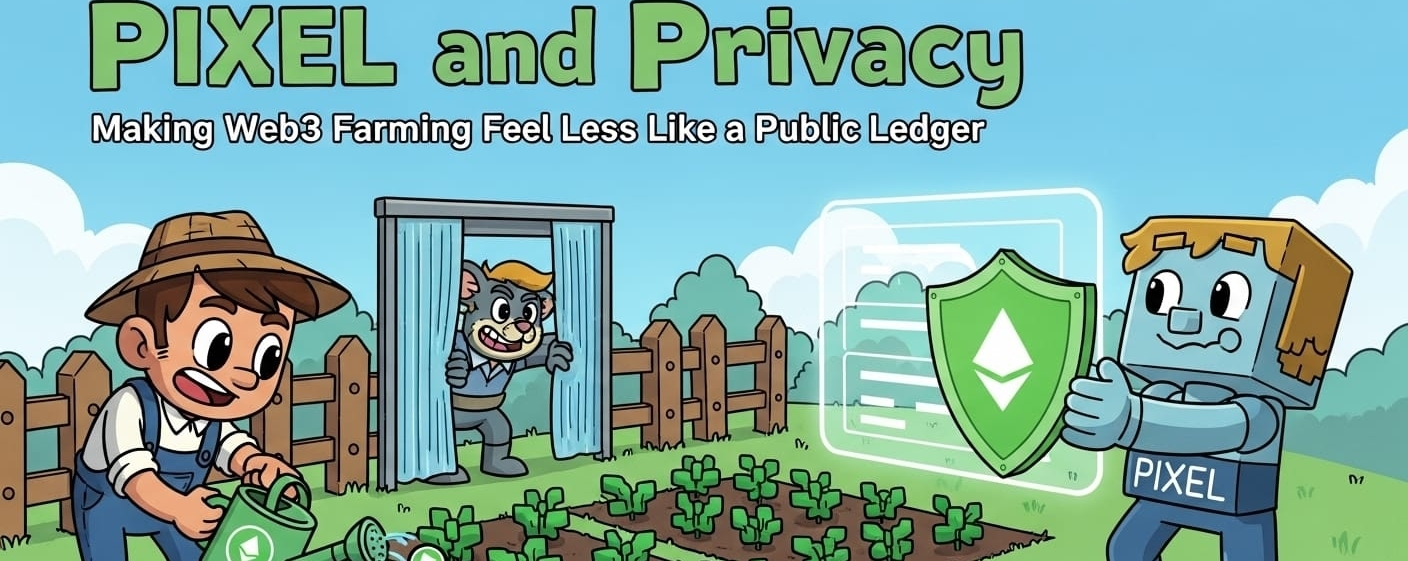
Pixel Coin is mostly known as the premium currency inside Pixels, the social farming game on Ronin. you use PIXEL to buy items, do upgrades, get VIP membership, and even mint NFTs like land plots and pets. so yeah, it’s a “game token”. but when you look at what web3 games are becoming, privacy starts to matter way more than people admit, even in something as chill as farming.
because on most public chains, every action leaves a trail. wallet address, timing, what you bought, how much you earned, what NFT you minted, all of it becomes public metadata. and in gaming, that can get weird fast. players don’t always want there whole strategy on display. whales don’t want everyone copying them. normal players don’t want their spending habits turned into a public profile. and if you’re doing quests and earning rewards, you also don’t want random people tracking you like it’s a sport.
this is where the idea of privacy-first infrastructure comes in: selective disclosure and zero-knowledge verification. not saying PIXEL itself is a privacy coin, it’s not. but the ecosystem around a game like Pixels can benefit a lot if it can prove things without exposing everything. like, imagine proving you completed a quest, or you’re eligible for a reward, or you’re a real player (not a bot), without showing your full wallet history and all your holdings. that’s the basic promise of zero-knowledge stuff: “yes this condition is true” without dumping all the details.
selective disclosure is even more practical. sometimes you only need to reveal one fact. like, “this user owns this land NFT” or “this account has VIP access” or “this player reached level X.” you don’t need to reveal the entire farm inventory, every past purchase, and every token balance. but most web3 systems today force you to reveal too much just to prove one tiny thing.
if Pixels wants to stay “fun first, crypto second,” then privacy tooling is not some luxury. it’s kinda UX. because when players feel watched, they act different. they start using multiple wallets, splitting assets, doing weird moves just to avoid leaving a clean trace. that adds friction and makes the game feel less like a game and more like tax paperwork.
a privacy-first approach could also help the economy stay healthier. if reward eligibility can be verified privately, you can reduce farming and abuse without turning the whole community into a public scoreboard of wallets. you can still enforce rules, but you don’t have to expose everyone’s data to do it.
of course, privacy has tradeoffs. if everything is hidden, it can be harder to audit what happend when something goes wrong. so the sweet spot is not total darkness. it’s proofs that are verifiable, rules that are checkable, but personal details stay contained.
so when people talk about PIXEL, they mostly talk about upgrades and NFTs. fair. but long term, web3 games need better privacy infra too. selective disclosure and zero-knowledge verification could make Pixels feel more normal, more safe, and less like your farming life is being broadcast forever. that’s how you keep the fun part alive, while still using blockchain in the background.