
One of the easiest things to do in Web3 gaming is attract attention with rewards.
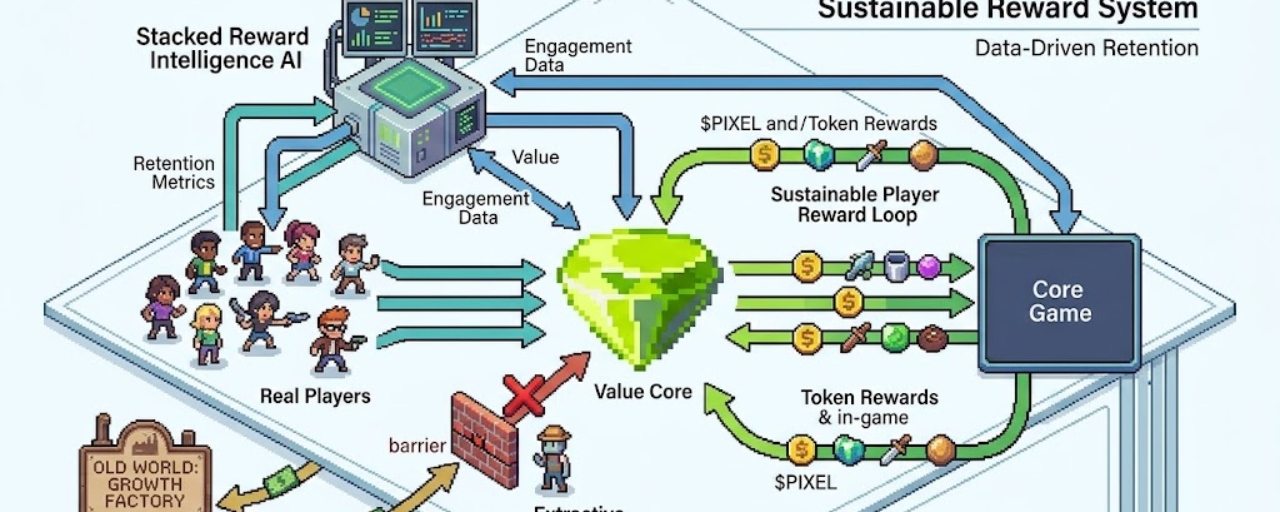
One of the hardest things to do is build a reward system that keeps real players, filters out extractive behavior, and does not slowly destroy the economy it was supposed to strengthen.
That is why I think the conversation around Stacked should be bigger.
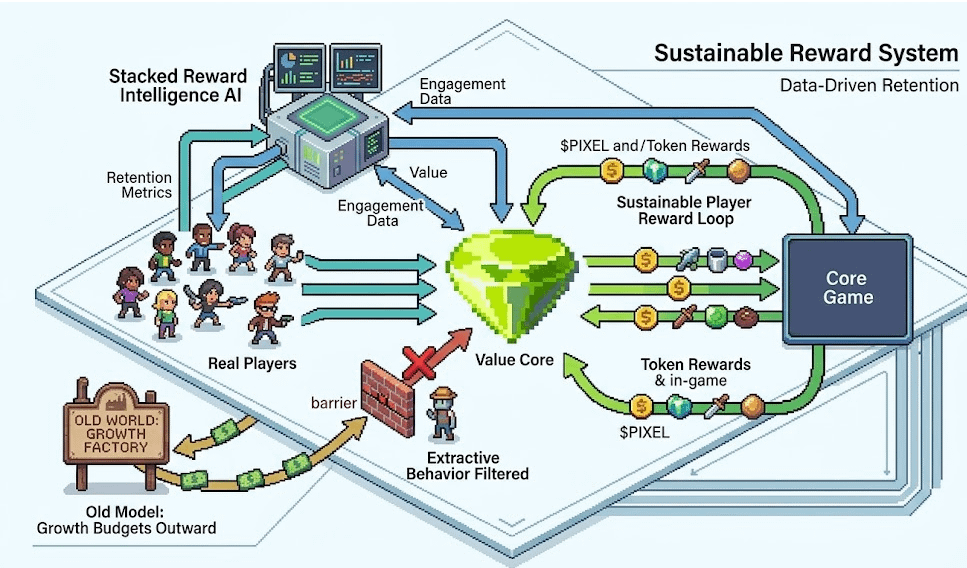
What @Pixels is pushing here is not just another “earn rewards” pitch. The more interesting part is the logic underneath it: rewarding the right player at the right moment, then measuring whether that reward actually improved retention, revenue, or long-term value. That sounds obvious in theory. In practice, very few teams seem capable of doing it well.
Because most systems are built for announcement value, not production reality.
The industry has seen this play out many times. Incentives create a spike. Growth looks strong. Then the system starts attracting behavior that was never aligned with the game in the first place. Rewards go to users who were never going to stay. Bots and farmers optimize harder than actual players. And what looked like growth turns out to be leakage.
That is why I keep coming back to one idea: experience under pressure matters.
Stacked feels different because it was built out of a live environment where these problems had already shown up. The Pixels ecosystem did not just imagine these risks. It had to respond to them. And in Web3, that makes a huge difference. A lot of teams can explain how a reward system should work. Far fewer can explain how it behaves once real incentives distort user behavior at scale.
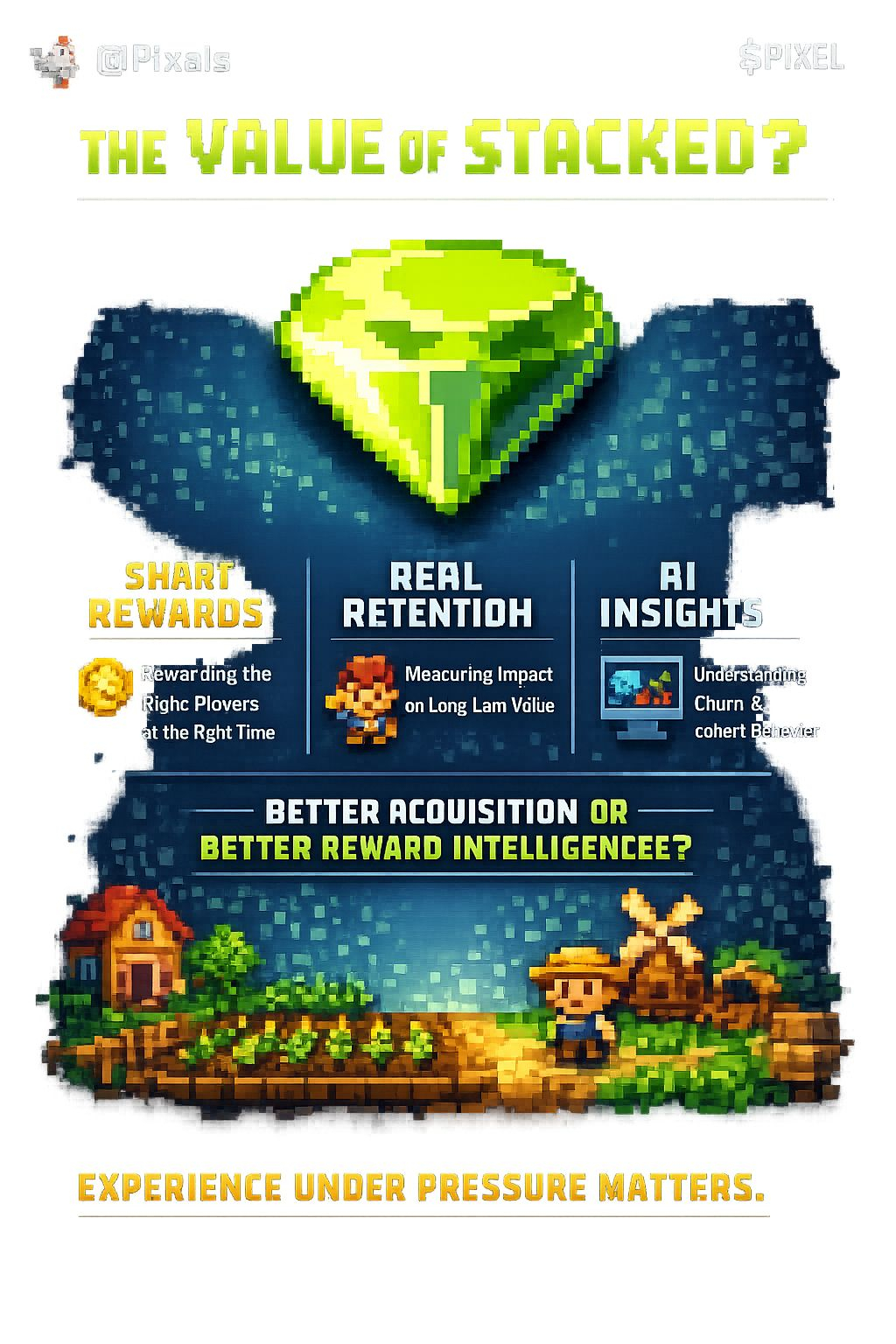
I also think the AI layer could end up being more important than the rewards themselves. A system that helps studios understand churn patterns, cohort behavior, and which experiments are worth running next is much more powerful than a system that just distributes incentives. The real value is not in handing out rewards. It is in learning what those rewards are actually doing.
And there is a bigger shift here too.
For years, growth budgets in gaming have flowed outward to ad platforms. Stacked suggests a different path: let more of that value flow directly to users who are actually engaged. That is a more interesting model for players, a more measurable one for studios, and arguably a healthier one for ecosystem design.
To me, that is the real reason Stacked deserves attention.
Not because rewards are new.
Not because Web3 gaming needs another narrative.
But because sustainable reward design is still rare, and this looks like one of the few teams trying to solve the hard part.
Curious how others see it: is the future of Web3 game growth better acquisition, or better reward intelligence?