
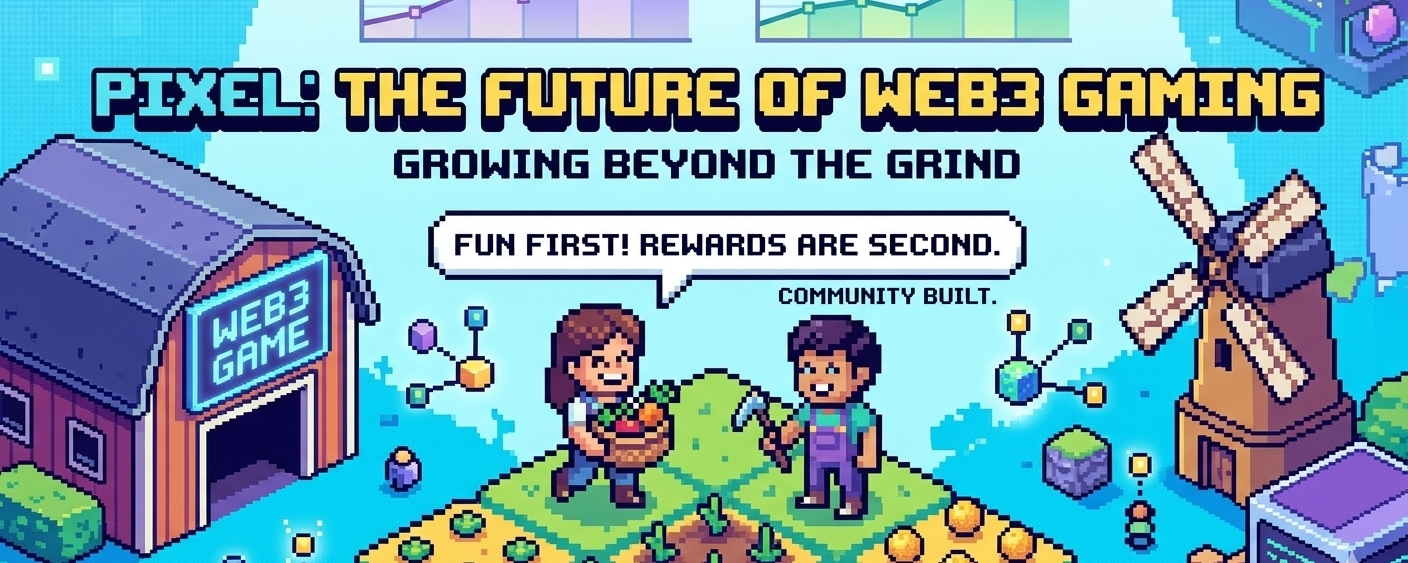
PIXEL has become a staple in the Web3 world, mostly known for its farming loops and massive user numbers. But looking past the surface, it feels like the team isn't just trying to build a hit game—they’re trying to solve the fundamental flaw that has killed almost every other project in this space.
Let’s be honest: the original "Play-to-Earn" dream was a bit of a disaster. The idea of getting paid to play sounds amazing on paper, but in practice, it created "games" that nobody actually wanted to play. People showed up for the paycheck, not the experience. The second the rewards dipped, the players vanished. We've seen that movie a dozen times now, and the ending is always the same.
What’s refreshing about PIXEL is that it flips the script. It starts with the player, not the token. It asks a simple, scary question for a Web3 project: Is this game actually fun if you take away the rewards? That shift in mindset changes everything. If a game can’t stand on its own feet, no amount of clever "tokenomics" is going to save it. By focusing on engagement first, rewards become a bonus—a way to enhance the fun rather than a bribe to keep people from leaving.
The way they handle the economy also feels much more grounded. Most P2E models are mindless; if you click enough buttons, you get tokens. That’s a recipe for bot farms and a collapsing economy. PIXEL seems to be moving toward a more "value-based" system. It’s not just about how much you do, but whether what you’re doing actually helps the game’s ecosystem.
When you reward quality over sheer volume, the whole vibe of the community changes. It stops being a mindless grind and starts feeling like a real game again.
There’s also a much smarter approach to growth here. Instead of burning cash on marketing or hype cycles, they’re leaning into a feedback loop. Players play, they generate data, and that data makes the game better. Better games keep players around longer, which means you don't have to constantly hunt for new users to replace the ones who quit. It's a "slow and steady" approach that feels built to last rather than built to trend on Twitter for a week.
Of course, talk is cheap. A good framework is one thing; sticking the landing is another. But compared to the "get rich quick" models of 2021, this feels like a serious step toward a mature version of Web3 gaming. It’s not perfect, but it’s moving in a direction that actually makes sense for the long haul.
If PIXEL pulls this off, it might just provide the blueprint for how we build games that people actually want to stay in—not because they have to, but because they want to.