
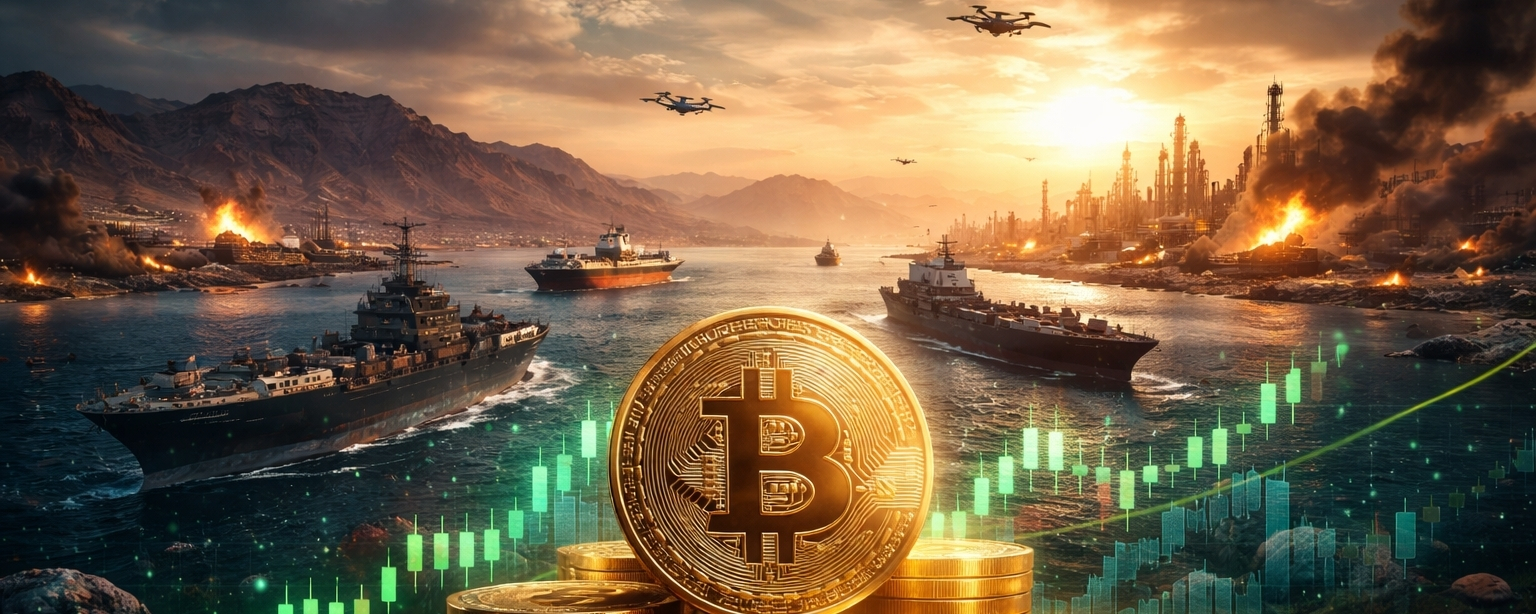
At major turning points in markets, assets don’t move in isolation—they mirror the world with precision. What we’re witnessing in the current crypto surge is not just a technical rebound, but a direct reflection of a complex geopolitical conflict centered around one of the world’s most critical energy arteries: the Strait of Hormuz.
🔷 The Crypto Rise… Not a Coincidence
In recent days, Bitcoin has climbed back above $74,000, with Ethereum and the broader market following strongly.
But this rally cannot be explained solely by internal factors like liquidity or technical analysis.
The deeper reality:
We are seeing a clear return of risk appetite (Risk-On) after a period of intense tension, driven by signs of relative de-escalation in the Middle East.
🔷 Strait of Hormuz… The Core of the Crisis
To understand the full picture, we must examine what’s happening in the Strait of Hormuz:
Around 20% of global oil supply passes through it
Naval mines and attacks on vessels have disrupted maritime activity
The United States has imposed a naval blockade after failed negotiations with Iran
This is not just tension—it’s one of the most significant energy disruptions in decades.
🔷 The Link Between Oil and Crypto
It may seem indirect, but the relationship is critical:
Rising oil prices = global inflation
Inflation = pressure on traditional economies
Result = capital shifts toward alternative assets
This is where crypto steps in as a partial hedge, especially as confidence in traditional systems weakens.
🔷 But Why Is Crypto Rising Despite the Crisis?
This is the key question.
Traditional logic suggests:
Crises = market declines
But what’s happening now is different:
Markets are pricing in containment, not escalation
Ongoing negotiations have restored some investor confidence
Liquidity is flowing back into risk assets, including crypto and equities
Even U.S. markets have risen despite the blockade, led by tech stocks.
👉 This phenomenon is known as a:
Relief Rally — not yet a confirmed long-term uptrend
🔷 Are the Blockade and Mines the Direct Cause?
The precise answer:
Yes… but indirectly.
Events in the Strait of Hormuz have created three major effects:
A global energy shock
Heightened uncertainty
Capital rotation into alternative assets
However, the current rally is not driven by the crisis itself, but by:
Expectations that the worst-case scenario may not materialize
🔷 The Market Between Two Scenarios
Right now, the market stands at a critical crossroads:
✅ Continued de-escalation → stronger crypto rally
❌ Escalation or full closure of the strait → sharp market downturn
This makes the current phase extremely sensitive.
🔷 Professional Outlook
What we’re seeing is not just a price rebound…
It’s a global repricing:
Energy has become a strategic weapon
Geopolitics is leading the markets
Crypto is reclaiming its role as a flexible asset in an unstable world
🔷 Conclusion
In times of crisis, markets don’t rise because things are good…
They rise because they are betting things won’t get worse.
And that is exactly what is happening now.


