
When I first discovered Pixels, I thought it was just another farming game in the Web3 space. At that time, many blockchain games were focused only on earning, not enjoyment. But as I spent more time playing, I realized Pixels was trying to do something much bigger, something that actually changes how players and games interact.
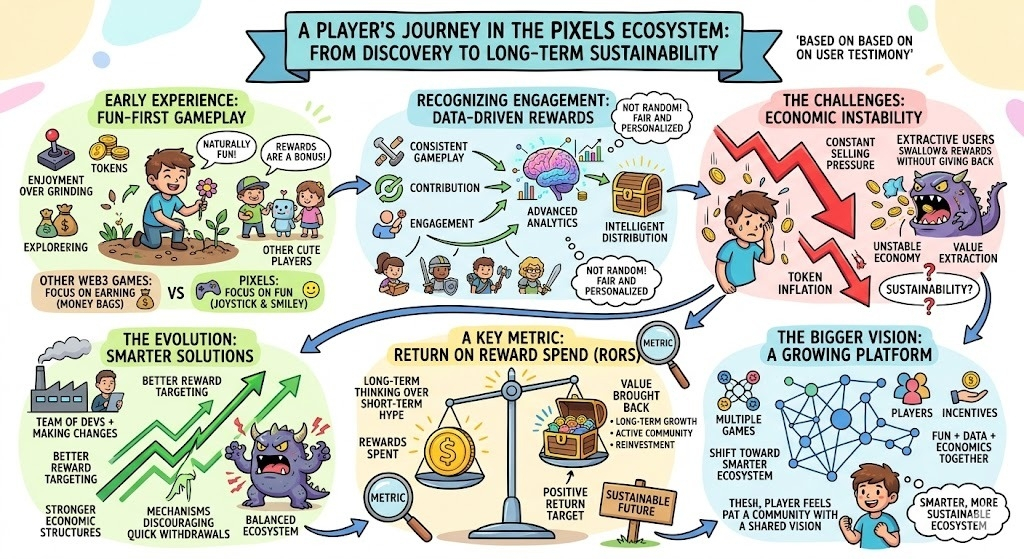
My early experience was simple: farming, exploring, and interacting with other players. But what made Pixels different for me was how naturally fun it felt. It didn’t feel like I was grinding just to earn tokens. Instead, I was enjoying the gameplay itself, and the rewards felt like a bonus rather than the main goal. That fun first approach is something I rarely found in play-to-earn games before.
As I got deeper into the game, I started noticing how intelligently rewards were distributed. It wasn’t random. It felt like the game actually recognized meaningful actions, whether it was consistent gameplay, contribution, or engagement. Later, I understood that Pixels uses data-driven systems and advanced analytics to target rewards. This made my experience feel more personalized and fair, compared to other games where rewards often go to short-term players.
However, my journey wasn’t perfect. I also saw the challenges firsthand. There were times when the in-game economy felt unstable. Token inflation and players constantly selling their rewards created pressure on the system. It became clear that many users were just extracting value without contributing back, which affected the overall experience.
What impressed me most was how Pixels responded to these issues. Instead of ignoring them, the platform evolved. I noticed changes like better reward targeting, stronger economic structures, and even mechanisms to discourage quick withdrawals. These updates made the ecosystem feel more balanced and sustainable.
One concept that stood out to me was the idea of Return on Reward Spend (RORS). As a player, I didn’t think about metrics at first, but over time I realized how important it is. It reflects whether the rewards being given actually bring value back to the system. Knowing that Pixels is aiming for a positive return shows that the project is thinking long-term, not just short-term hype.
Another thing I personally enjoyed was the sense of growth within the ecosystem. It didn’t feel like just one game anymore. Pixels is slowly becoming a platform where multiple games, players, and incentives are connected. Features like new token models and community-driven systems made me feel more involved, almost like I’m part of something bigger than just playing a game.
Looking back, my experience with Pixels has been a journey, from curiosity to understanding its deeper vision. It’s not just about farming or earning anymore. For me, it represents a shift toward a smarter, more sustainable gaming ecosystem where fun, data, and economics work together.
And honestly, that’s what keeps me coming back.
