
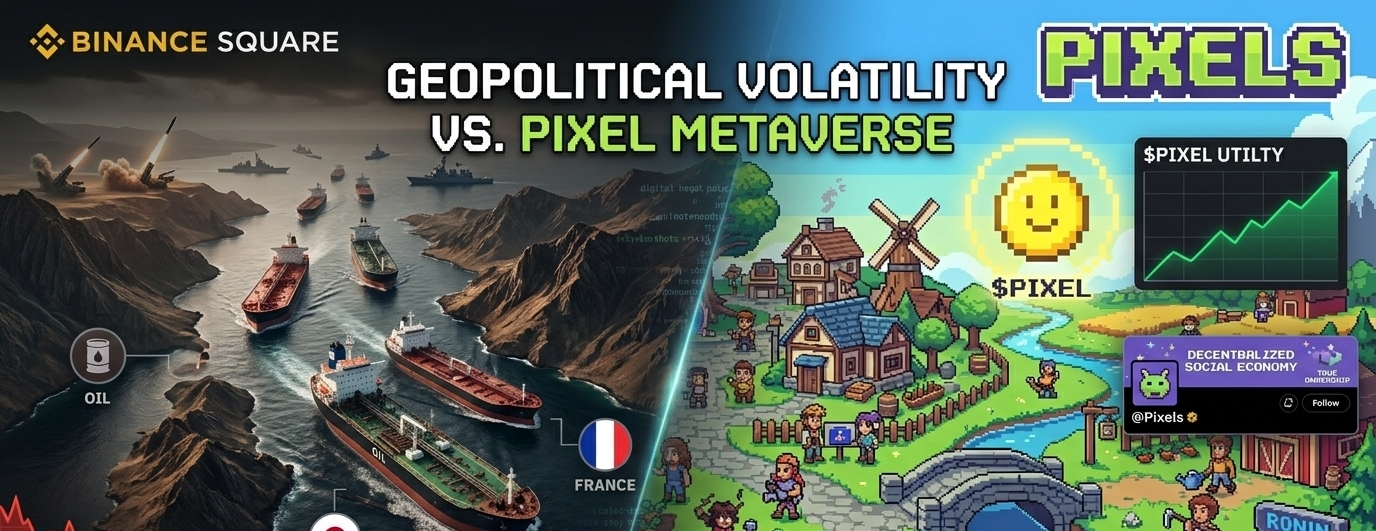
The global market narrative has taken a sharp turn following recent bold statements from Donald Trump regarding the situation in Iran. He highlighted that Iran's military capabilities—ranging from their air force to missile sites—have faced significant setbacks. More importantly, the reports of activities around the Strait of Hormuz have sent ripples through the international economy.
The Ripple Effect: From Oil to Crypto
When tensions rise in the Strait of Hormuz, the first sector to react is always energy. Oil prices become volatile, which traditionally pushes investors toward alternative assets. In moments of high unpredictability, we see a clear divide: some traders flock to traditional commodities, while others look toward the resilience of the Web3 ecosystem.
Why $PIXEL Stays Relevant in Volatile Times
While geopolitical tensions move the legacy markets, projects like @Pixels offer a different kind of value—a decentralized social economy. Even when global stocks or oil prices swing sharply, the community within the Pixels metaverse continues to build and farm. The utility of the $PIXEL token is driven by internal game mechanics and community engagement, which often provides a unique "digital hedge" against real-world chaos.
Conclusion
We are living in a fast-moving era where a single statement can shift supply expectations for countries like France or Japan. As the momentum builds, it is crucial to stay diversified. Watching the growth of #pixel during these times shows that the future of digital assets is not just about speculation, but about building sustainable, community-driven worlds that can withstand external pressures.