


I remember the first time I watched a shiny GameFi chart go vertical. The room was buzzing, everybody was talking about “the next big thing,” and I was doing that trader thing where you try to stay calm while you’re really asking who’s left to buy after the crowd gets in. That’s why Pixels catches my eye. It doesn’t look dead on the screen, and that already makes it more interesting than most of this lane. The game says it passed 180,000 daily active users in 2023, then later hit over 1,024,243 daily active wallets on May 12, 2024, after moving from Polygon to Ronin. That kind of growth gets people excited fast. But growth isn’t the whole story.
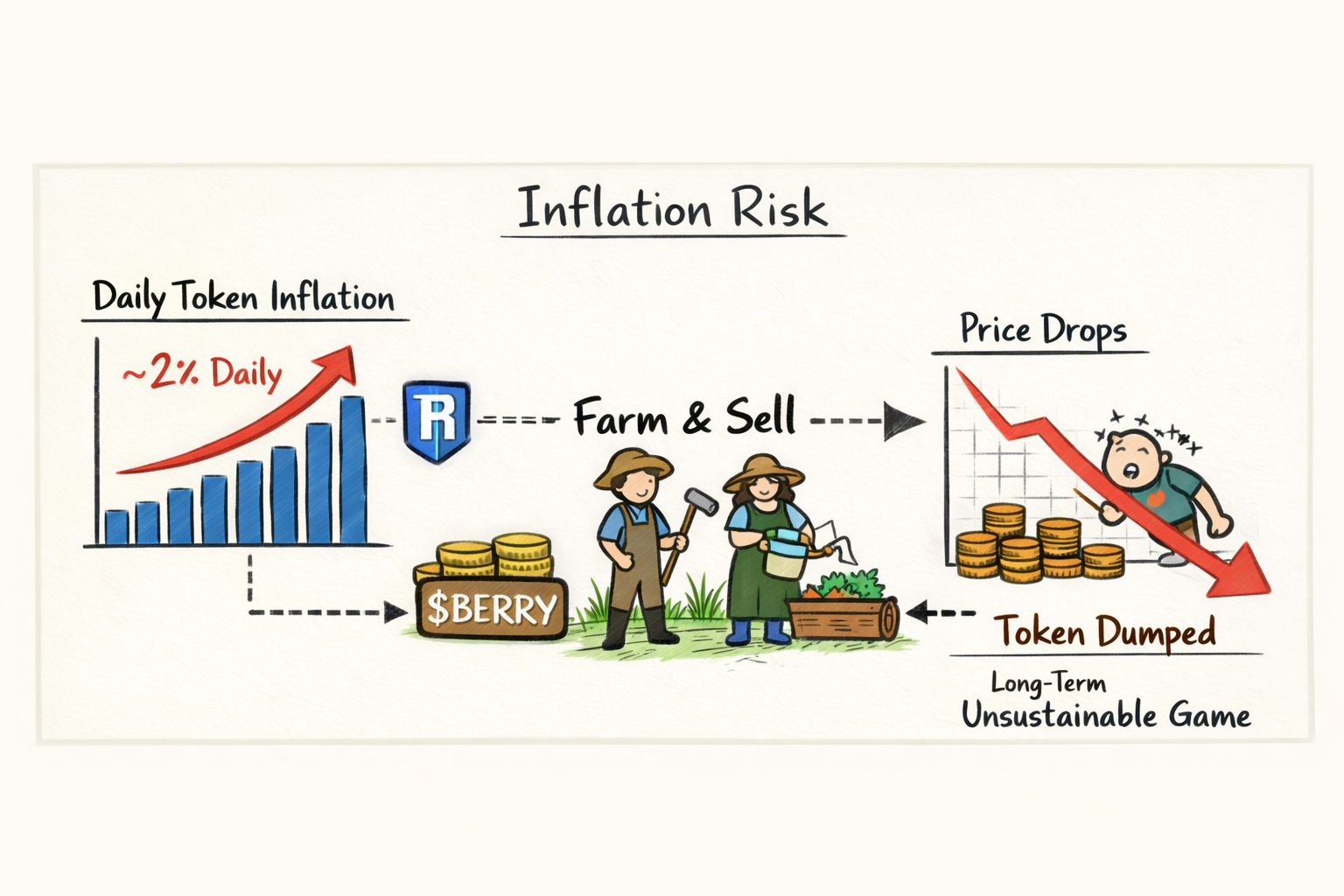
The real question is whether people come back when the free stuff slows down. That’s the retention problem, and in a play-to-earn game it’s the whole ballgame. If users show up for rewards and disappear once the incentives cool off, you don’t really have a game. You have a faucet with nicer graphics. Pixels’ own FAQ says long-term success has to prioritize sustainability, and it spells out the problem plainly: $BERRY had a daily inflation rate of about 2%, and Web3 makes the grind-and-sell loop easier for farmers. That’s the kind of leak that eats a project alive over time. If the economy keeps printing more than the game can absorb, the token becomes an exit, not a reason to stay.
That’s why the shift away from $BERRY matters. Pixels said it was phasing out $BERRY, rewarding holders with $PIXEL, and moving to a simpler economic model with a new off-chain coin called Coins. They also said players can’t keep selling items to NPCs the way they used to, because they want to protect the economy and reduce market sell-pressure. In plain English, they’re trying to stop the game from paying out too much too fast and then watching the token get dumped. That’s smart. It’s also a sign of how hard this business is. When a project has to keep rewriting the rules of its own economy, you know the old version wasn’t working cleanly.
Now, to be fair, there is something real here. Pixels isn’t some ghost-chain game with a couple of bored wallets and a Discord full of hope. The token is still live, and today it shows roughly $0.0083 per PIXEL, about $28.1 million in market cap, with 3.38 billion tokens circulating out of a 5 billion max supply. A project like this can look fine for months while the chart is really just floating on attention, and then one quiet stretch hits and you feel the air leave the room.
The weakness I see is simple. Retention can look decent on paper and still fail in the real world if it’s driven by rewards more than love for the game. Pixels did report a 27% player retention rate over a month in an earlier collaboration, which is better than the usual Web3 junk pile, but even that number is not a magic shield. If 100 people show up, 27 stay after a month. That sounds solid until you remember the token has to survive not just one month, but many cycles of hype, selling, updates, and boredom. And as of March 2026, outside coverage said PIXEL’s circulating supply had reached about 66% of its total, so the market is already past the easy excuse of “too many unlocks.” At this stage, usage has to do the heavy lifting.
So here’s my honest take over coffee. Pixels is one of the few play-to-earn names that actually looks like it understands the problem instead of just pretending rewards will solve it forever. That matters. But understanding the problem and fixing it are two different trades. I like that they’re trying to clean up the economy, I like that they’re talking about sustainability, and I like that the user base has shown it can get big. Still, the retention test is brutal, and it’s the one test that never really goes away. So would I keep watching it? Yeah, I would. But I’d watch it like a trader, not like a fan.