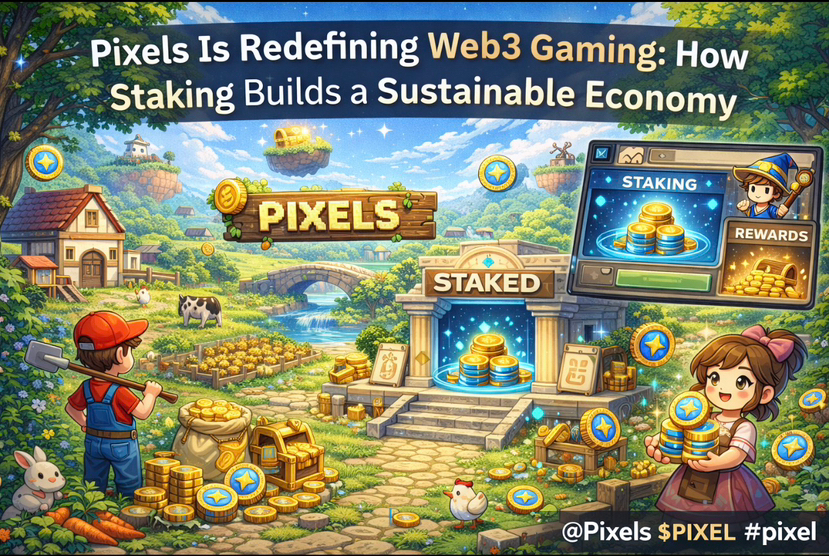
The future of Web3 gaming is no longer just about play-to-earn — it’s about building systems where time, strategy, and ownership converge into a sustainable digital economy. That’s exactly where @Pixels is making a strong impact with its Staked ecosystem.
What makes Pixels different is how it transforms players into long-term participants rather than short-term grinders. The Staked system introduces a powerful shift: instead of simply earning and selling rewards, players can stake $PIXEL to actively support and benefit from the ecosystem’s growth. This creates a deeper layer of engagement where decisions are not just about farming crops or completing tasks, but also about managing digital assets intelligently.
The beauty of this system lies in alignment. When players stake $PIXEL, they are aligning themselves with the success of the platform. This encourages more thoughtful participation, reduces short-term dumping behavior, and builds a healthier in-game economy. Over time, this kind of design can create a more stable token environment while still rewarding active users.
Another important aspect is how staking adds a strategic dimension to gameplay. Players must decide when to stake, how much to stake, and how to balance liquidity versus long-term rewards. This transforms Pixels from a simple farming game into a hybrid ecosystem that blends gaming with financial strategy.
In my opinion, this is where Pixels truly stands out. It’s not just about fun gameplay — it’s about creating an ecosystem where users can grow alongside the platform. The integration of staking into the core loop shows a mature understanding of how Web3 economies should evolve: rewarding loyalty, encouraging sustainability, and empowering users.
As more players begin to understand the value of staking within Pixels, we could see a shift toward more stable and engaged communities in Web3 gaming overall. The Staked ecosystem is not just a feature — it’s a foundation for long-term growth.