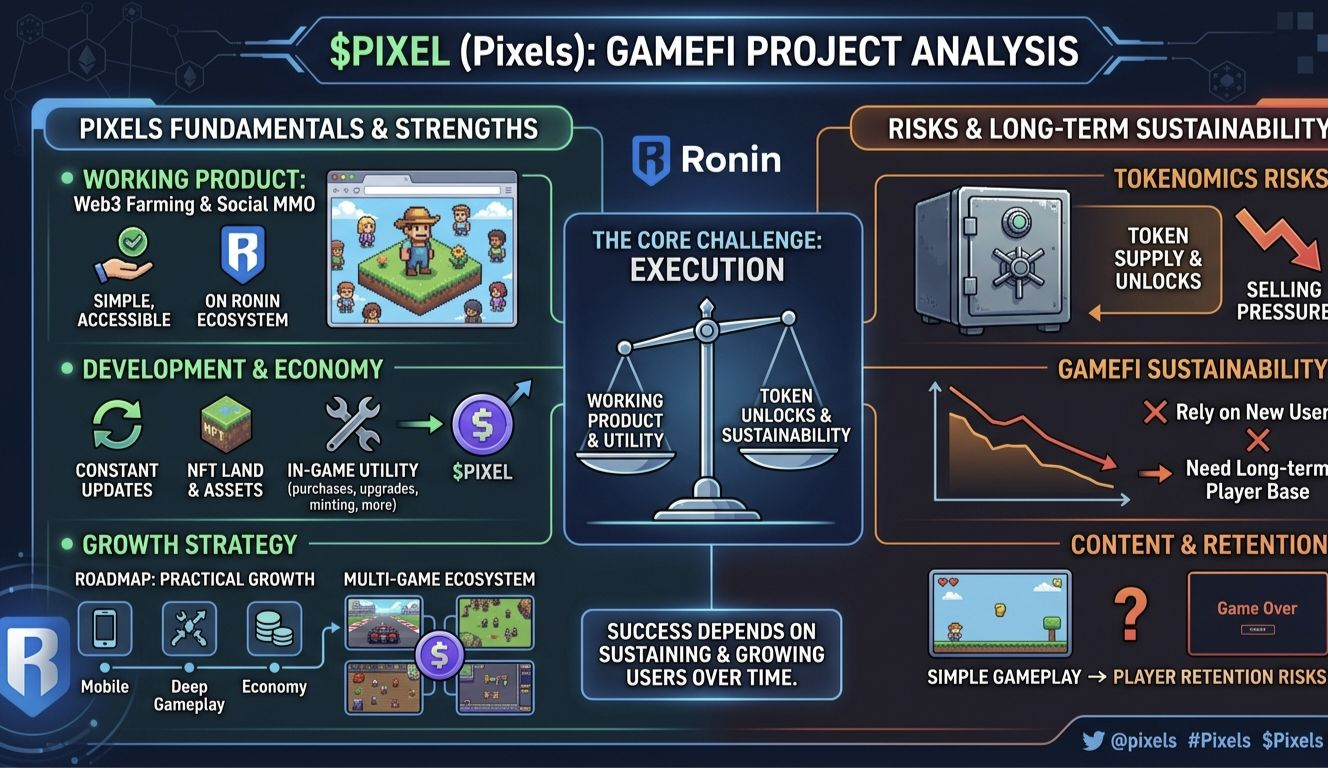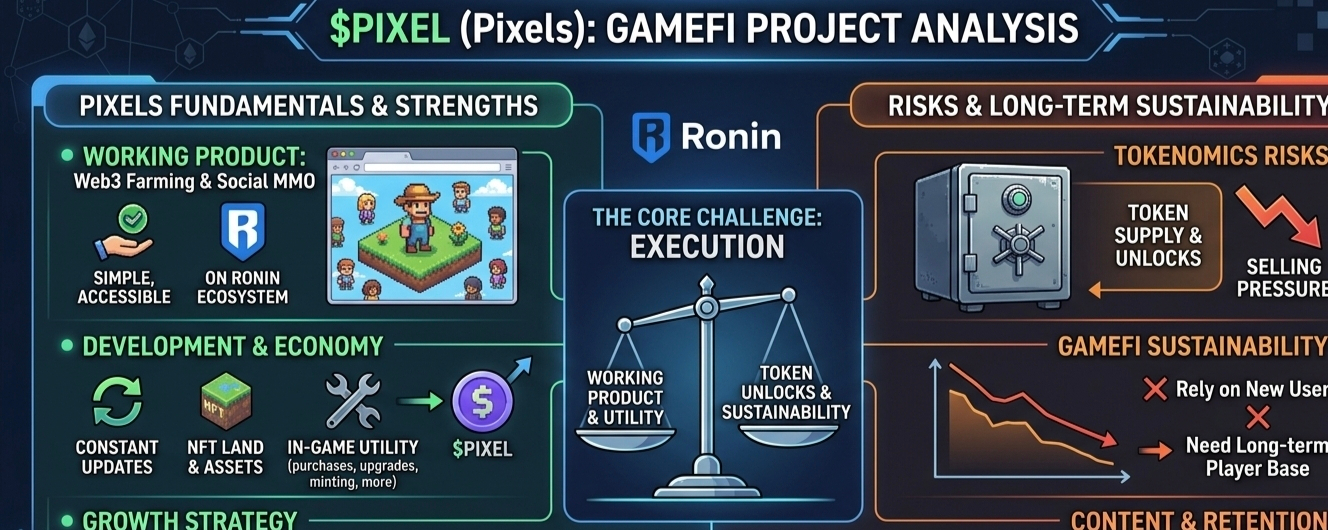
$PIXEL (Pixels) is one of the rare GameFi projects that actually has a working product people are using. It’s a Web3 farming and social MMO built on the Ronin ecosystem, focused on making crypto simple and accessible. Instead of forcing users through complicated setups, it offers a browser-based experience where players can jump in quickly, which is a smart move in a space where most projects fail due to friction.
At its core, Pixels is designed around user experience rather than blockchain hype. The gameplay loop—farming, crafting, exploring, and social interaction—is simple but effective. It’s not groundbreaking, but it’s playable, and that alone puts it ahead of most Web3 games that struggle to retain users.
From a development standpoint, the team has been consistent. They’ve introduced NFT-based land and assets, built an in-game economy, added reward systems and VIP mechanics, and continued rolling out updates. This shows ongoing commitment rather than the typical “launch and disappear” pattern seen in many crypto projects.
The $PIXEL token does have real utility within the ecosystem. It’s used for in-game purchases, upgrades, NFT minting, and premium features. That creates actual demand, but only as long as the player base continues to grow. Without users, even the best-designed token utility becomes irrelevant.
One of the most important shifts in their roadmap is the move toward a multi-game ecosystem. Instead of relying on a single game, Pixels aims to expand into multiple experiences where Pixel acts as a shared currency. If executed properly, this could create strong network effects and long-term demand.
The roadmap itself focuses on practical growth rather than empty promises. This includes improving gameplay depth, expanding social features, enhancing mobile accessibility, and continuously evolving the in-game economy. The direction is clear: build something people actually want to use.
However, there are real risks that shouldn’t be ignored. The token has a large supply with long-term unlocks, which creates ongoing selling pressure. Even with strong growth, this can limit price performance and frustrate investors expecting quick gains.
There’s also the broader issue of GameFi sustainability. Most play-to-earn models have failed because they rely heavily on constant new users. Pixels is trying to shift away from that model, but it hasn’t fully proven it can sustain long-term demand yet.
Another concern is content depth. The current gameplay works, but it’s relatively simple. If the experience doesn’t evolve and deepen over time, player retention could drop, which would directly impact the entire ecosystem.
Overall, Pixels has stronger fundamentals than most GameFi projects, with a real product, active development, and a clear growth strategy. But none of that guarantees success. Its future depends entirely on execution and whether it can maintain and grow its user base over time.