
I was analyzing Crypto market and this month has been oddly steady after a volatile start to the year. Bitcoin hovering around the mid $70K range tells you speculation hasn’t disappeared, but it has cooled into something more selective. Then one thing got my attention that user activity on gaming chains is quietly climbing again. That contrast matters. It suggests people are still here, just more careful about where they spend time.
So, I keep coming back to a simple question lately. Why do some blockchain games feel alive while most still feel like empty loops with tokens attached?
That’s where Sky Mavis and its chain, Ronin start to feel different. When I first looked at Ronin, it seemed like just another application-specific chain. But underneath, it’s doing something more focused. It is not trying to be everything. It is trying to make games actually work on-chain without friction showing up every few clicks.
On the surface, Ronin supports EVM compatibility, which sounds technical but really means developers can reuse familiar tools from Ethereum. Underneath that, the chain is tuned for speed and cost. Transactions settle quickly and fees stay close to zero. That combination changes behavior. Players don’t hesitate before every action. They click, trade, upgrade, and move on.
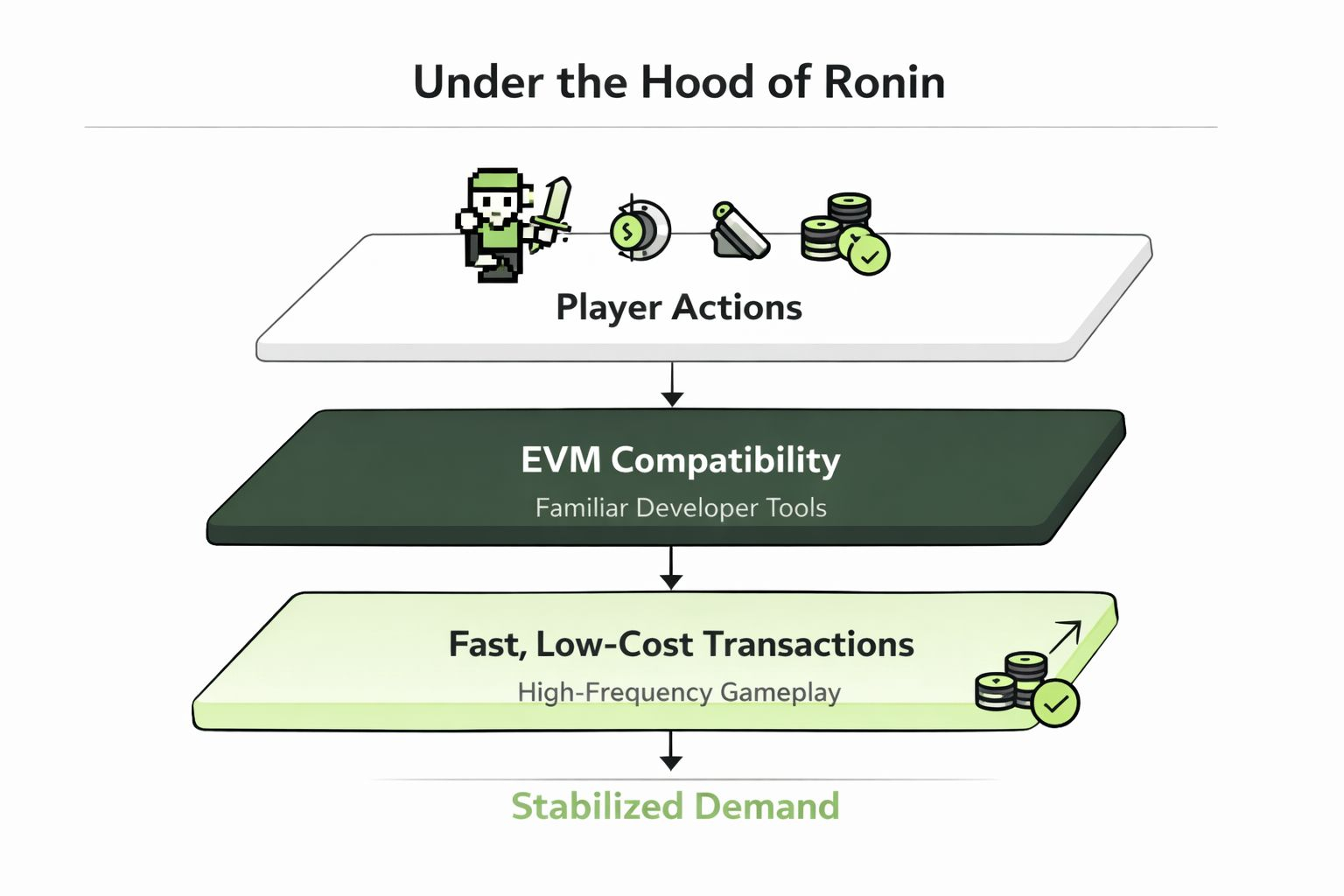
That freedom creates another effect. Activity compounds. Ronin reported over 1 million daily active addresses at its recent peak, and even after cooling, it still holds several hundred thousand daily users. That drop might sound like a weakness, but it actually shows something healthier. The users who remain are not just farming tokens. They are staying for the game loop.
You see this most clearly in @Pixels . At one point, Pixels crossed 700,000 daily active users. That number alone is less interesting than what sits behind it. Players are not just earning. They are farming, crafting, trading, and reinvesting. The token, PIXEL, is not the end goal. It is a tool inside the loop.
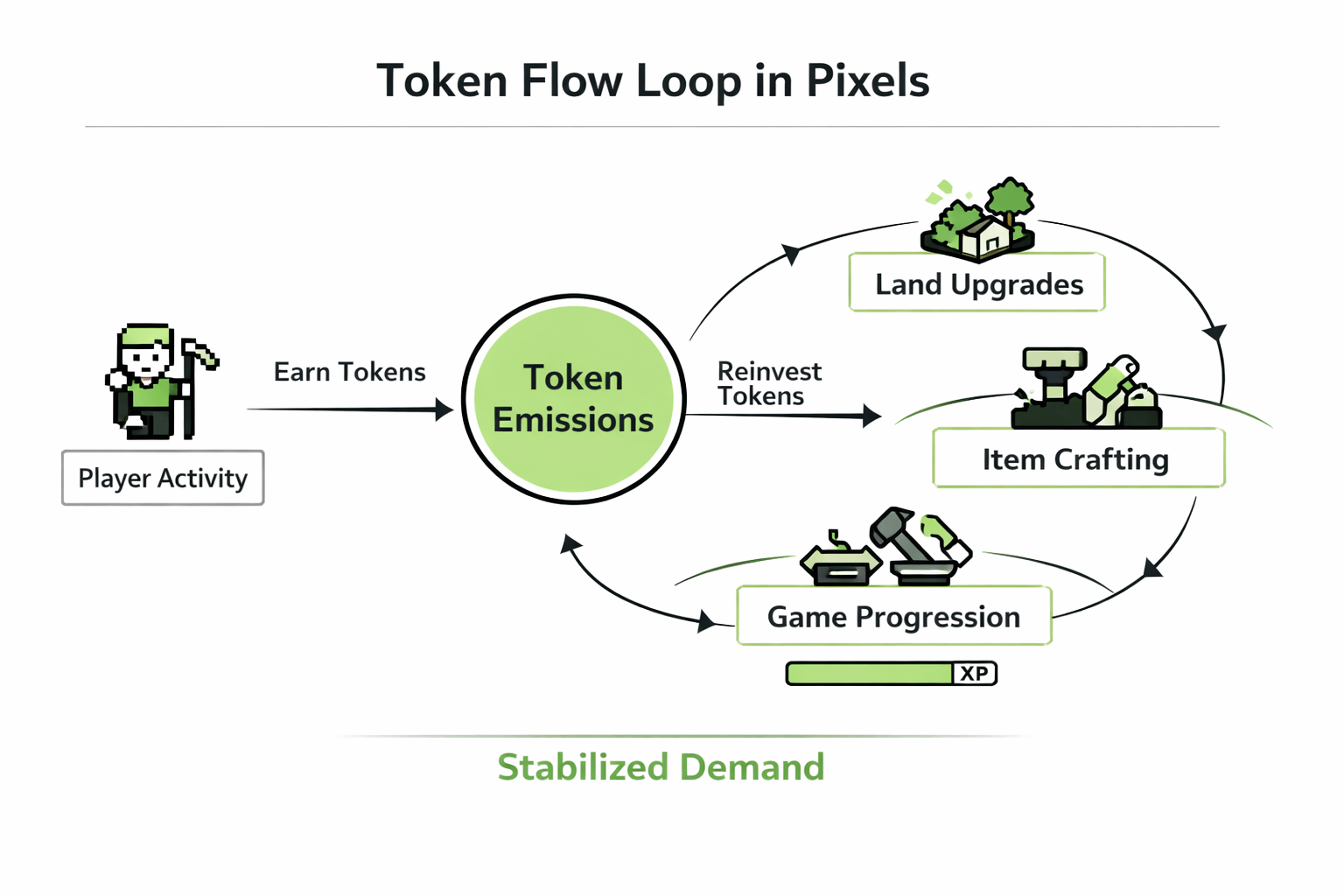
Here’s where the structure gets interesting. On the surface, players earn tokens through activity. Underneath, those tokens flow into sinks like land upgrades, item crafting, and progression systems. That flow matters. If 60 to 70 percent of earned tokens cycle back into the game, which early data suggests during peak engagement periods, inflation pressure slows down. Prices don’t collapse immediately because demand is built into the system.
Understanding that helps explain why Ronin feels more stable than earlier play-to-earn experiments. Back during the peak of Axie Infinity, token emissions often outpaced utility. Daily rewards flooded the market, and sinks were too shallow. Once new players slowed, the system exposed itself.
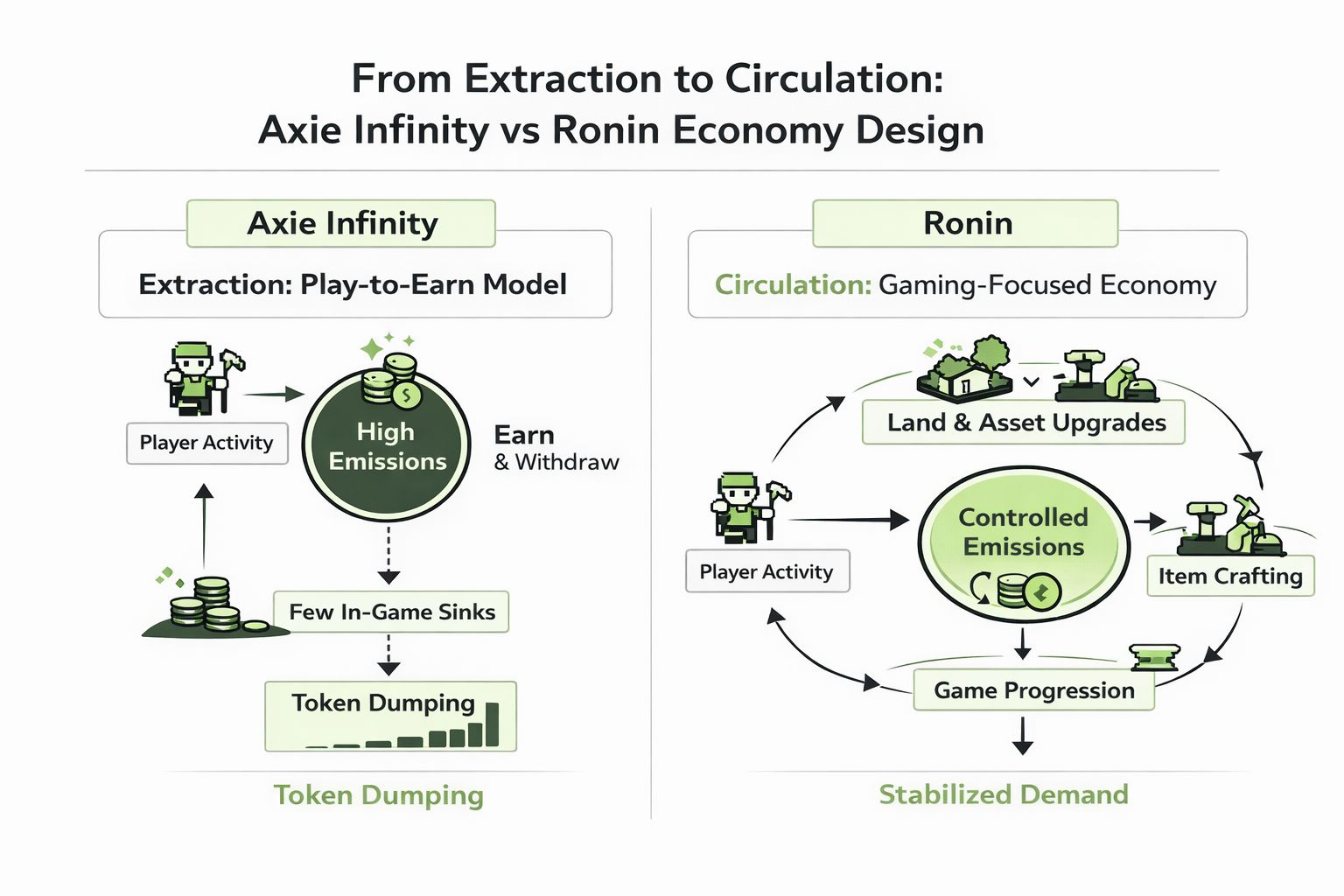
Ronin seems to have learned from that. Fewer tokens are emitted, and more effort goes into where they go after they are earned. That sounds simple, but it shifts the foundation. The economy becomes circular instead of extractive.
Meanwhile, there are risks sitting quietly underneath. If user growth stalls, even a well-designed loop can tighten. If too much value is locked in assets like land, liquidity dries up. And if PIXEL demand depends too heavily on new content drops, engagement can become seasonal instead of steady.
Still, the texture here feels different. Daily transactions on Ronin have consistently stayed in the hundreds of thousands, even outside hype cycles. That consistency is hard to fake. It suggests real usage rather than temporary speculation.
What this reveals about the bigger pattern is subtle. Blockchain gaming is moving away from selling the idea of earning and toward building systems where spending makes sense. The shift is quiet, but it changes everything. Games are no longer trying to justify tokens. They are trying to absorb them.
If this holds, the chains that win won’t be the ones with the most features. They’ll be the ones where value keeps moving, almost unnoticed, because the game itself is worth staying in.
And that’s the part that sticks with me. The strongest economies don’t feel like economies at all.

