
I did not go back to Pixels expecting much. I have seen too many Web3 games generate noise, daily activity, and token chatter without giving people a real reason to stay once extraction becomes easier than playing. That was my bias when I spent time reading the official @undefined materials again. What made me pause was not the farming theme, and it was not the usual ownership pitch either. It was the way Pixels now talks about reward design like a real economic problem, not a shortcut.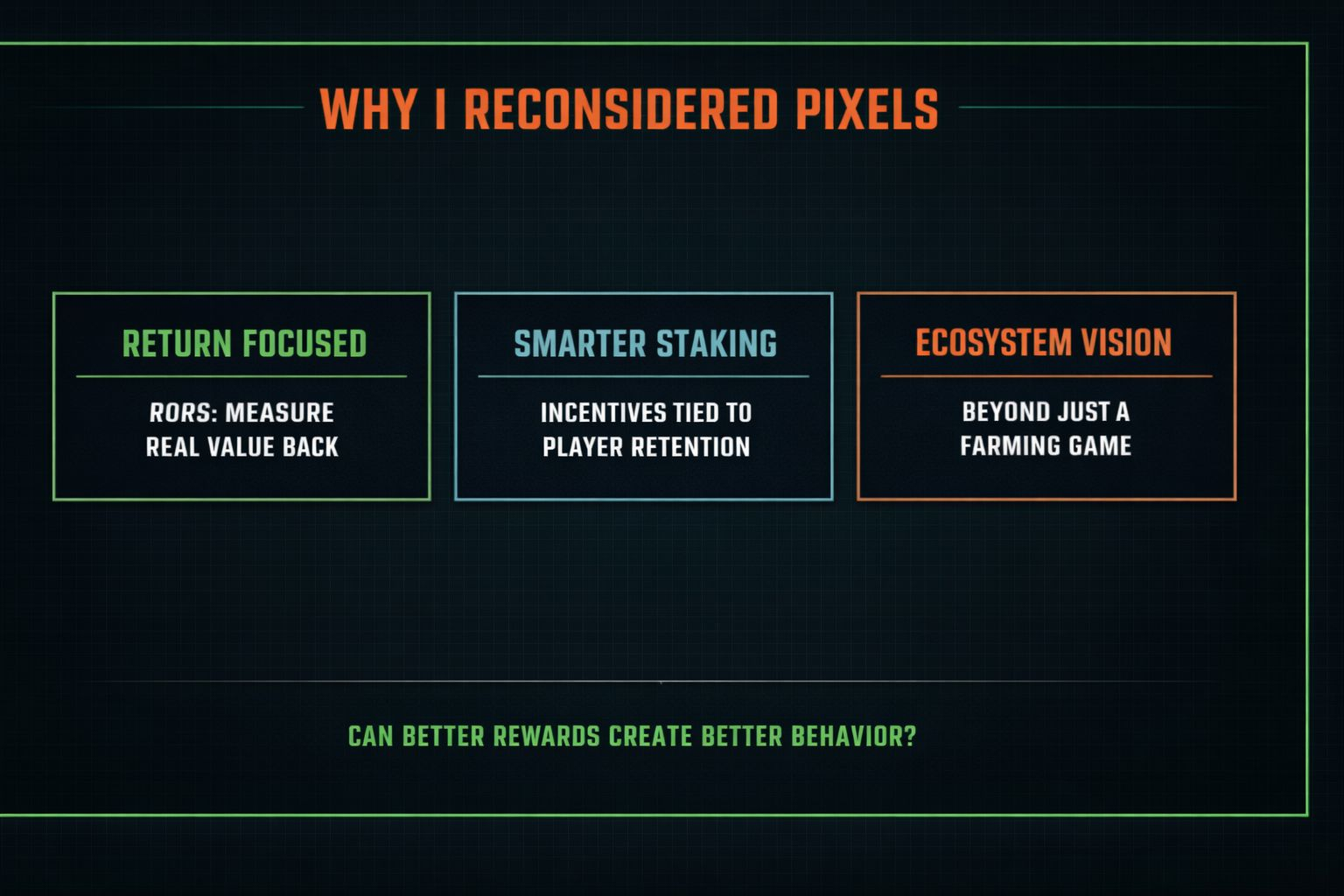
That stood out to me because most GameFi systems fail in a very predictable way. They reward the wrong behavior, then act surprised when the economy starts collapsing under that pressure. When incentives are broad, easy, and poorly targeted, they attract people who optimize for claiming rather than contributing. The system starts measuring activity, but not value. It looks alive on the surface while quietly training users to leave as soon as the easiest extraction path appears. I think Pixels is more interesting when viewed through that lens, because it seems to be trying to correct that exact mistake instead of pretending it never existed.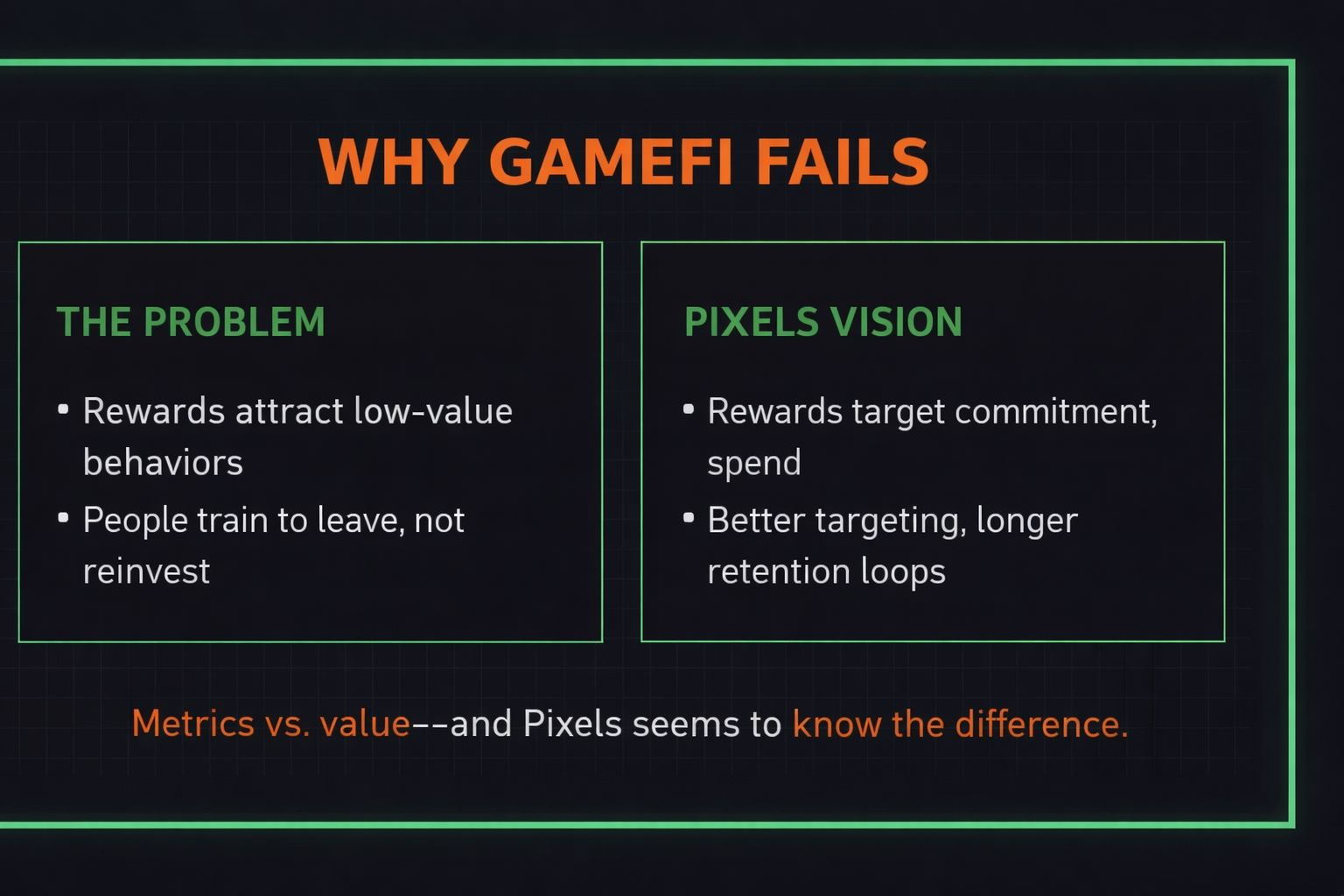
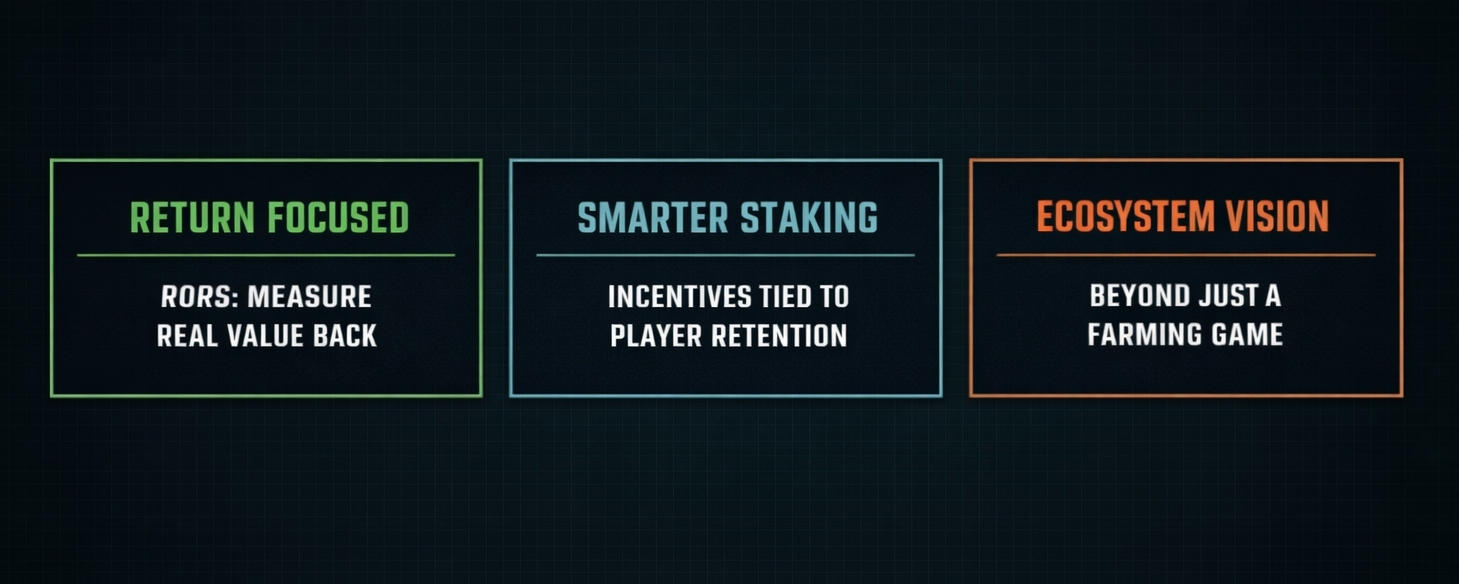
The part that pulled me in was the logic behind RORS, or Return on Reward Spend. I like that idea because it forces a harder question. If rewards go out, what actually comes back into the ecosystem? Do players stay longer, spend more meaningfully, reinvest into progression, create more social value, and strengthen the loop? Or is the project simply paying for temporary engagement that disappears once rewards cool down? To me, that is a much more serious way to think about incentives. It shifts the conversation away from emissions for their own sake and toward the quality of behavior those emissions create.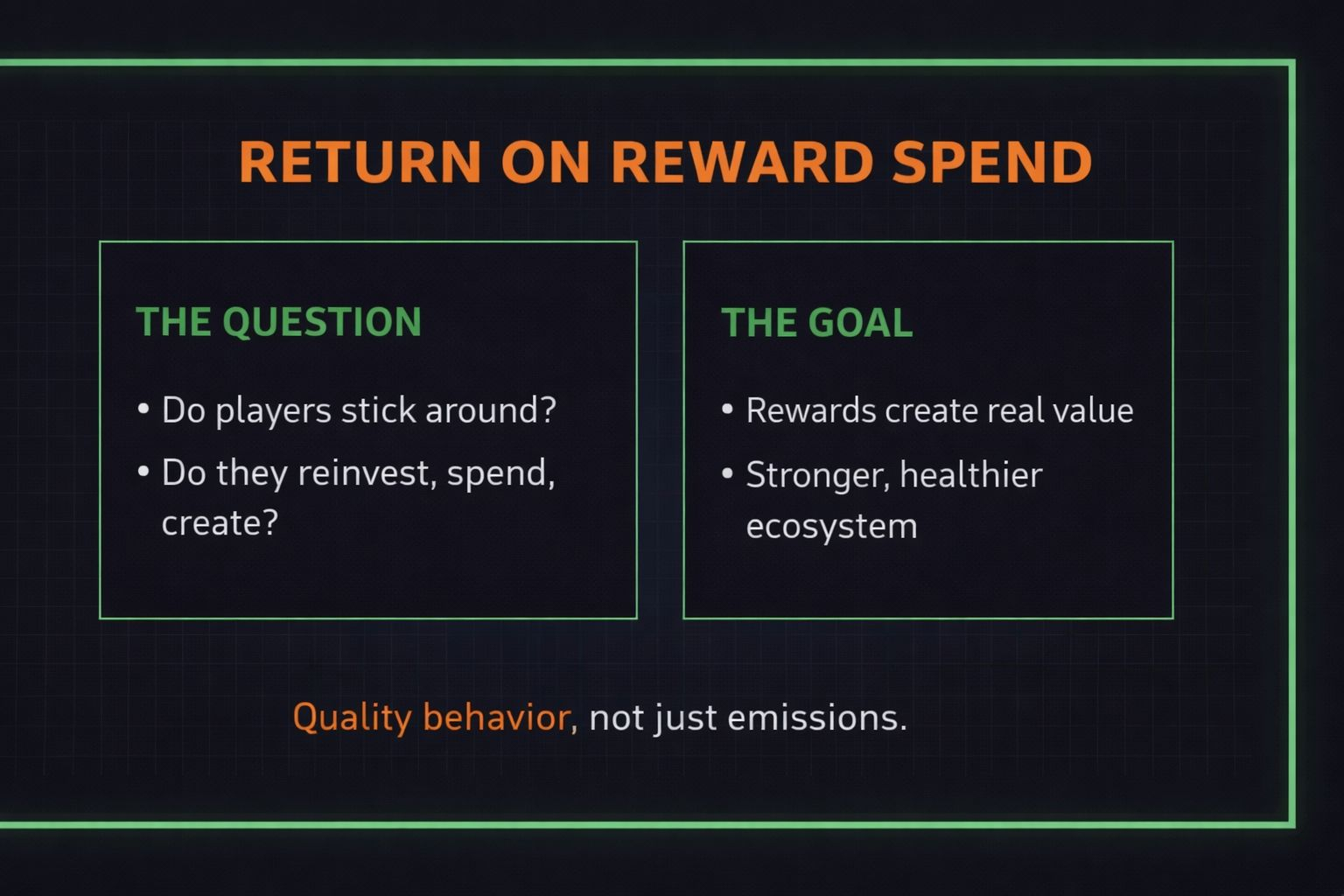
That is also where Pixels stopped feeling like just another farming game to me. The litepaper does not frame Pixels as a single isolated game forever. It points toward a wider ecosystem where data, targeting, and reward infrastructure matter just as much as content itself. The publishing flywheel is what made that click for me. Better data improves reward targeting, better targeting lowers acquisition cost, stronger economics attract more games, and those games create more reasons for players to stay inside the system. I do not read that as some perfect formula. I read it as a team trying to make rewards less blind and more connected to actual ecosystem health.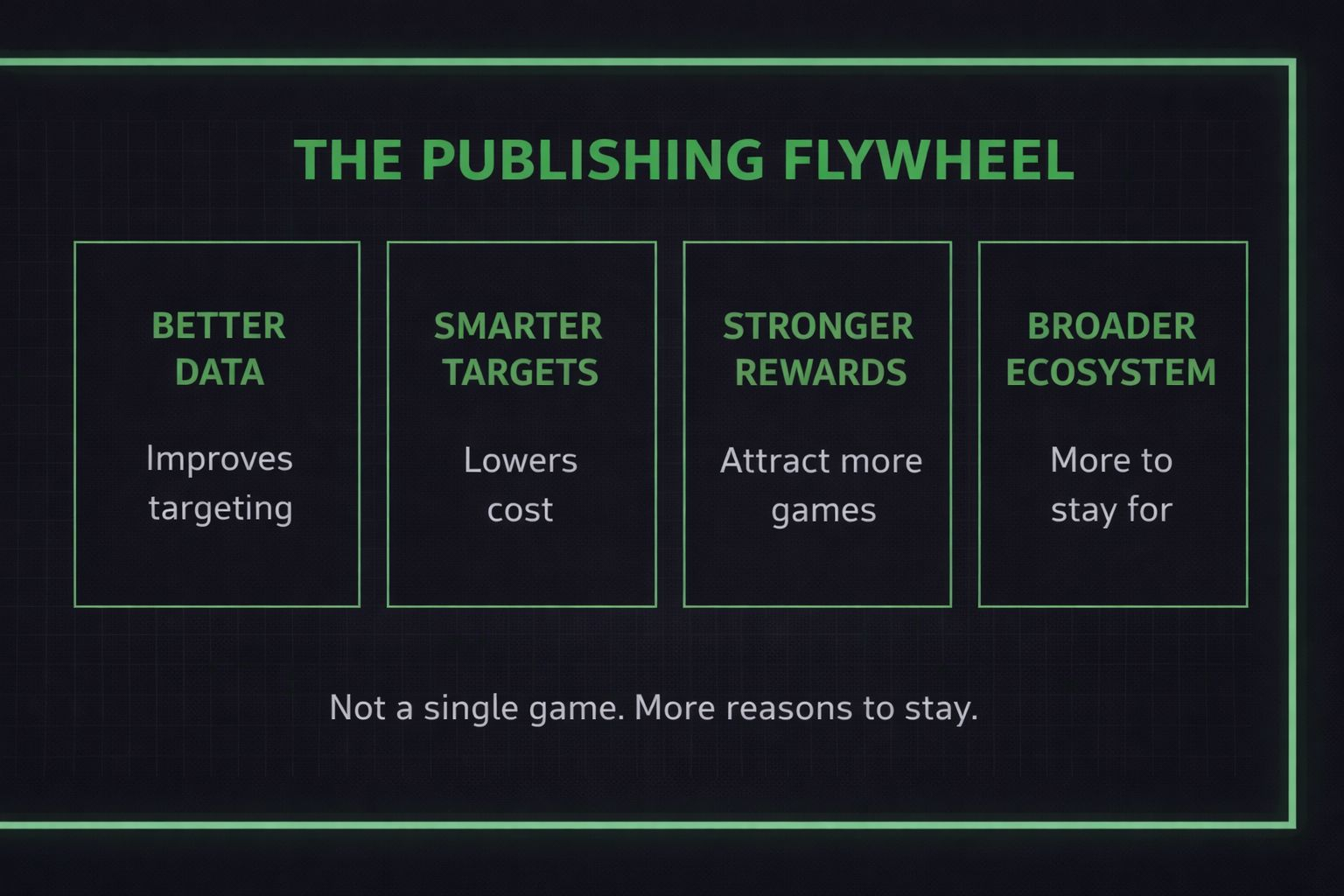
The staking direction also adds to that. Pixel is not just presented as a token floating around a game economy. It is being positioned as the core governance and staking asset, and the framing around games acting like validators competing for player support is more thoughtful than the usual token utility line. The idea, as I understand it, is that support should flow toward games that retain players and produce stronger net spend rather than just louder attention. That is a more demanding standard, and honestly, a healthier one.
The token structure around $vPIXEL also fits this same attempt to reduce pure extraction. A spend-only token backed 1:1 by PIXEL suggests the team is trying to keep more economic energy inside the ecosystem instead of letting everything immediately convert into an exit. That matters more than people admit. Many Web3 economies do not fail because players hate the game. They fail because the system gives players too few reasons to recycle value back into progression, status, or deeper participation. Pixels seems more aware of that now, and you can see it in how it talks about sinks, progression, and long-term loops.
I also think the social side matters more here than it would in a purely transactional game. Farming, exploration, creativity, progression, referrals, creator activity, and shared visibility all reinforce each other differently when the game is meant to feel lived in rather than just farmed. Ownership only becomes meaningful when it changes behavior. Do players care more, build more carefully, return more often, invite better users, and commit to the space with a longer time horizon? That is the real test for me. Not the headline number, not short-term DAU spikes, and definitely not token excitement by itself.
That said, I do not see any of this as magic. A system like this can still fail if the gameplay gets stale, if incentives are misconfigured, if content stops evolving, or if the data layer starts optimizing shallow behavior instead of valuable participation. Reward design can become smarter and still miss the human side of why people stay. That is why I think Pixels deserves attention, but not blind praise. Sustainable game economies are difficult because fun, progression, spending, and social commitment all have to work together. If one part weakens, the whole loop feels it.
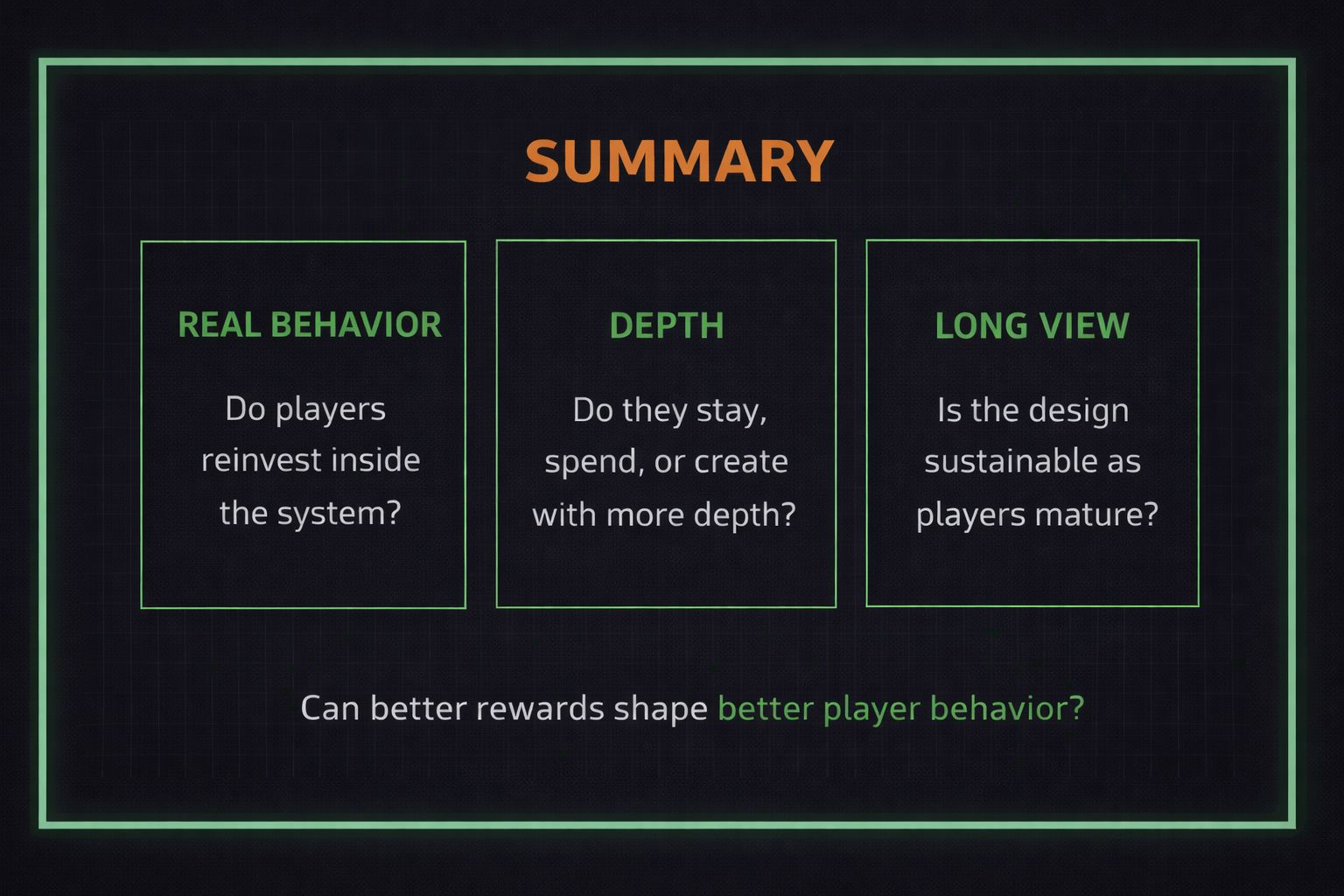
What made me reconsider @undefined is simple. I am less interested now in whether a Web3 game can purchase activity for a season, and more interested in whether it can shape behavior that compounds over time. I pay attention when a project starts treating incentives as something that must earn their place, not just inflate a chart. With $PIXEL, the more meaningful test to me is whether players actually stay, spend, create, refer, and participate with more depth as the system matures. If that happens, then the reward design is doing real work. If not, it is just a better-looking version of the same old problem.
So the question I keep coming back to is this: can Pixels turn better reward design into better long-term player behavior, not just better numbers on the surface?