I didn’t really understand what Stacked was at first.
From the outside, it just looked like another reward layer. Play, earn, come back. The usual loop.But after spending time inside Pixels, something felt different. Rewards didn’t feel random, and they didn’t feel fixed either. They felt timed.
Not in a scheduled way. More like the system was reacting to something.
I noticed it the first time I came back after being inactive. I wasn’t expecting anything. Just logged in to run a normal loop. Farming, moving around, nothing special. But the way rewards showed up felt slightly off from what I was used to. Not bigger. Not smaller. Just placed differently.
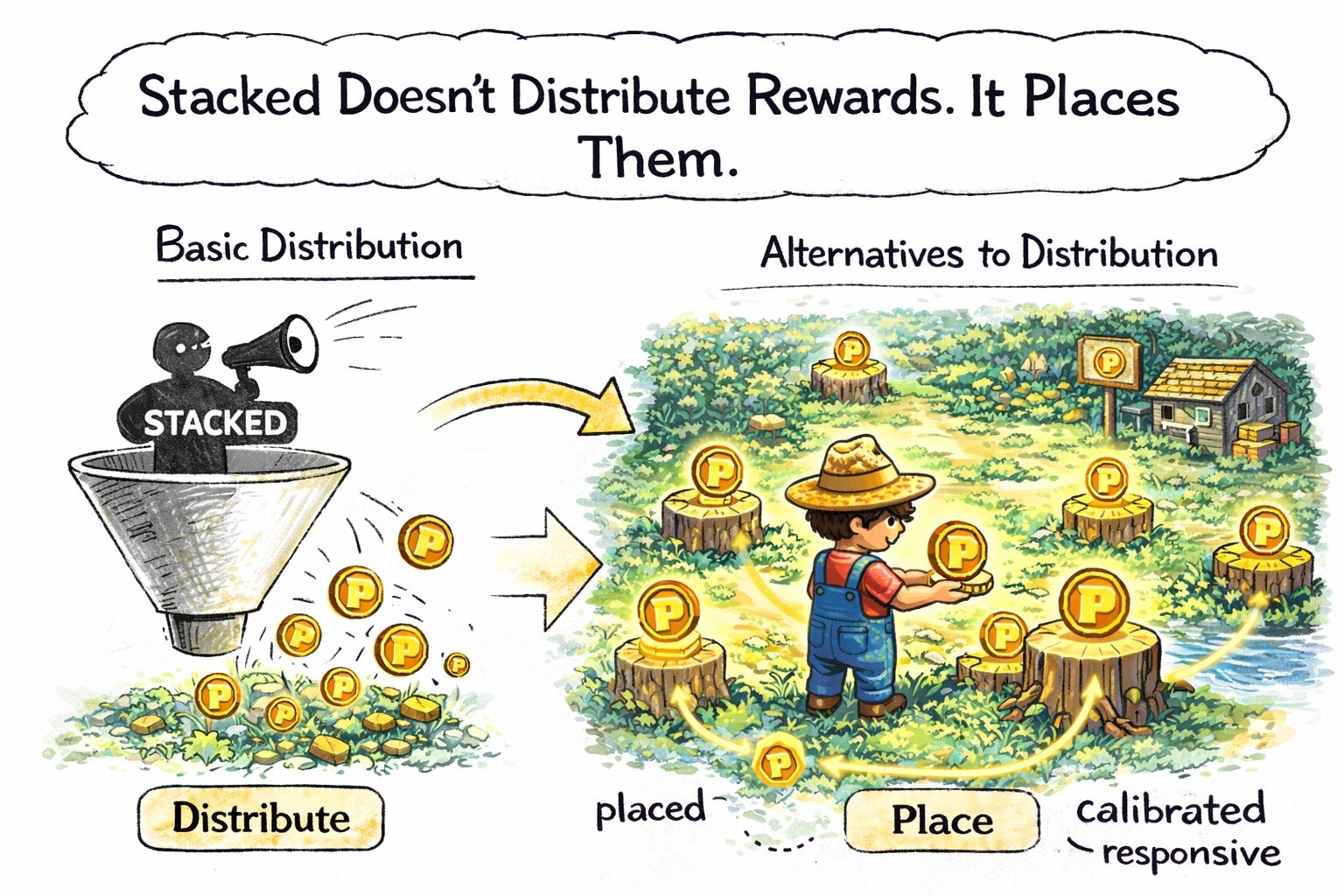
That’s when it started to make sense. Stacked isn’t really about distributing rewards. It’s closer to managing attention.
Every action inside Pixels becomes a signal. Playing, leaving, slowing down, coming back. None of it disappears. It all feeds into the system. And instead of waiting for patterns to finish, the system reads them while they’re forming.
That changes everything.
Most reward systems are built around fixed outputs. Do something, get something. But Stacked doesn’t think in terms of fixed rewards. It thinks in terms of timing.
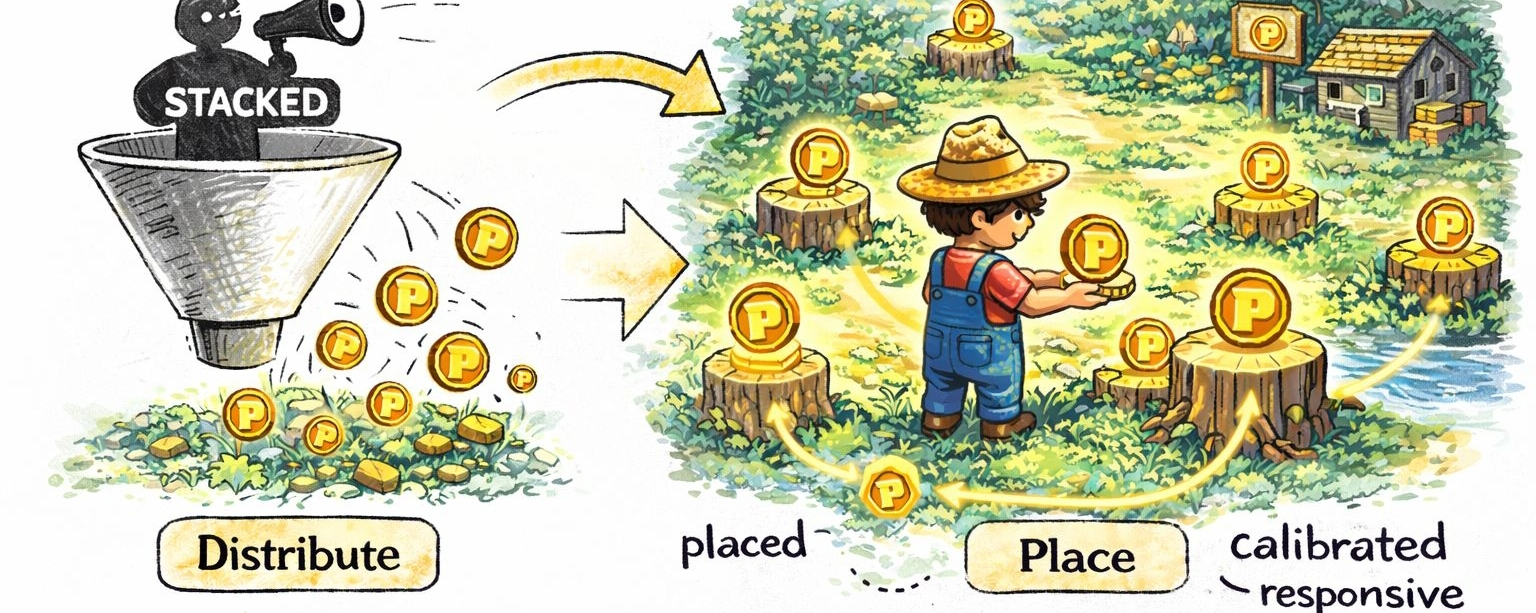
It doesn’t decide how much value to give. It decides when value should enter the system. And that small shift creates a completely different experience.
Because now rewards are not just incentives. They become responses. If activity is dropping, the system doesn’t panic. It nudges. If engagement is high, it doesn’t overpay. It compresses. The flow adjusts quietly in the background, without making it obvious.
It’s not reacting after things happen. It’s shaping what happens next.
I started noticing this more when I changed how I played. Same actions, different timing. The results didn’t match what I expected. Not because I played better or worse, but because the system around me had already shifted.
That’s when it clicked.
Staked is not a reward engine. It’s a LiveOps layer. And LiveOps here doesn’t mean events or campaigns. It means the system is constantly adjusting itself based on real player behavior. Not weekly updates. Not manual changes. Continuous adjustment.
It decides who gets pulled back into the system and when. That’s also where $PIXEL fits in differently.
It’s not just a reward token sitting at the end of a loop. It’s part of how these adjustments actually execute. Every time value moves, every time the system nudges behavior, the token is involved in that flow.
So instead of asking where utility comes from, it makes more sense to look at how often the system needs to act.
Because every action is tied to behavior. And behavior is always moving.
That’s why it doesn’t feel like a typical game economy. It feels like something that is constantly watching, adjusting and rebalancing itself while people are inside it.
Not loudly.
Not aggressively.
Just enough to keep things from breaking.
And once you see that, it’s hard to unsee.
You’re not just playing a game.
You’re moving inside a system that is quietly deciding how value should behave around you.