

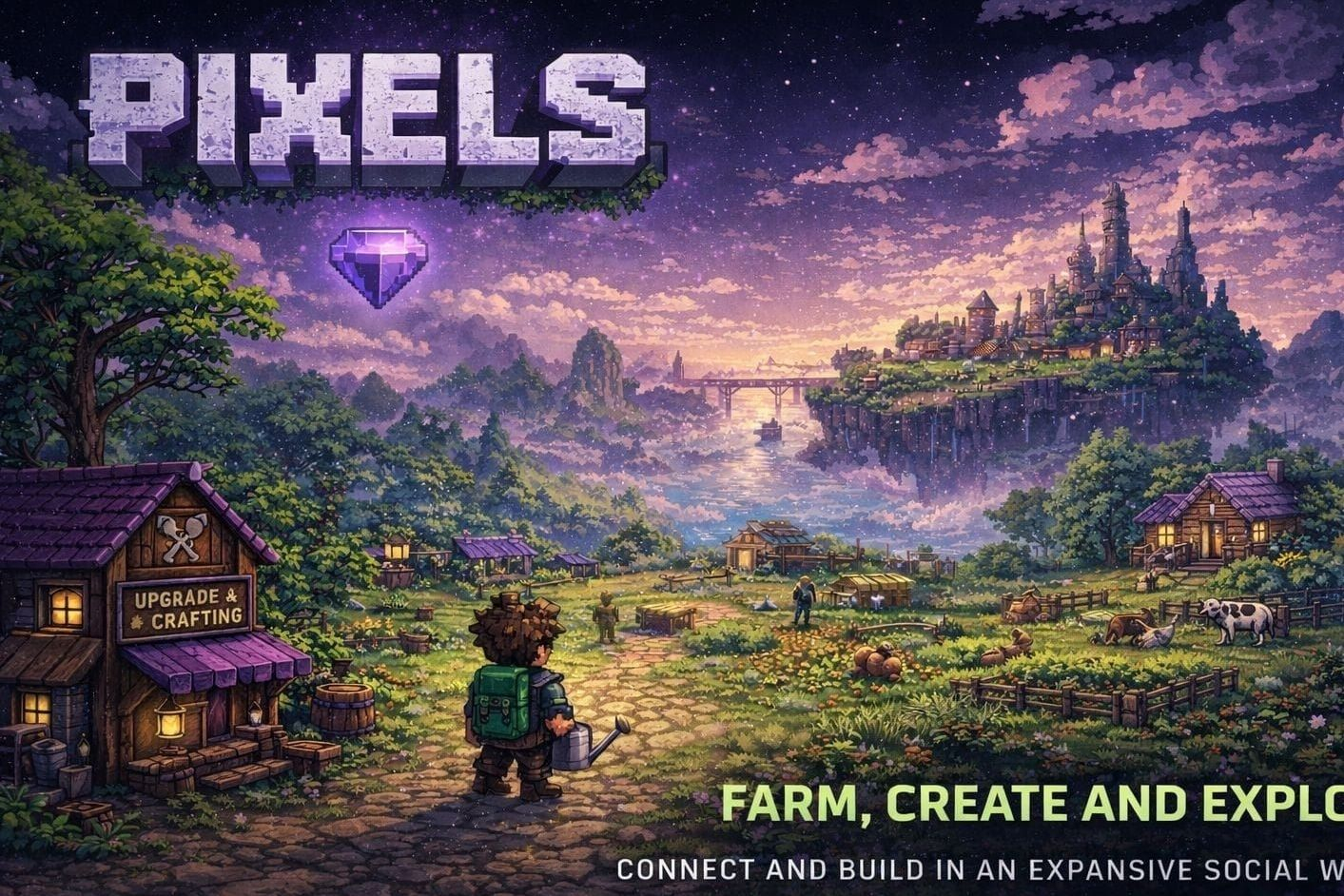
One of the projects that have taken Web3 gaming even further and away from speculation and closer to long term utility is Pixels. The best aspect of the Pixels thesis is straightforward the thesis is not attempting to be another game with a token attached to it. Rather, it is creating a platform in which digital collectibles and player ownership and a community driven gameplay are integrated into the core design. According to the official Pixels site, the world is based on the idea of playing with friends, owning progress on-chain, and creating experiences that are designed to last, and not dissipate once the initial hype is over. It also emphasizes on a huge and engaged players base and this is important since real economies require real users, not just short term incentives.
The biggest change in the Pixels ecosystem is the transition to a staking based model of PIXEL. Based on the official help center, staking pixel should work to put the token into place on various game projects, assist with development and growth, and open the door to future benefits depending on each project. The staking FAQ adds that PIXEL staking is a way to support games in the Pixels ecosystem, with 100% of Farmer Fee revenue refunded to stakers. It is a valuable design option as it matches the participation with value capture, rather than constant token emission.
It is here that Pixels becomes different to the older play-to-earn narrative. According to the official whitepaper, the project is overcoming the flaws of traditional play-to-earn with focused rewards, considerate economic systems, and enhanced incentive alignment. That is, it is not aimed at rewarding activity, but authentic contribution. Such an attitude is essential to sustainability since it can lessen the strain that tends to shatter in-game economies: over-rewarding bad behavior, promoting the use of bots, and causing inflation that ultimately harms real players.
The ecosystem remains growing too, not within one game loop. The official blog of Ronin affirmed that Pixels had moved to Ronin and that pixel was the ecosystem token that was running the experience. More recently, Ronin also announced that Pixels and Forgotten Runiverse had partnered, providing new opportunities to earn and spend pixel in another giant Web3 game. That is important since multi game utility is one of the most evident indicators that a token can be in a long term demand. When a token is useful in over one experience, it is more than speculative, it is functional
The interesting thing about Pixels is not simply that it has a token, staking, or has an expanding ecosystem. All of these pieces are being used to construct a more balanced digital economy, it is. Players are not considered as liquidity sources in the short run. Instead, they are included in a bigger network where ownership, rewards, progression, and ecosystem involvement are interrelated. Web3 gaming will require more sustainable projects instead of hype driven projects in order to mature. It seems that pixels is constructing in that direction.