
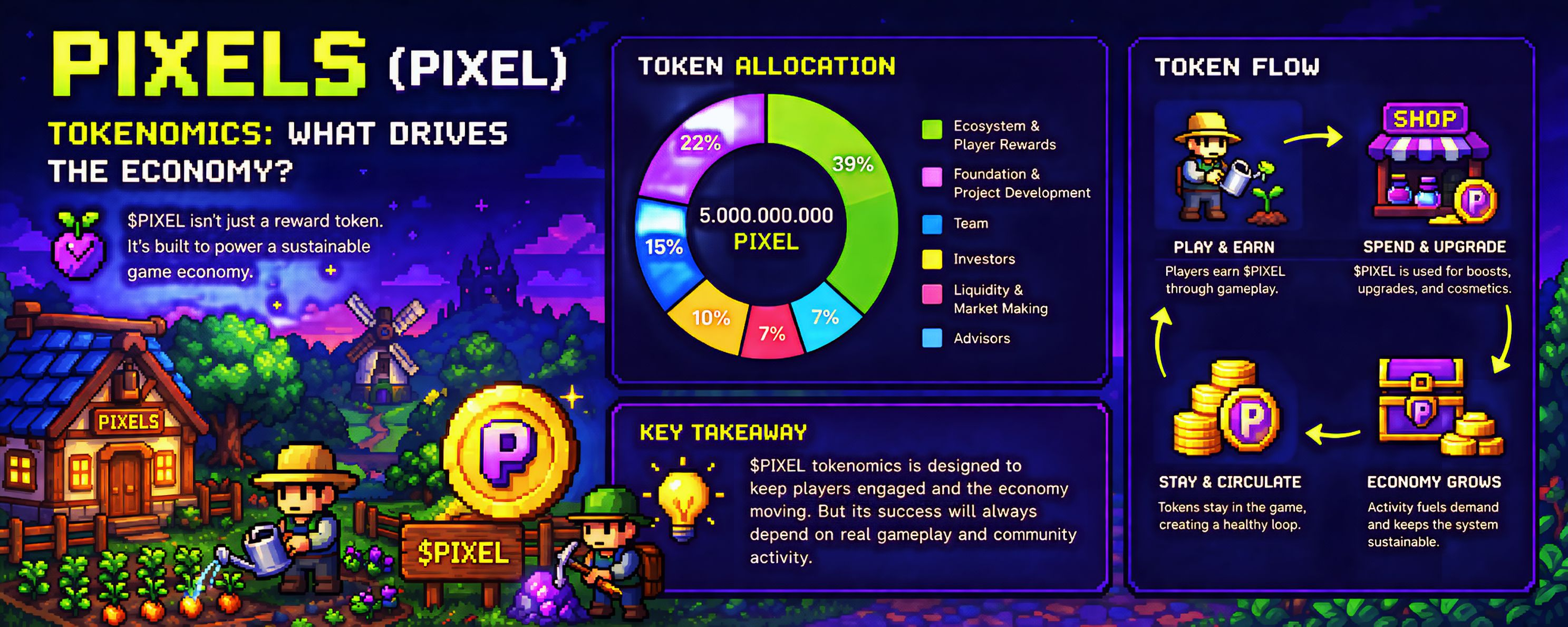
I thought $PIXEL tokenomics would be the usual mess… but it’s actually more structured than I expected 👇
I decided to break down PIXEL tokenomics separately. Usually, this is the weakest part of GameFi — inflation, constant selling, and everything depends on new players coming in.
But I took a deeper look… and the model turned out to be a bit more interesting.
📊 First thing I noticed:
max supply is around 5B $PIXEL
and a significant portion is allocated to players and the ecosystem
👉 rewards
👉 project development
👉 long-term incentives
I also noticed the distribution doesn’t look like a “quick exit” setup for investors
yes, there are allocations for the team and funds
but the core logic is supporting in-game activity
And this is where it gets important.
I analyzed how the token flows inside the system:
👉 players earn PIXEL
👉 spend it on boosts and upgrades
👉 part of it returns back into the economy
So the model is trying to create a loop,
not just distribute tokens and hope for price growth
But let’s be real — I also checked the risks
if new player inflow slows down
or current players stop spending
the whole system starts to break
My takeaway:
PIXEL tokenomics isn’t a “perfect solution”
but it’s an attempt to move away from the old GameFi model
And systems like this don’t depend on the token alone
they depend on whether people actually keep playing
I don’t see an easy story here
but I do see an experiment that either works…
or repeats the fate of previous projects
What do you think —
can this tokenomics model survive the market…
or will it still depend on constant new users? 👀
👉 @Pixels 👀
👉 $PIXEL 💯 👇
