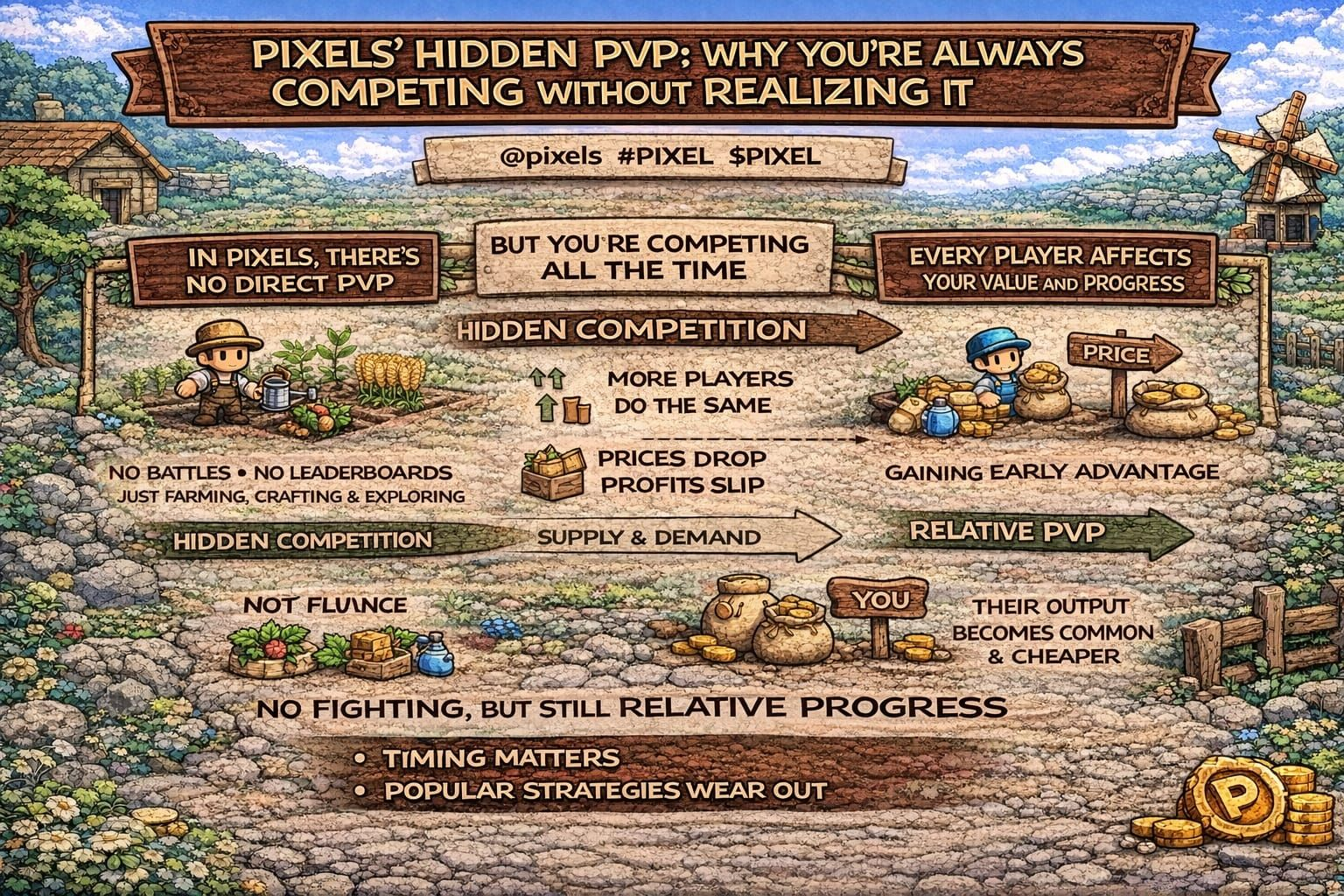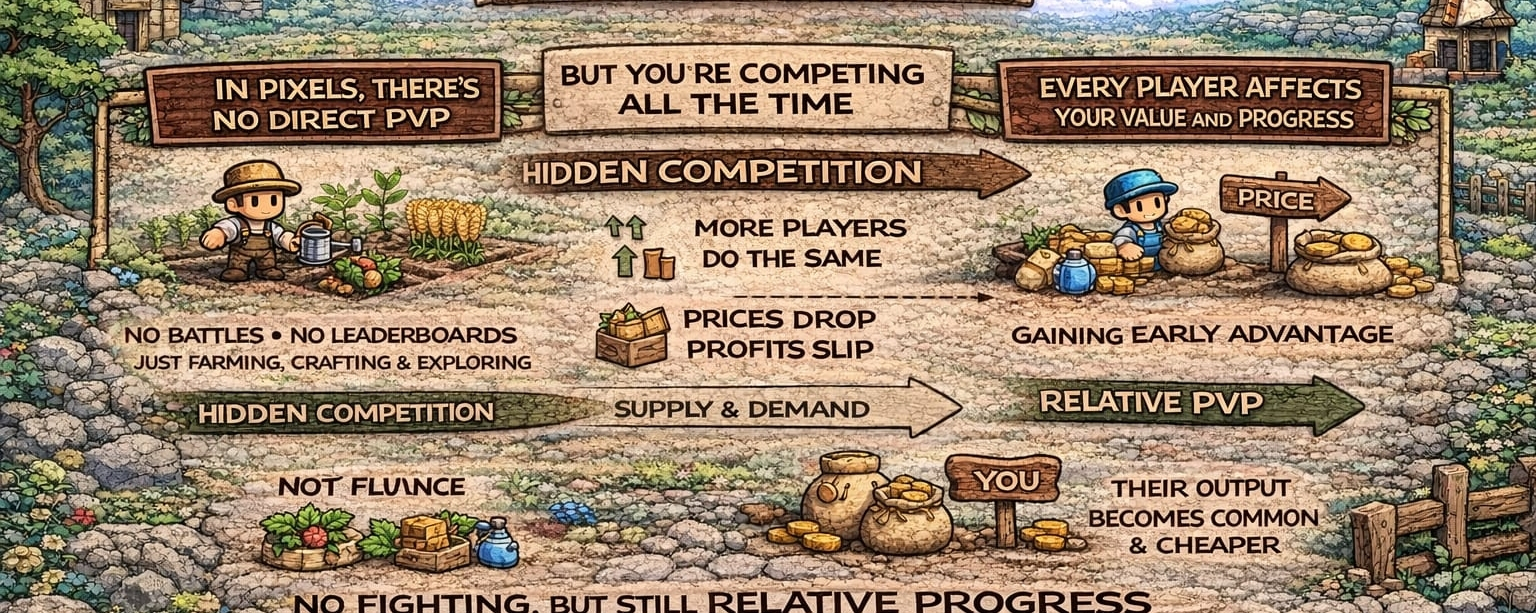
Zawsze konkurujesz w Pixels. Dziwne jest to, że nigdy nie widzisz, z kim konkurujesz.
To właśnie sprawia, że system jest łatwy do niezrozumienia. Nie ma walki, nie ma bitew, nie ma bezpośredniej interakcji, w której wygrywasz lub przegrywasz z innym graczem. Czujesz się spokojnie, niemal w izolacji. Uprawiasz, tworzysz i poprawiasz swoje ustawienia w swoim własnym tempie.
Ale ta spokojna powierzchnia ukrywa coś ważnego.
Każda akcja, którą podejmujesz, odbywa się w ramach wspólnej gospodarki. A to oznacza, że każdy inny gracz cicho kształtuje twoje wyniki.
Konkurencja nie jest bezpośrednia. Jest strukturalna.
Na początku też tego nie zauważyłem. Wszystko wydawało się osobiste. Moje farmy, moje decyzje, mój postęp. Ale z czasem pewne wzorce zaczęły się powtarzać. Strategia wydawała się silna, a potem nagle słabsza. Pętla, która działała dobrze w jednym tygodniu, wydawała się przeciętna w następnym.
Nic w grze nie wyjaśniło dlaczego.
Powód jest prosty. Inni gracze robili to samo.
Wyobraź sobie wspólną pętlę. Grupa graczy odkrywa, że pewna uprawa i ścieżka rzemieślnicza przynosi dobre zyski w $PIXEL . Na początku działa dobrze. Wynik wydaje się wartościowy, a pętla wydaje się efektywna. Naturalnie, więcej graczy zaczyna to kopiować.
Gdy to się dzieje, coś się zmienia.
Te same zasoby stają się bardziej powszechne. Te same wytworzone wyniki tracą względną wartość. Pętla wciąż działa, ale nie tak dobrze jak wcześniej. Żaden notatka aktualizacyjna ci tego nie mówi. Żadne ostrzeżenie się nie pojawia. Ale twoje wyniki cicho się zmieniają.
Ta zmiana to konkurencja.
Nie dlatego, że ktoś cię zaatakował, ale dlatego, że zbyt wielu graczy podjęło tę samą decyzję.
Tutaj Pixels staje się ciekawszy, niż wygląda. Gra tworzy PvP bez konfliktu. Gracze nie walczą ze sobą, ale nieustannie wpływają na siebie poprzez wspólne systemy. Każda decyzja dodaje presję w pewnym miejscu w gospodarce.
Dlatego postęp w Pixels jest względny.
Możesz się rozwijać i wciąż pozostawać w tyle.
Jeśli inny gracz znajdzie lepszą pętlę, dostosuje się szybciej lub unika zatłoczonych strategii, wyprzedza cię. Twój postęp może wyglądać dobrze sam w sobie, ale w systemie pozycja zawsze się zmienia.
Ta idea zmienia sposób, w jaki postrzegasz wszystko.
Pamiętam, jak porównywałem dwóch graczy. Jeden był bardzo aktywny, zawsze podążał za popularnymi strategiami, robiąc to, co wydawało się efektywne w danym momencie. Drugi był wolniejszy, bardziej selektywny, unikał zatłoczonych ścieżek i dostosowywał się w oparciu o to, co robili inni.
Po pewnym czasie drugi gracz miał lepsze wyniki.
Nie dlatego, że pracowali więcej.
Ponieważ lepiej się pozycjonowali wewnątrz systemu.
To jest prawdziwa warstwa, którą większość ludzi pomija.
W Pixels nie zarządzasz tylko zasobami. Nawigujesz w wspólnym środowisku, w którym wszyscy wpływają na wartość. Jeśli zbyt wielu graczy produkuje to samo, traci na sile. Jeśli mniej graczy koncentruje się na danej ścieżce, staje się bardziej atrakcyjna.
To tworzy ruchomy cel.
Najlepsza strategia nie jest ustalona. Zmienia się, gdy gracze się poruszają.
Ten projekt ma cel. Zapobiega, aby gra stała się statyczna. Jeśli jedna strategia pozostałaby dominująca na zawsze, system stałby się przewidywalny i płytki. Zamiast tego Pixels pozwala zachowaniom graczy kształtować gospodarkę w czasie.
Dzięki temu wydaje się bardziej żywy.
Ale to również stwarza wyzwania.
Pierwszym wyzwaniem jest widoczność. Większość graczy nie zdaje sobie sprawy, że konkurują. Gdy strategia przestaje działać, wydaje się to mylące. Mogą myśleć, że system jest niespójny, gdy w rzeczywistości reaguje na zachowanie graczy.
Drugim wyzwaniem jest zachowanie tłumu. Gracze naturalnie kopiują to, co działa. Ale w wspólnym systemie kopiowanie zmniejsza skuteczność. Im bardziej strategia się rozprzestrzenia, tym słabsza się staje. To tworzy cykl, w którym gracze gonią za wczorajszą przewagą.
Trzecim wyzwaniem jest adaptacja. Aby wyprzedzić innych, gracze muszą się dostosować. Wymaga to świadomości. Musisz zauważyć zmiany, kwestionować popularne ścieżki i czasami podjąć mniej oczywiste trasy.
Nie wszyscy tak robią.
Tam pojawia się przewaga.
Jedna idea, która utkwiła mi w głowie podczas myślenia o tym, jest prosta. W Pixels nie walczysz z graczami, konkurujesz z ich decyzjami.
To wyjaśnia, dlaczego system wydaje się inny niż tradycyjne gry. Nie ma wyraźnego przeciwnika, ale jest stała presja. Ta presja pochodzi z kolektywnego zachowania.
To również wyjaśnia, dlaczego kopiowanie rzadko prowadzi do długoterminowego sukcesu. W momencie, gdy strategia staje się popularna, już traci na sile. Najwięcej zyskują zazwyczaj ci, którzy działają wcześniej lub inaczej.
Z perspektywy projektowania to mądra strategia. Dodaje głębi bez dodawania agresji. Gracze mogą doświadczyć konkurencji bez konfliktu. Gra pozostaje dostępna, ale wciąż nagradza myślenie i adaptację.
To również ściśle łączy się z rolą $PIXEL in systemie. Wartość zasobów i wyników nie jest stała. Zależy od tego, jak zachowują się gracze. Jeśli aktywność koncentruje się w jednym obszarze, wartość przesuwa się gdzie indziej. Token staje się częścią dynamicznego przepływu kształtowanego przez decyzje.
Więc każdy gracz staje się częścią rynku.
Nawet jeśli tylko spokojnie uprawiają.
To ma długoterminowe konsekwencje. Taki system może działać bez stałego zewnętrznego wkładu. Ewoluuje poprzez zachowanie graczy. Dopóki gracze wciąż wchodzą w interakcje, gospodarka wciąż się zmienia.
Ale to również oznacza, że gracze muszą zmienić sposób myślenia.
Jeśli traktujesz Pixels jako doświadczenie solo, pomijasz głębszą warstwę. Twój postęp nie jest izolowany. Istnieje w sieci innych graczy podejmujących podobne decyzje.
Gdy to zobaczysz, twoje podejście się zmienia.
Zaczynasz szukać mniej zatłoczonych ścieżek. Kwestionujesz popularne strategie. Zwracasz uwagę na wzorce zamiast tylko za nimi podążać. Myślisz o pozycjonowaniu, nie tylko o aktywności.
Wtedy ukryte PvP staje się jasne.
Zawsze tam było.
Tylko nie w sposób, którego większość ludzi się spodziewa.