
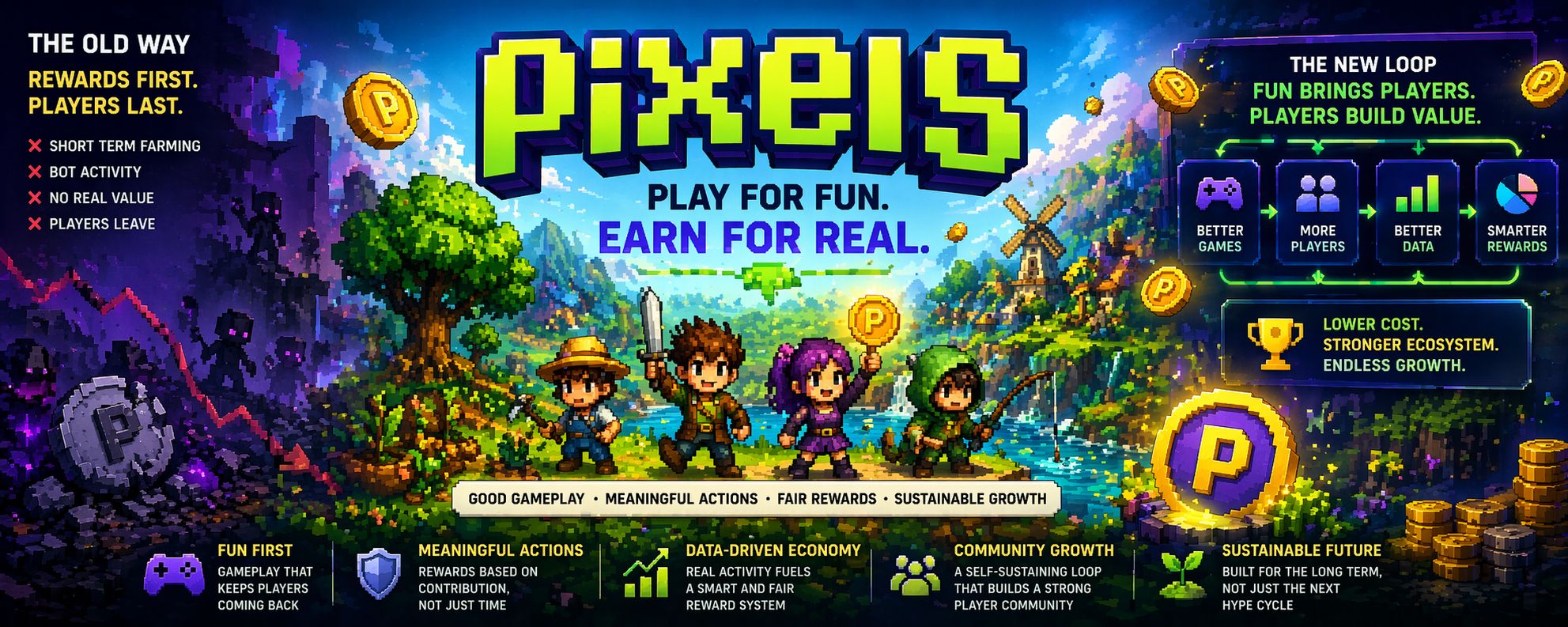

Most Web3 games didn’t fail by accident… they were built around the wrong incentives.
People didn’t join for the game, they joined for rewards. And the moment those rewards slowed down, everything collapsed. That’s been the pattern again and again.
This is exactly where Pixels is trying to do something different.
Instead of pushing earning as the main attraction, the focus is flipped. Gameplay comes first. And not just as a feature, but as the core reason to stay. That might sound simple, but it’s something most projects completely ignored. They built token economies first and hoped the game would catch up later. It never did.
The idea is straightforward. If a game is genuinely enjoyable, you don’t need to constantly pay users to keep them around. That changes the entire dynamic. Retention becomes natural instead of forced.
This is where $PIXEL starts to feel different compared to most Web3 gaming projects.
But the more interesting part is how rewards are handled.
Most systems treated rewards as something equal for everyone. Spend time, get tokens. Simple. But also flawed. It encouraged farming, bots, and low-effort activity that didn’t actually add value.
Here, the approach is more selective.
Rewards are tied to what players actually do and how much that activity contributes to the ecosystem. Not all actions are treated the same. And honestly, that makes more sense. Rewarding everyone equally was never really fair, it just looked fair on the surface.
This shift moves the focus from grinding to contributing. In theory, that could reduce a lot of the noise that usually destroys Web3 game economies.
At the same time, this is where things can get tricky.
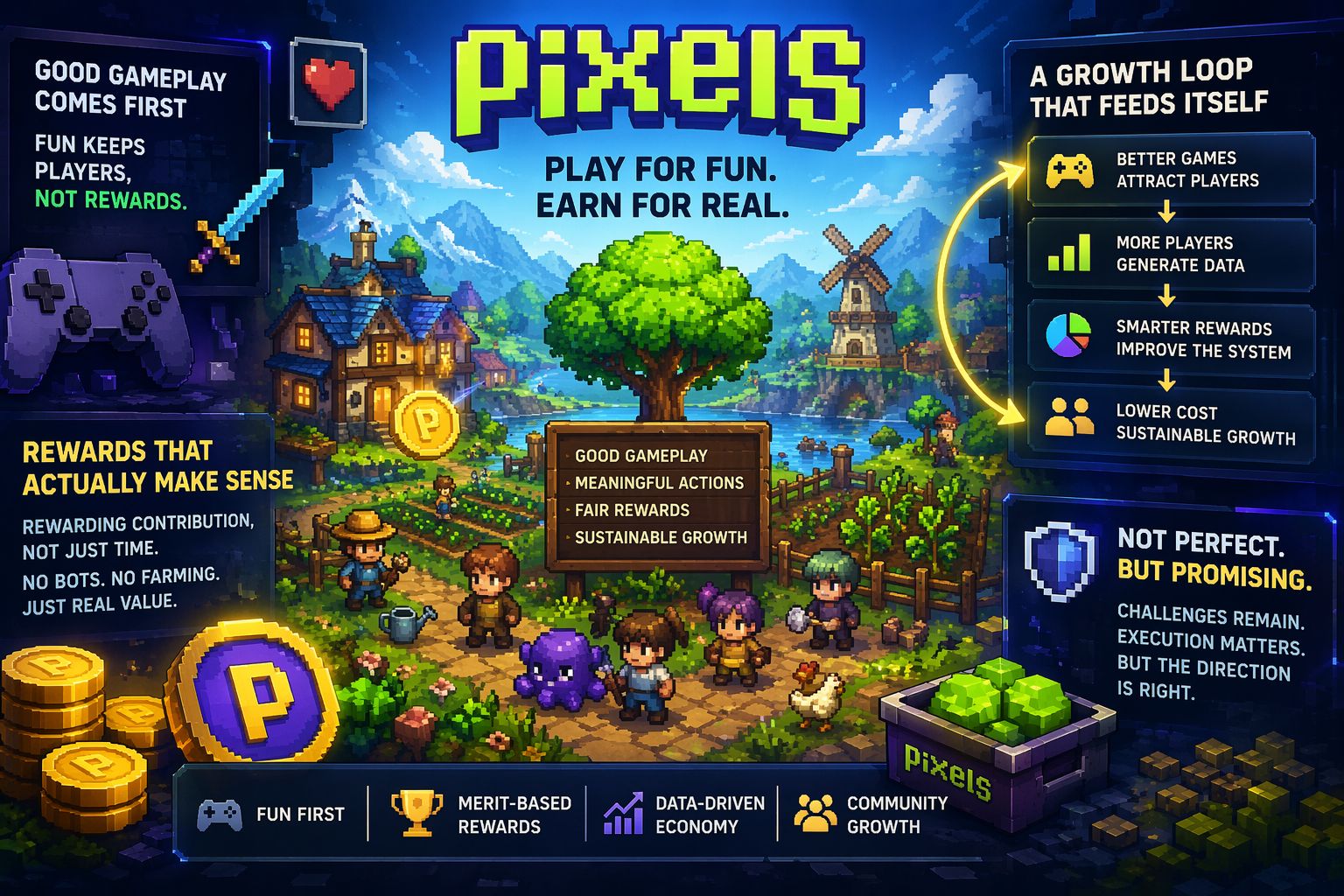
Once rewards depend on data and behavior tracking, it introduces a layer of uncertainty. Players might not fully understand how value is calculated. And if that system isn’t clear or balanced, it can easily lead to trust issues.
So while the idea is strong, execution becomes everything.
Another piece that stands out is how growth is structured.
Instead of chasing users through constant promotions, the model is designed like a loop. Better games bring in more players. More players generate better data. That data improves how rewards are distributed, which lowers the cost of acquiring new users. And then the cycle repeats.
It’s a system that feeds itself if it works properly.
The key difference here is that growth is tied to actual usage, not just hype. That’s something most projects never managed to achieve.
Still, none of this guarantees success.
Building a game people genuinely enjoy is already difficult. On top of that, managing a reward system that feels both fair and effective adds another level of complexity. And if the balance leans too far toward control, it could start to feel less like Web3 and more like a traditional system.
That balance is going to decide everything.
But one thing is clear. Pixels is not just trying to increase rewards or attract short-term users. It’s trying to fix the reason why players leave in the first place.
And if that actually works, it won’t just be another Web3 game token. It could be a shift in how these ecosystems are built.