
There are rare moments in digital spaces when a
project stops feeling like a product and begins to feel like a place. Not a pitch.
Not a temporary experience. But something people slowly start to inhabit. Pixels is moving in that direction.
Not through loud promises or aggressive marketing, but through quiet, consistent design decisions that shape how people interact with the world, return to it, and eventually stay.
What makes Pixels interesting is not just its blockchain integration or token structure. It is the emotional rhythm it is building.
A feeling that time spent inside the game is not lost or disposable, but retained. Not only as currency or numbers, but as something deeper experience that slowly accumulates meaning.
This is where Pixels begins to separate itself
from many traditional Web3 experiments.
NOT JUST A LOOP, BUT A CONTINUOUS SYSTEM
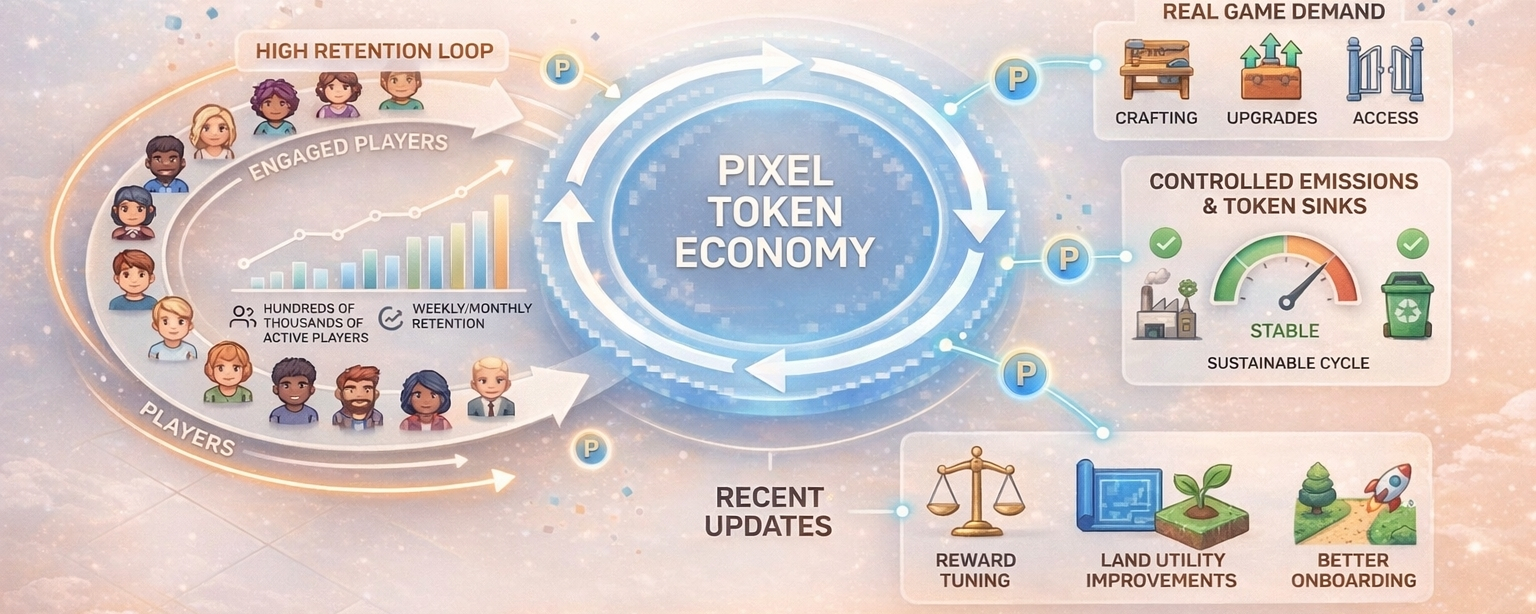
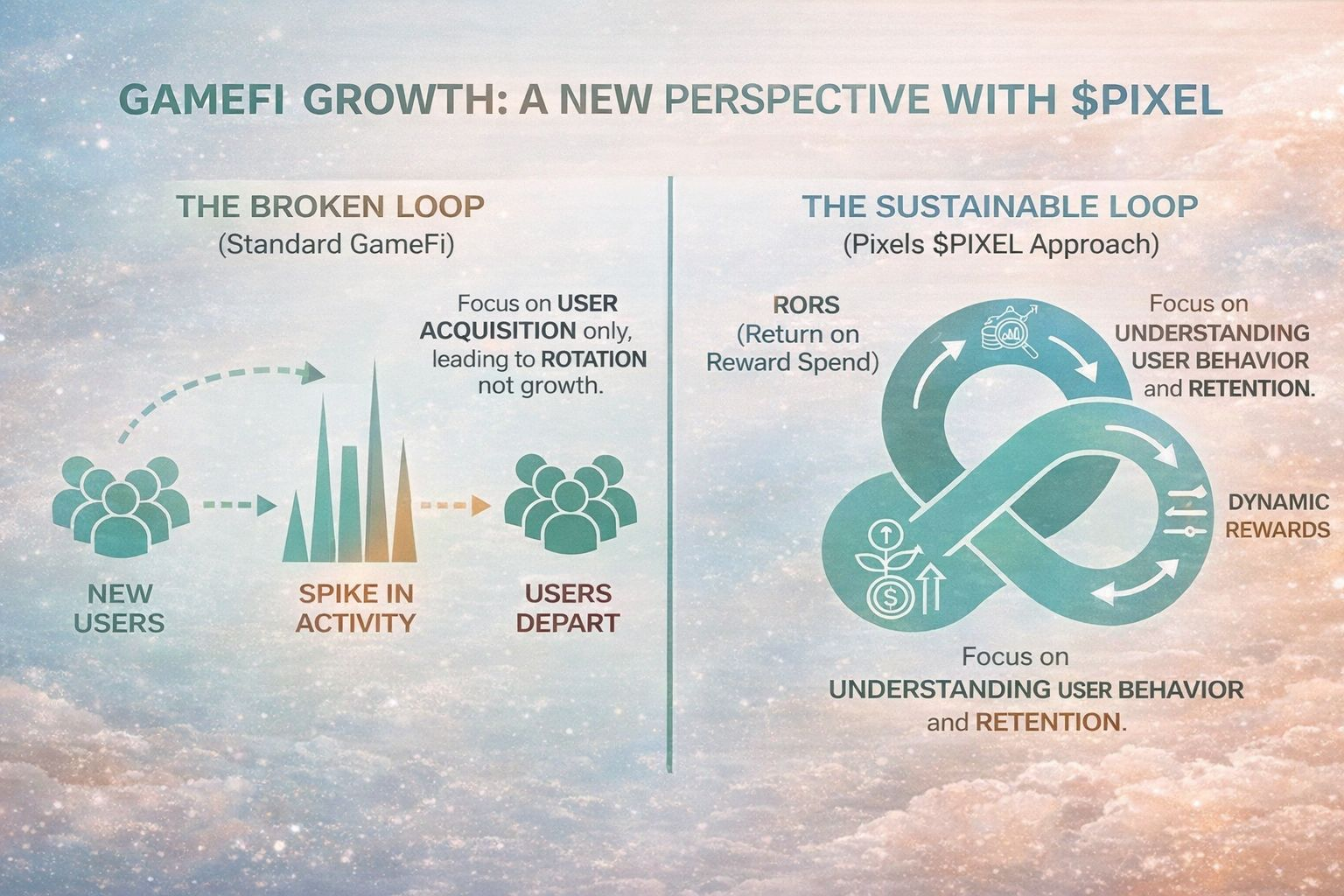
Most games are built around repetition. You complete a task, receive a reward, and reset the cycle. Over time, this loop becomes predictable. Efficient, but shallow. Pixels attempts to shift this structure into something more continuous. Instead of isolated mechanics, its systems are interconnected.
Farming feeds into crafting. Crafting supports progression. Progression connects to ownership. Ownership expands influence within the world.
Nothing exists in isolation. Each action feeds into another layer, creating a system that feels less like a loop and more like an evolving environment.
The result is subtle but important. The world does not feel like it resets around the player. It feels like it continues forward. So when a player returns, they are not starting from zero. They are re entering something that has moved, changed, and progressed. That single shift changes how time feels inside the experience.
THE POWER OF SMALL ACTIONS
At the center of Pixels is a simple but powerful idea: people stay where their actions feel meaningful. Not necessarily large or dramatic actions, but small, consistent ones. Planting crops. Crafting tools. Managing land. Moving resources. Individually, these actions are simple. Almost ordinary.
But when the system remembers these actions and reflects their impact over time, they begin to feel significant. This creates a quiet psychological loop. You act today. The world responds later. You return and notice the difference.
Over time, this builds familiarity. And familiarity slowly turns into attachment. Not forced through rewards or pressure, but formed naturally through repeated interaction. The world starts to feel responsive almost aware of your presence.
FROM OWNERSHIP TO IDENTITY
One of the strongest aspects of Pixels is land ownership. But its importance goes beyond technical control or financial value. It becomes a form of expression.
A player’s space reflects their decisions, priorities, and play style. Some optimize for efficiency, building systems that maximize output. Others focus on creativity, shaping environments that feel unique and personal. Some take a strategic approach, thinking long-term about growth and resource flow.
None of these paths are right or wrong. But each one contributes to identity. And identity changes everything. Once a digital space begins to reflect personal choices, it stops feeling temporary. It becomes something you return to not just something you use.
PROGRESSION THAT RESPECTS TIME
Modern digital experiences often prioritize speed. Fast rewards, instant upgrades, immediate satisfaction. Pixels takes a slower, more deliberate approach. Progress is tied more to consistency than intensity.
This means the system rewards presence over time rather than bursts of activity. The emotional outcome is different. Instead of chasing quick wins, players begin to notice gradual improvement. And gradual improvement feels earned.
When progress feels earned, it carries weight. It is no longer just a number increasing on a screen. It becomes something remembered. Something that reflects time, effort, and intention.
No digital environment can feel alive without its players. But many systems treat users as isolated individuals operating in parallel. Pixels leans toward shared impact.
Players are not just existing in the same space — they are shaping it together. Some build. Some explore. Some refine systems. Others simply move through the world at their own pace. Each action contributes to a larger environment.
Over time, this creates something difficult to replicate: a sense that the world is inhabited. Not empty. Not purely mechanical. But lived in. And when a space feels lived in, it begins to carry emotional weight.
TOKEN DESIGN ROOTED IN ACTIVITY
The $PIXEL token is not positioned as something separate from the game. It is embedded within the experience itself. Its value is tied to participation to what players actually do inside the system.
This design choice matters. It shifts attention away from pure speculation and toward meaningful activity. Instead of focusing only on external price movement, players focus on building, growing, and contributing within the game.
Whether this model fully succeeds depends on execution over time. But the direction is clear: value should come from behavior, not just hype.
WHAT PIXELS IS REALLY TESTING
At a deeper level, Pixels is exploring a bigger question. What happens when a digital world begins to hold time in a meaningful way?
Not just consume time. Not just entertain briefly. But retain something from it. If a system can make time feel valuable instead of temporary, it changes the relationship between the player and the platform.
It stops being just a game you played. It becomes a place you were part of.
FINAL THOUGHT
Pixels is still evolving. It is not a finished world, and it does not need to be yet. Its identity is still being shaped through design, community behavior, and economic structure.
What makes it worth paying attention to is not perfection, but direction. It is attempting to build something where players do not simply enter and exit, but return with a sense of continuity. Where progress is not just mechanical, but personal.
Whether it fully succeeds remains uncertain. But the idea it is moving toward is clear.
And that idea a digital world that retains meaning, memory, and emotional continuity may become one of the most important directions in the future of Web3.
@Pixels $PIXEL #Pixal