

There’s a quiet moment in every failing digital world, a moment no one talks about, when the rewards slow down and the players begin to disappear. Not all at once, not dramatically, but gradually, like lights going out in a city where the power grid is failing. At first, it’s just a few empty streets. Then entire neighborhoods. And eventually, what once felt alive becomes something you can scroll through in silence. This is how most Web3 games end, not with collapse, but with absence.
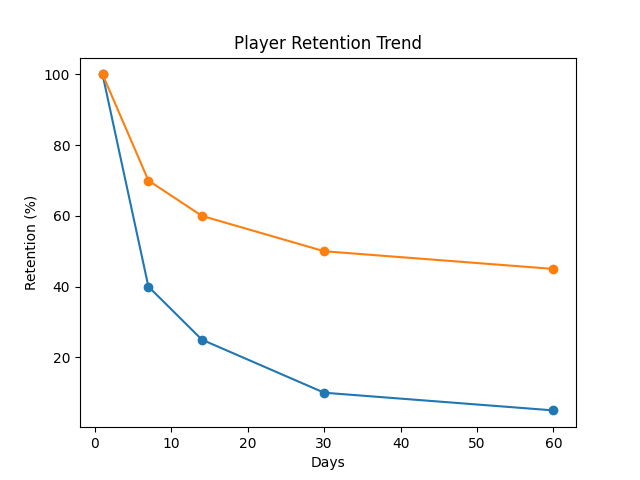
The promise was always seductive. A game where your time has value, where effort translates into ownership, where playing is no longer just consumption but participation in an economy. Yet somewhere along the way, the idea was inverted. Instead of building worlds people wanted to live in, many projects built economies people wanted to extract from. The result was predictable. Players arrived like miners during a gold rush, not to stay, but to take what they could before moving on. And when the gold thinned, so did the crowd.
The deeper issue is not technical, it is philosophical. Most Web3 games treat incentives as the foundation, as if human behavior can be sustained indefinitely by rewards alone. But incentives are volatile. They attract attention quickly, but they rarely build attachment. A game, at its core, is not an economy. It is a feeling, a rhythm, a place where time disappears instead of being measured. When that essence is missing, no amount of token engineering can compensate for it.
This is where Pixels begins to feel like a deviation from the script. It does not present itself as a revolution, but as a quiet correction. Instead of asking how to maximize earnings, it seems to ask a more fundamental question: what would make someone return tomorrow, even if there were no rewards waiting for them. The answer it offers is surprisingly simple. Familiar loops, a sense of progress, and a world that feels inhabited rather than optimized.
Running on the Ronin Network, the game benefits from an infrastructure that does not demand attention. Transactions happen quickly, costs remain low, and the underlying system recedes into the background. This might sound like a technical detail, but it changes the experience in a profound way. When the technology becomes invisible, the world itself becomes the focus. Players are no longer thinking about wallets and fees, they are thinking about what to plant, where to explore, who to interact with. The illusion of a living world is preserved.
What stands out most is the way the economy is layered rather than imposed. There is a soft currency that fuels everyday actions, abundant and forgiving, allowing players to experiment without pressure. And then there is the token, scarce and external, connecting the game to a broader market. This separation creates breathing room. Not every action needs to be profitable. Not every moment needs to be optimized. Some parts of the experience are allowed to exist simply because they make the world feel whole.
In many ways, Pixels resembles a small ecosystem rather than a machine. Resources flow, players interact, value emerges organically rather than being strictly engineered. Land ownership introduces a sense of permanence, while social interactions add unpredictability. You are not just playing against a system, you are participating in a network of other players, each with their own goals and rhythms. This subtle shift transforms the experience from extraction to coexistence.
There is also a deeper narrative unfolding, one that extends beyond gaming itself. Blockchain technology has long been described in terms of ownership and decentralization, but these concepts often feel abstract until they are grounded in lived experience. In Pixels, ownership is not just a feature, it becomes part of the story. The land you cultivate, the items you create, the relationships you build, all accumulate into something that feels personal. The blockchain is not the point, but it quietly ensures that what you build persists beyond a single session.
Of course, none of this places Pixels outside the risks that define the space. Economies can still drift out of balance, tokens can still fluctuate, and player attention remains a finite resource. The challenge is not just to build a system that works today, but one that adapts over time without losing its core identity. Sustainability in this context is not a fixed achievement, but an ongoing negotiation between design, community, and market forces.
What makes this moment particularly interesting is the timing. The initial wave of Web3 gaming has already revealed its weaknesses. The easy models have been tested and found wanting. What remains is a more difficult path, one that requires patience, iteration, and a willingness to prioritize experience over short-term gains. Pixels appears to be walking that path, not perfectly, but deliberately.
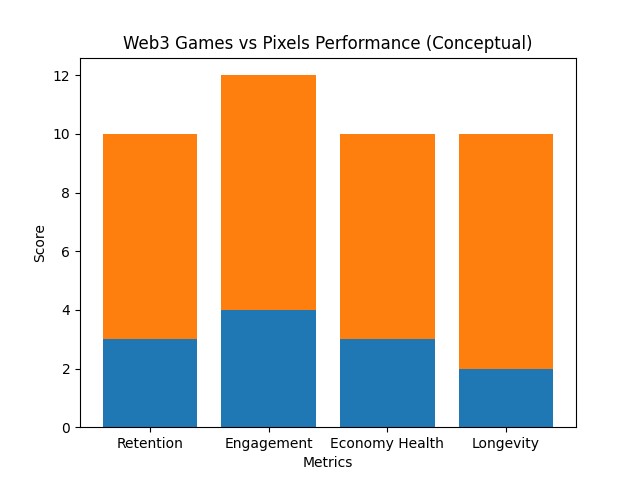
In the end, the difference between a game that fades and one that endures may come down to something deeply human. People do not stay in places where they feel like tools. They stay where they feel a sense of presence, where their actions matter in ways that are not purely transactional. Most Web3 games tried to buy attention. Pixels, in its own quiet way, is trying to earn it. And that difference, subtle as it may seem, might be the line between another empty world and one that people return to long after the rewards stop counting.
