
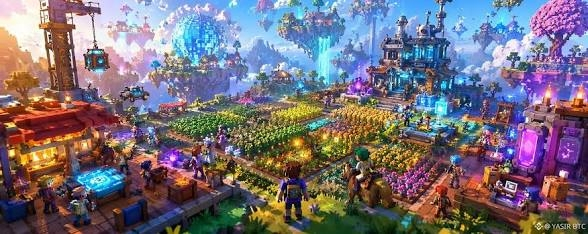

At first Pixels doesn’t try too hard to impress you.
You log in plant a few crops walk around maybe complete a small task or two. It feels light almost relaxing like something you can play without thinking too much. And that’s exactly what makes it so easy to under estimate.
Because behind that simple friendly surface Pixels is quietly doing something very few Web3 games manage to get right it balances fun gameplay with meaningful rewards.
And more importantly it doesn’t reward just anyone randomly it rewards players who are willing to think adapt and stay patient.
It Starts as a Game Not a System
One of the biggest differences with Pixels is how it introduces itself.
It doesn’t overwhelm you with complex mechanics token explanations or pressure to optimize everything from day one. You’re allowed to just play.
That matters more than people realize.
Most Web3 games throw you into systems before you even understand the gameplay. Pixels flips that approach. It lets you enjoy the experience first planting exploring crafting before slowly revealing that there’s a deeper layer underneath.
And by the time you notice it you’re already invested.
The Fun Is Real Not Forced
A lot of games in the Web3 space struggle because they focus too much on rewards and forget about enjoyment.
Pixels avoids that trap.
The gameplay loop feels natural:
• You plant crops
• You harvest
• You explore a little
• You improve your setup
There’s no pressure no rush. You can log in for a short session and still feel like you’ve made progress.
This is where Pixels stands out it doesn’t feel like a job disguised as a game. It feels like a game that happens to have value attached to it.
And that small difference changes everything.
Where Strategy Quietly Takes Over
After a few days something shifts.
You start noticing that not all actions give the same results. Some crops are better than others. Some strategies feel more efficient. Some decisions save time while others waste it.
That’s when Pixels reveals its second layer.
It becomes less about what you do and more about how you do it.
• Should you focus on farming or explore more?
• Is it better to sell now or wait?
• Are you spending your time in the most efficient way?
These questions don’t come from the game forcing you they come naturally as you try to improve.
And that’s where smart players begin to separate themselves.
Patience Is a Real Advantage
In many games speed is everything. The faster you grind the better you perform.
Pixels doesn’t fully follow that rule.
Yes effort matters but patience matters just as much if not more.
Players who rush into everything, chasing quick rewards often end up making inefficient decisions. They overproduce certain items follow trends too late or waste resources on things that don’t hold value.
On the other hand, patient players take a different approach:
• They observe trends before acting
• They experiment instead of copying others
• They focus on consistency rather than quick wins
And over time that patience pays off.
Pixels rewards those who are willing to slow down and think.
A System That Keeps Changing
Another reason Pixels feels different is that it doesn’t stay static.
The in game economy shifts based on player behavior. What works today might not work tomorrow. That creates a dynamic environment where players have to stay aware.
And this is where the balance becomes clear.
The game remains simple enough to enjoy casually but complex enough to reward players who
• Pay attention
• Adapt quickly
• Learn from mistakes
It’s not about being perfect it’s about improving.
Rewards Feel Earned Not Given
One of the most satisfying parts of Pixels is how rewards feel.
They don’t feel random. They don’t feel guaranteed.
They feel earned.
When you make a smart decision choosing the right strategy timing your actions well or optimizing your routine you see the difference. And that creates a stronger sense of accomplishment compared to systems where rewards are handed out without much thought.
It’s subtle but powerful.
Because when rewards feel earned players feel more connected to the game.
Why This Balance Matters Especially for Web3
In the broader Web3 space many projects struggle with sustainability.
They either:
• Focus too much on rewards and lose the gameplay
• Or focus on gameplay but fail to create real value
Pixels finds a middle ground.
It shows that you don’t need to sacrifice fun to create a meaningful system. And you don’t need to overcomplicate things to reward smart players.
For platforms like Binance Square this is exactly the kind of project that stands out because it’s not driven by hype alone but by consistent player engagement.
Final Thoughts
Pixels doesn’t try to be the flashiest game.
It doesn’t rely on overwhelming features or aggressive promises.
Instead it focuses on something much more important
• Making the game enjoyable
• Giving players room to learn
• Rewarding those who think long-term
That balance between fun and strategy is what makes it different.
And in a space where many games are forgotten as quickly as they appear Pixels is quietly building something stronger a system where smart and patient players actually have an edge.
Not because the game tells them how to win but because it gives them the freedom to figure it out.