
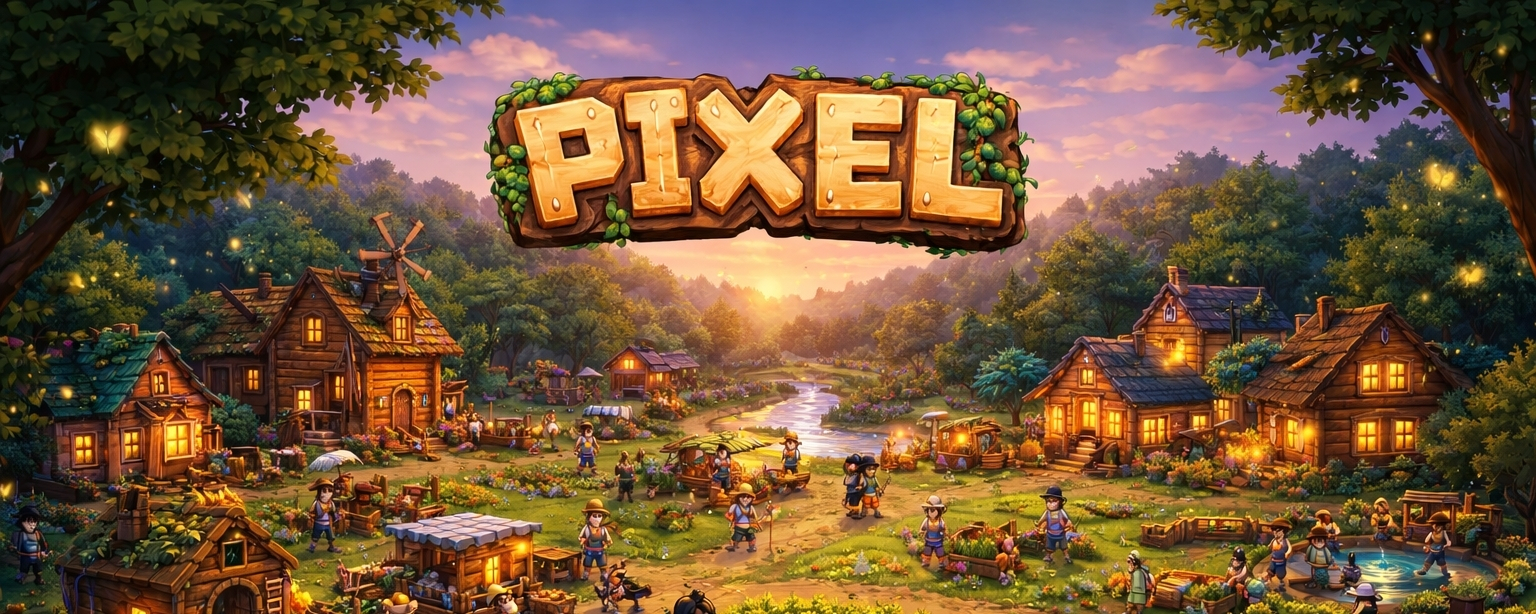
@Pixels :begins to understand what it is. That shift is not loud, and it rarely arrives with dramatic announcements or sudden transformations. It unfolds gradually, almost imperceptibly, through small decisions, subtle changes in direction, and a growing sense that the people behind it are no longer chasing attention but building something meant to last. PIXEL, in its current state, feels like it is somewhere within that transition.
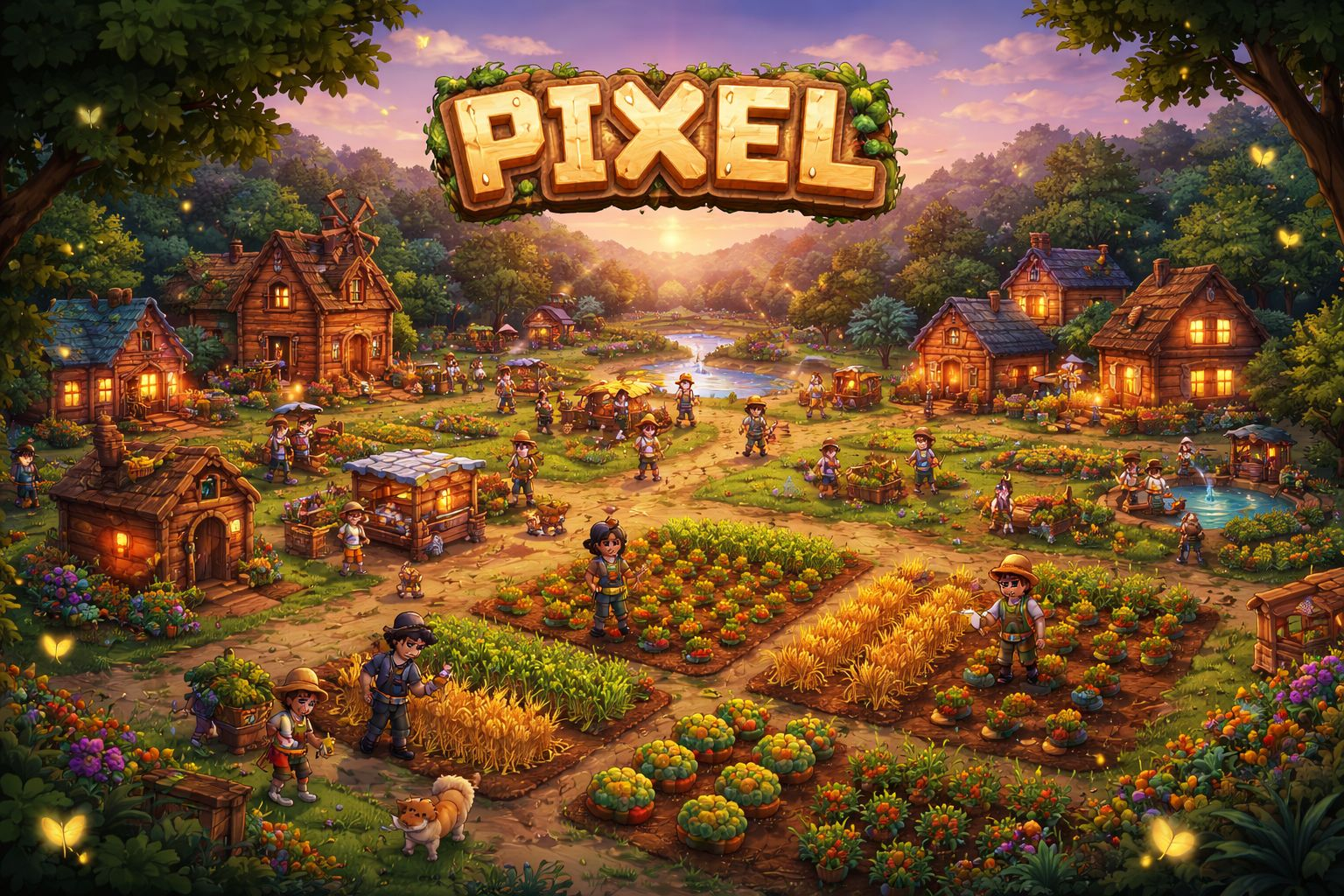
At first glance, it would be easy to misunderstand what PIXEL represents. The surface tells a familiar story: a farming game, simple mechanics, a loop of planting, harvesting, and progression that many players have seen before. For those who have spent time around blockchain-based games, the initial impression might even lean toward skepticism. There have been too many projects that relied on similar foundations but were ultimately driven by short-term incentives rather than long-term design. In those cases, gameplay often became secondary, a thin layer placed over an economic system that could not sustain itself.
But PIXEL does not fully fit into that pattern, and the difference becomes clearer the longer one pays attention. It is not that the game avoids economic structures entirely; rather, it seems to be reconsidering how those structures should exist within a broader experience. The presence of land, resources, and trade introduces a sense of ownership, yet these elements do not completely overshadow the act of simply playing. There is a noticeable effort to maintain balance, even if that balance is still evolving.
What stands out most is the way the game treats time. In many digital economies, time is compressed into efficiency—players are encouraged to optimize every action, to extract as much value as possible in the shortest period. PIXEL, by contrast, often feels slower. Progress is not entirely about speed but about continuity. The routines of tending to a farm, exploring new areas, or interacting with other players create a rhythm that is less about urgency and more about persistence. It gives the impression that the game is not asking to be rushed.
This slower pace also changes how players relate to the world. Instead of viewing it purely as a system to exploit, there is space to see it as something to inhabit. Small details begin to matter more: how land is arranged, how resources are gathered, how different activities connect over time. These are not groundbreaking features on their own, but together they contribute to a sense of place. It is subtle, but it makes the difference between a system that is used and a world that is lived in.
Another important aspect is how value is framed. In earlier models of similar games, value was often externalized—tokens were the primary goal, and everything else served as a means to that end. PIXEL appears to be experimenting with a more internal approach, where value emerges from participation itself. Skills, progression, and player-driven interactions begin to carry weight, not just because they can be converted into something else, but because they shape the experience directly. This does not remove economic incentives, but it places them alongside other forms of engagement rather than above them.
There is also an underlying question about sustainability that the game seems to be addressing, even if indirectly. Many projects in this space have struggled with longevity because their systems were built on constant expansion without enough depth to support it. PIXEL, in its current direction, seems more focused on layering systems rather than simply adding new ones. The idea is not just to grow outward, but to deepen what already exists. Whether this approach will succeed is still uncertain, but the intention itself is notable.
Equally significant is the role of the player community. In games where progression is heavily individualized, interaction often becomes secondary. Here, there is a stronger emphasis on shared space. Players are not entirely isolated in their own loops; they exist alongside others who are navigating the same environment. This creates opportunities for cooperation, competition, and simple observation. Over time, these interactions can shape the identity of the game in ways that no single update or feature could achieve.
What makes this stage of PIXEL particularly interesting is that it does not feel complete. There are rough edges, inconsistencies, and unanswered questions. Yet, instead of diminishing the experience, these elements contribute to a sense that the game is still in the process of defining itself. It is not presenting a finished vision but an evolving one. For some players, this uncertainty may be frustrating. For others, it is precisely what makes the experience worth following.
In a broader sense, PIXEL reflects a larger conversation about what digital worlds are becoming. The early focus on ownership and rewards introduced important ideas, but it also revealed their limitations when isolated from meaningful design. Now, there is a gradual movement toward integration—bringing together gameplay, economy, and community in a way that feels coherent rather than fragmented. PIXEL is not alone in exploring this direction, but it offers a clear example of how such a transition might look in practice.
Ultimately, the significance of PIXEL does not lie in any single feature or system. It lies in the way those elements are being reconsidered and reassembled. It is a game that seems to be learning from its environment, adapting to the realities of its space rather than resisting them. Whether it will fully realize its potential remains to be seen, but the trajectory itself is worth observing.
There is a certain patience required to appreciate something like this. It does not deliver immediate conclusions or definitive outcomes. Instead, it asks for attention over time, for a willingness to notice gradual change. In that sense, engaging with PIXEL is not just about playing a game, but about witnessing a process—one that is still unfolding, still uncertain, and still quietly searching for its final form.