One thing that always surprises me about web3 games is how they draw in a lot of people but most of them leave after a short time. The problem is that these worlds have always rewarded visible actions without realizing which ones quietly build a sense of community.
Solutions used to be simple.
Projects gave out tokens for easy logins, short tasks, or set events that everyone had to do the same thing. This led to quick growth, but it also led to a lot of farming, and once the flow slowed, there wasn't much reason to go back.
Later changes, like point ladders or event timers, still felt mechanical and easy to take advantage of, so real attachment didn't happen very often and empty spaces became more common.
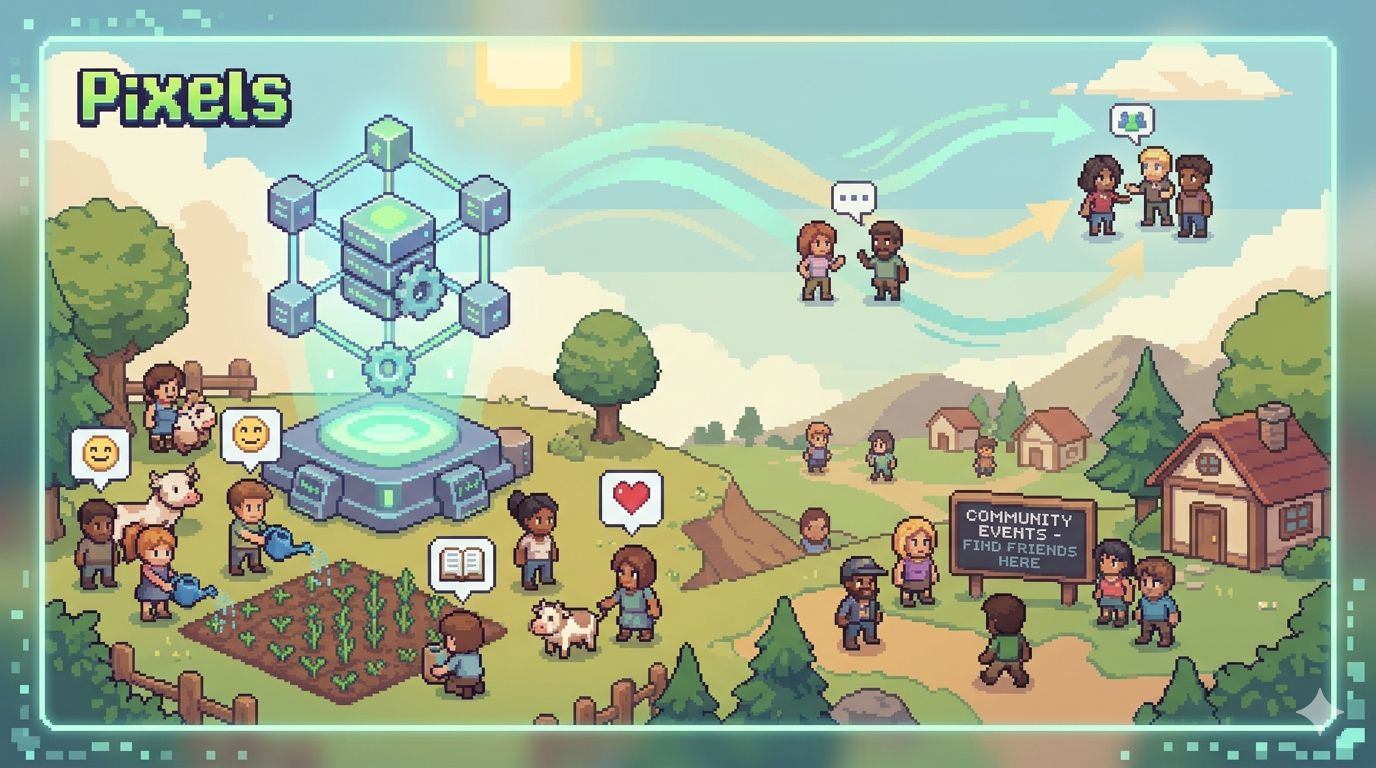
Pixels uses a different lens in its laid-back farming game Ronin. In a soft pixel style that encourages calm exploration, players grow crops, take care of animals, own land as NFTs, and talk to other players.
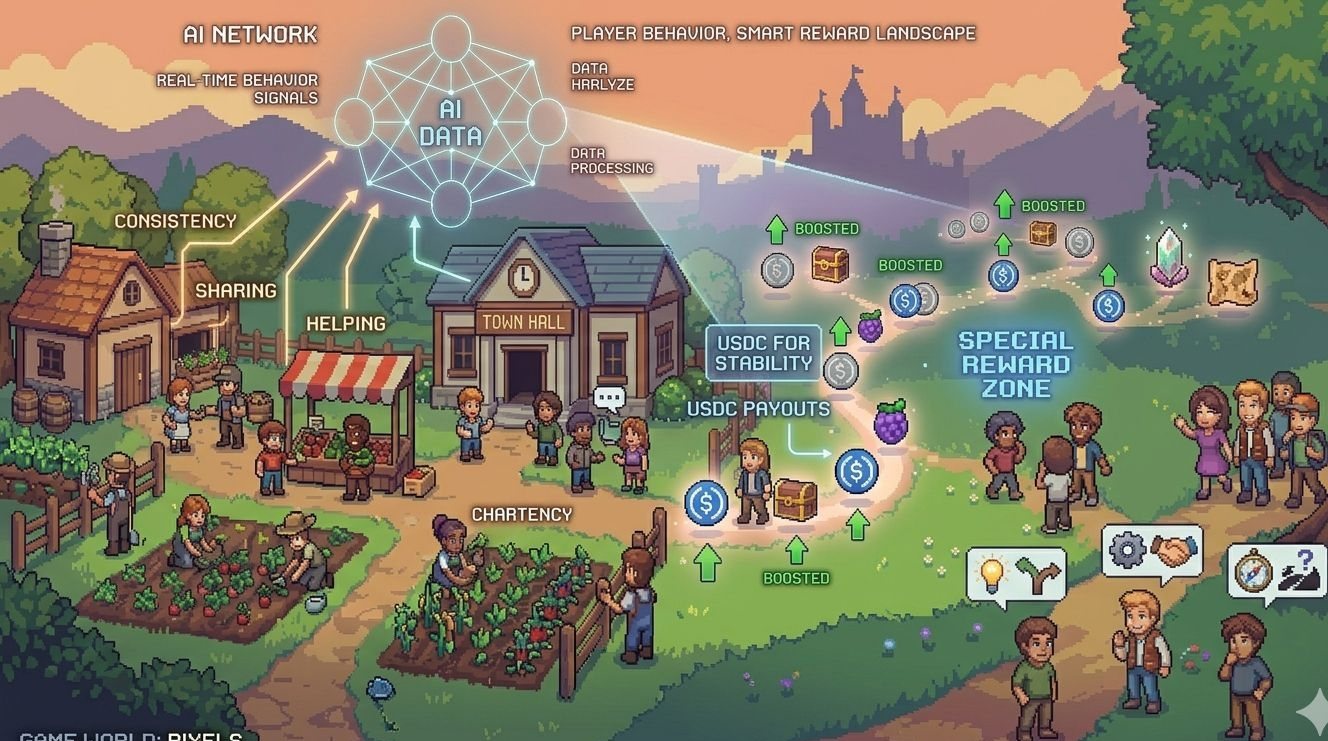
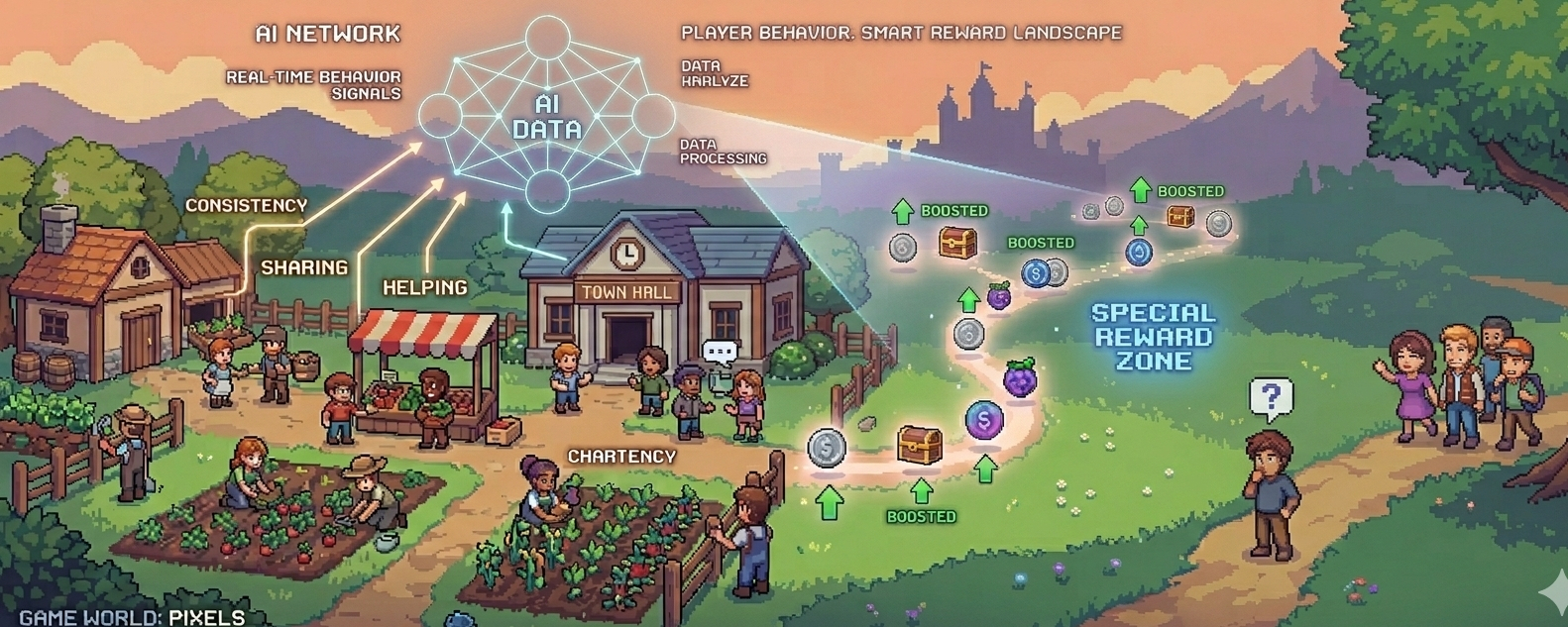
The main layer below is Stacked, an AI tool that the team built and tested for years in their own game before giving it to other developers. At its most basic level, Stacked keeps track of daily play flows, like how much time is spent on chores, small changes that other people notice, and steps that make the shared space feel more welcoming.
Machine learning sorts these signals to direct rewards toward patterns that suggest more consistent participation, moving away from drops that are the same every time.
There are some clear pros and cons to this method. It learns from how people usually play, so it might not value new or low-key ways of playing that don't fit with what it already knows.
When you go from watching to gently directing, it can feel delicate. There are still questions about how closely personal rhythms are followed, even when data is handled carefully. Those insights could go further than expected as more studios join.
Players who have calm routines, like steady tending, soft sharing, and being there when needed, tend to get more responses from the AI. People who only visit a few times or test their own paths may not get as many personalized nudges, but they may still enjoy the game.
When a game starts to closely map behavior to shape ongoing rewards, does it create worlds that feel warmer and more personal, or does it slowly pull everyone toward the moves the system already knows best?
What makes you stop when games start to carefully read each player's play style?