
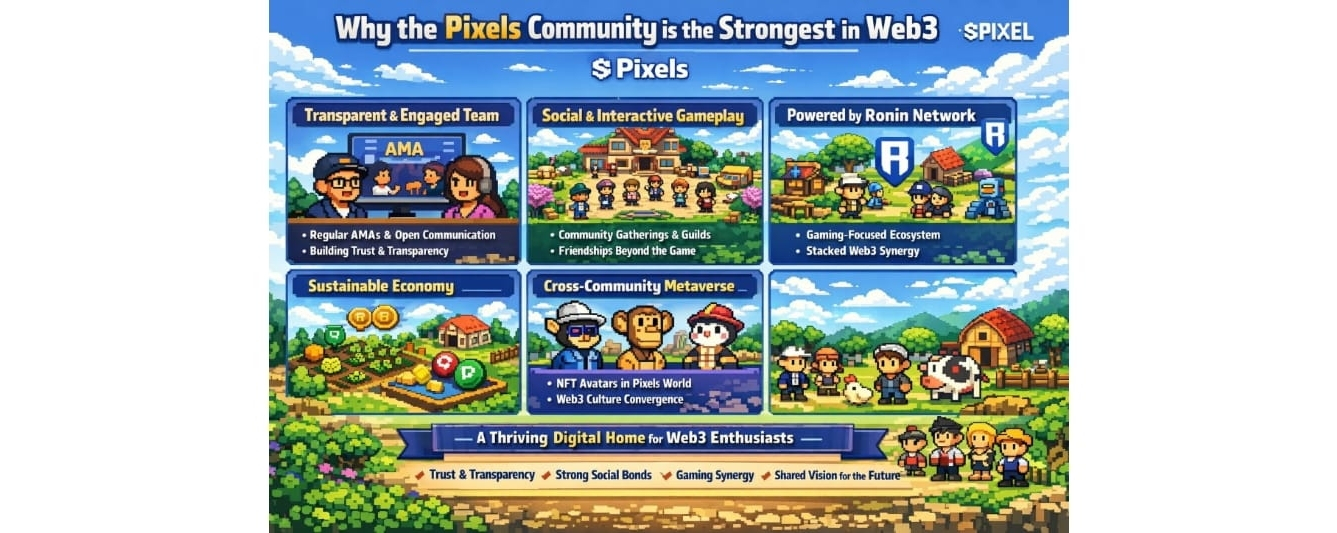
The world of Web3 is often criticized for being a place of fleeting interests where users jump from one project to another based purely on short-term gains. However, Pixels has completely flipped this narrative by building what is arguably the most resilient and engaged community in the blockchain space. When we look at why this specific ecosystem stands out, it isn't just about the technology or the play-to-earn mechanics; it is about a shared sense of belonging and a vision for the future of digital ownership that the community has fully embraced.
One of the primary reasons the Pixels community is so strong is the transparency and accessibility of the development team. In a space where many founders remain anonymous or distant, the leadership behind Pixels has consistently shown up. By hosting regular AMAs and being active on social platforms, they have fostered a level of trust that is rare in Web3. This open line of communication ensures that players feel like stakeholders rather than just users. When people feel heard, they are far more likely to stick around during market volatility, contributing to a stable and growing ecosystem that transcends simple price action.
The social layer of Pixels is another massive factor. Unlike many traditional games where you play in a vacuum, Pixels is designed to be inherently social. Whether it is gathering at the central plaza or collaborating on farm designs, the game encourages interaction. This has led to the formation of organic guilds and friendships that exist outside the game itself. These social bonds act as a powerful retention tool. People might come for the $PIXEL rewards, but they stay for the community they have built. This "social stickiness" is the holy grail for Web3 projects, and Pixels has managed to capture it better than almost anyone else.
Furthermore, the integration with the Ronin Network was a masterstroke for community building. By aligning with a network that already had a massive, gaming-focused user base, Pixels was able to tap into a group of people who already understood the value of digital assets and community-driven development. This synergy created a "stacked" ecosystem where different projects and players support each other. The community isn't just focused on one game; they are part of a broader movement toward a more open and user-controlled internet.
The economic model of Pixels also plays a role in its strength. While many games struggle with sustainability, Pixels has focused on creating a loop that rewards genuine engagement. The community understands that the value of the $PIXEL token is tied to the health of the game world. This creates a collective incentive to keep the ecosystem clean, helpful, and welcoming to newcomers. You often see veteran players helping beginners understand the mechanics of farming and resource management, which creates a positive feedback loop that strengthens the community from the bottom up.
The concept of digital identity is also central to this community. Through the use of various NFT collections as in-game avatars, Pixels has allowed different communities across the Web3 space to converge in one place. This "metaverse" approach means that a Bored Ape holder or a Pudgy Penguin fan can interact within the Pixels world, bringing their own community's energy into the Pixels fold. It makes Pixels a melting pot of Web3 culture, further solidifying its position as a central hub for the entire industry.
In conclusion, the strength of the Pixels community comes down to a combination of trust, social interaction, and a well-aligned economic structure. It isn't just a game; it is a digital home for thousands of people who believe in the future of Web3. By prioritizing the player experience and fostering genuine connections, Pixels has built a foundation that is likely to last for years to come. As the ecosystem continues to evolve and expand, the community will undoubtedly remain its most valuable asset, proving that in the world of blockchain, people are always more important than code.
