
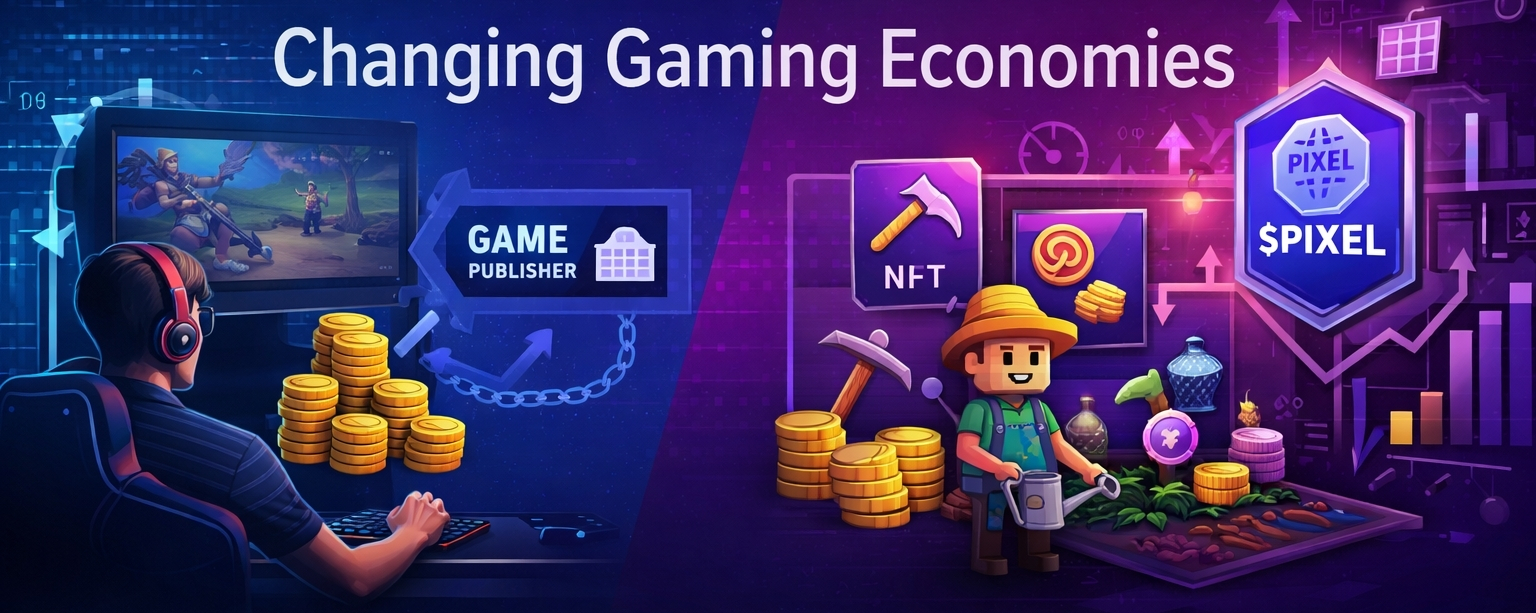
The difference between traditional games and blockchain-based games like Pixels (PIXEL token) goes far beyond just technology it fundamentally changes how players interact with value, ownership, and time.
In traditional Web2 games, players spend money on skins, items, and upgrades, but they never truly own them. Everything is controlled by the game publisher, meaning assets can’t be transferred, sold freely, or used outside the game. In contrast, Pixels introduces true digital ownership through blockchain technology. Assets like land, tools, and items exist as NFTs, giving players full control.
This shift transforms gaming from a closed ecosystem into an open economy where players are not just participants, but stakeholders.
Another major difference lies in how economies are structured. Traditional games rely heavily on microtransactions players continuously spend money without direct financial return. Pixels flips this model by creating a player-driven economy where resources, crops, and items have real value. Players can trade, sell, or reinvest their assets, turning gameplay into an economic activity.
Instead of money flowing only to developers, value circulates within the community, creating a more balanced and engaging system.
Perhaps the most powerful shift is the concept of “time equals money.” In Web2 gaming, hours spent playing are mostly for entertainment or progression with no real-world benefit. In Pixels, time invested can generate tangible rewards through the $PIXEL token and in-game assets.
This doesn’t just gamify earning it redefines productivity in digital spaces. Players are no longer just gamers; they become digital workers, traders, and creators inside a living virtual economy.
This evolution signals a bigger trend: gaming is moving from consumption to ownership, from spending to earning, and from isolated play to interconnected economies.