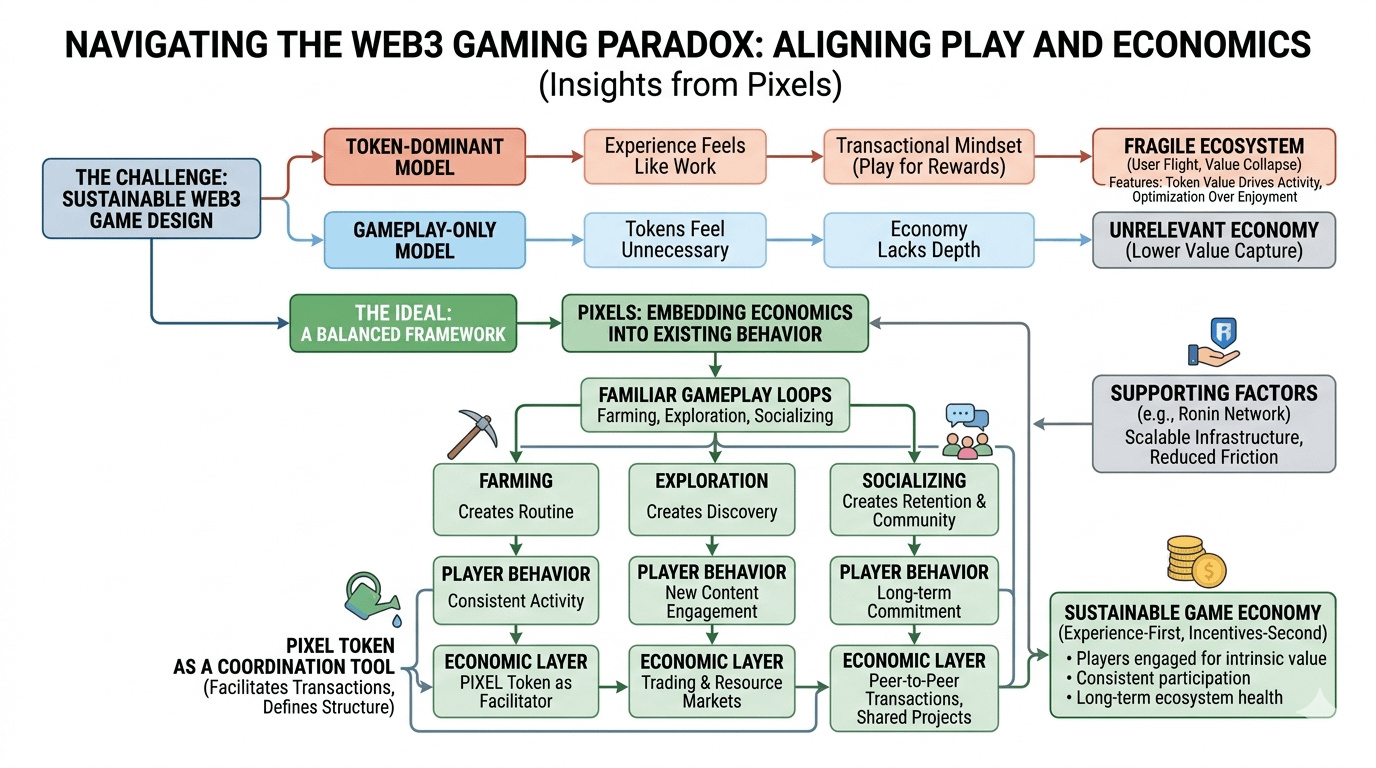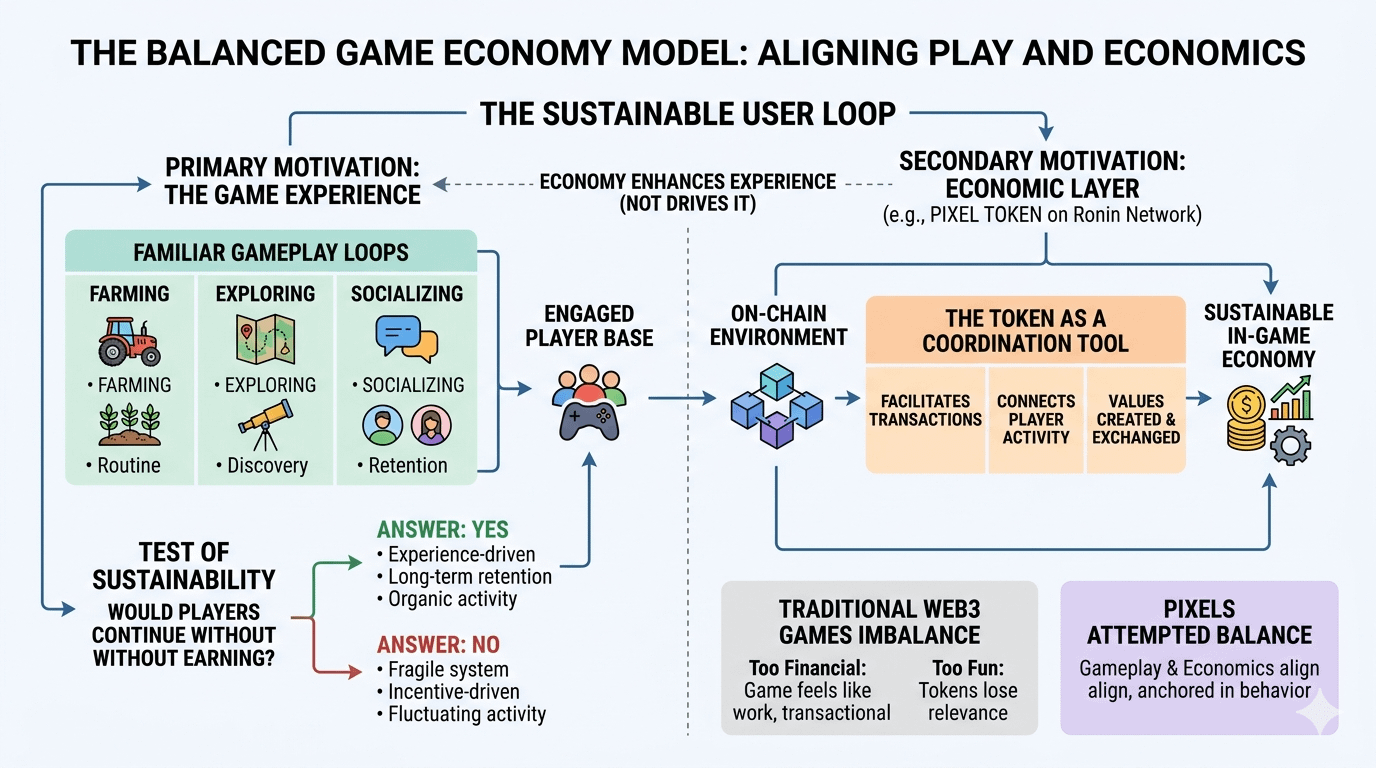

I didn’t notice the shift immediately. At first, Pixels feels exactly like what you expect—a relaxed loop of farming, gathering, and small progression wins. You log in, spend your energy, harvest crops, maybe explore a bit, and log off. It’s simple, almost comforting. The kind of game where you don’t overthink things. But after a few longer sessions, something starts to change. Not dramatically. Quietly.
You begin to care about how you’re using your energy.
The energy system, which once felt like a soft limit, starts behaving more like a resource you actively manage. You hesitate before spending it. You start planning sessions instead of just playing them. And then land enters the picture in a more serious way. Owning land isn’t just cosmetic or convenient—it directly shapes how efficiently you can produce. Suddenly, your output isn’t just about effort. It’s about positioning.
And that’s where the shift begins to feel real.
The game stops guiding you in a clean, predictable loop and starts opening into something less controlled. Resources aren’t just things you collect anymore—they’re things you evaluate. Some feel more valuable than others. Some feel worth holding, others worth moving quickly. You start noticing how other players behave, not just what you’re doing. The environment isn’t static. It reacts.
But here’s the part that really stands out: it doesn’t feel like a clean upgrade. It feels like a transition.
One moment you’re playing casually, the next you’re thinking in layers. Do you reinvest what you earn or extract it? Do you optimize your land usage or expand slowly? Do you focus on consistency or chase better returns? The questions aren’t forced on you—they just start appearing. And once they do, it’s hard to ignore them.
That’s when Pixels stops feeling like a traditional game.
Because traditional games are controlled. Developers define the pace, the progression, the boundaries. Pixels begins to loosen that control. The economy becomes less of a background system and more of a living layer that players influence directly. And the more you engage with it, the more you realize that your decisions are part of a larger network of decisions happening at the same time.
This is where the $PIXEL token changes meaning.
It’s not just a reward you earn and forget. It becomes part of how you interpret your actions. Time spent farming, resources collected, land utilized—all of it starts connecting through value. Not in an overwhelming way, but in a way that makes you pause. Your actions are no longer isolated gameplay moments. They’re inputs into a system that keeps moving whether you’re online or not.
And that creates a different kind of feeling.
For some players, it’s exciting. The world feels alive, unpredictable, shaped by real behavior rather than fixed design. For others, it introduces a layer of pressure. The game they once played casually now asks for attention, planning, awareness. It doesn’t demand it—but it rewards it enough that you feel the difference.
That tension is what makes Pixels interesting right now.
It’s sitting between two identities. One is a relaxed, social farming game where you can log in and enjoy the loop without thinking too much. The other is an emergent system where efficiency, timing, and player behavior start to matter more than simple participation. And instead of choosing one, Pixels is blending both.
The result is not perfectly smooth. It’s uneven at times. It can feel rewarding one moment and slightly overwhelming the next. But that’s also what makes it feel real.
Because systems are not supposed to feel perfectly controlled.
If Pixels continues down this path, it won’t just be remembered as a Web3 game. It will be remembered as a moment where a game became something else—something shaped less by design and more by the people inside it.
And once that shift happens, there’s no going back to just playing.