
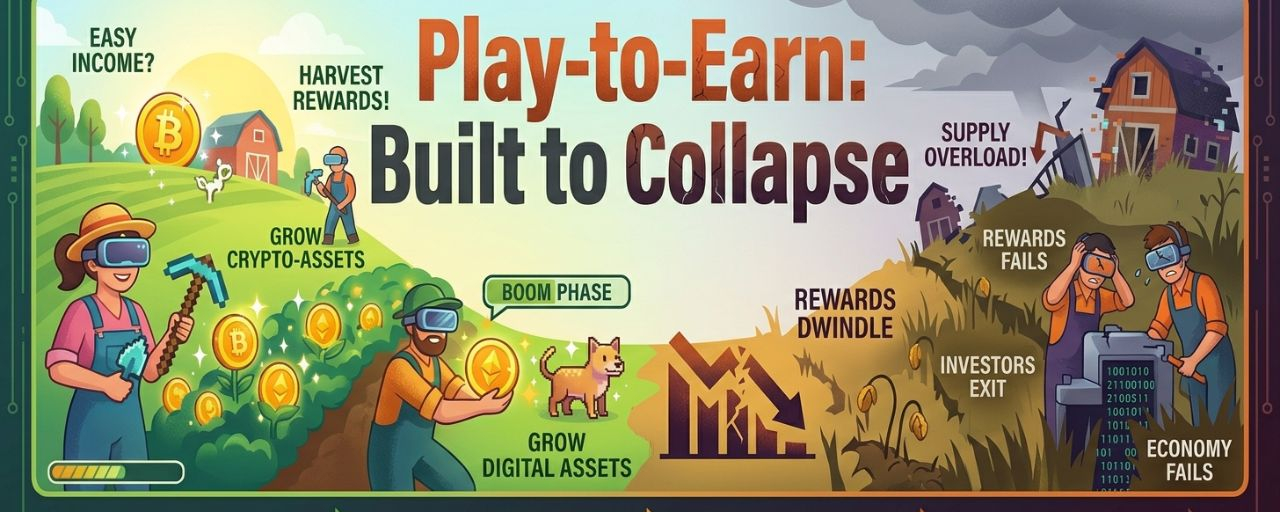

I used to think that most play-to-earn games failed because people just got bored with them. That was my explanation for why they failed. But the more I looked at how economies like Pixels structured the more it felt like boredom was not the cause. It was the outcome of something fundamentally broken underneath the play-to-earn games.
What really killed play-to-earn games was not the gameplay it was the math behind the play-to-earn games. In early systems tokens were printed faster than they could be used in a meaningful way. You would see models where rewards were constantly flowing out. There was no real pressure pulling them back into the play-to-earn games. Inflation was not a side effect it was the system of the play-to-earn games. So players were not playing the play-to-earn games. They were extracting tokens from the play-to-earn games. And once extraction becomes the behavior everything else collapses quietly in the play-to-earn games.
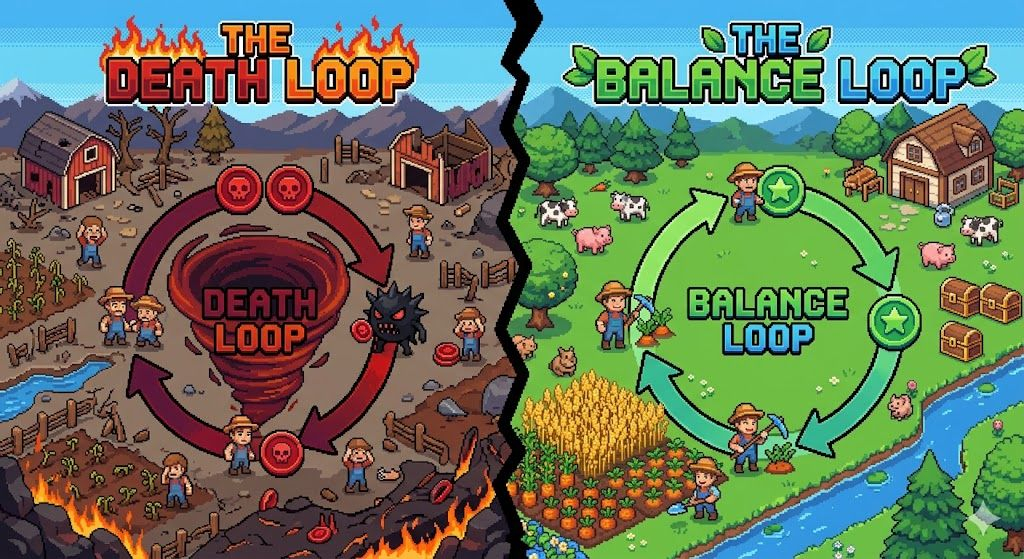
Pixels seems to be built around not letting that happen again. The first thing that stood out to me was the idea of RORS sitting 0.8 in Pixels. That number sounds small. It is actually doing a lot of work in Pixels. It basically means the system of Pixels is targeting a state where 80% of value emitted gets recycled back into the ecosystem of Pixels. Not fully closed, not perfectly balanced. But intentionally slightly leaky in Pixels. That matters because a closed loop would stagnate in Pixels while a completely open one, like old play-to-earn games bleeds out. This sits in between and that balance is where sustainability might live in Pixels.
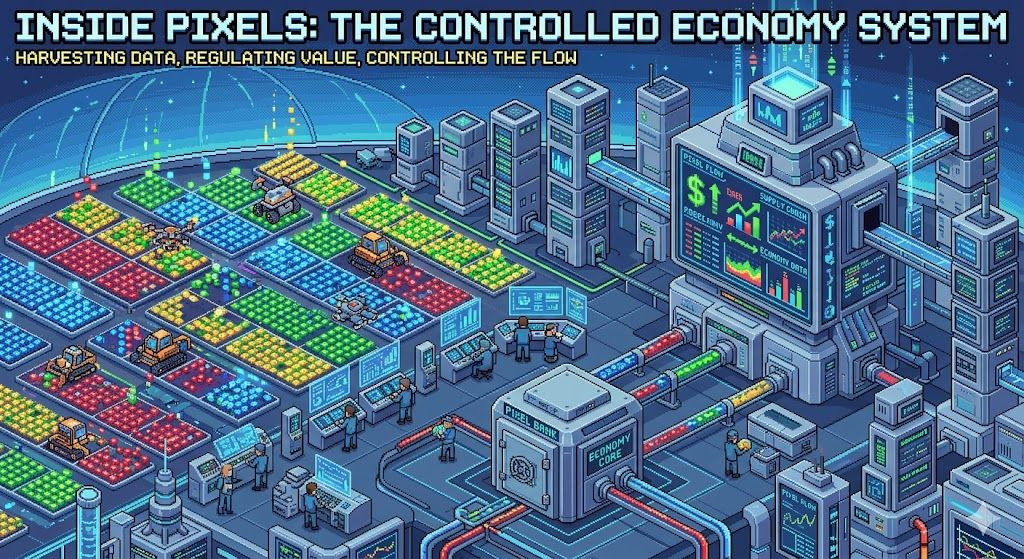
That creates another effect. Rewards stop being free money and start being conditional in Pixels. The PIXEL token itself has a capped supply, around 5 billion total, which on the surface just looks like token.. Underneath it changes player expectations in Pixels. If supply is finite emissions can not just be the default solution in Pixels. So of relying purely on emissions Pixels leans into sinks. Things like upgrades, crafting, land usage and especially staking in Pixels.
The staking part is where it gets more interesting in Pixels. Players can stake PIXEL tokens to influence reward distribution, which subtly shifts the system from earning to active positioning in Pixels. You are not just playing the game of Pixels. You are deciding where value flows in Pixels. That introduces friction. It is the kind of friction that slows down extraction in Pixels.. In a system like Pixels slowing things down is actually a feature, not a bug in Pixels.
Meanwhile reward targeting adds another layer in Pixels. Of spraying tokens evenly across all activities the system adjusts incentives toward areas that need growth or balance in Pixels. So if many players crowd one strategy in Pixels rewards there weaken and other areas become more attractive in Pixels. It is basically a feedback loop trying to prevent the one farm problem that destroyed earlier economies of play-to-earn games.
On the surface Pixels looks like a farming game with a token. Underneath it is closer to a controlled experiment in Pixels.. This is where I am slightly unsure about Pixels. Because all of this. RORS, staking influence reward targeting. Depends on player behavior reacting the way the system of Pixels expects. If players find a way to game the incentives faster than the system can adjust in Pixels the same patterns could reappear in Pixels. Just in a complex form in Pixels.
Complexity cuts both ways in Pixels. It can stabilize an economy. It can also make it harder for average players to understand what is actually happening in Pixels.. If players do not understand the system of Pixels they either disengage or default back to extraction in Pixels.
Still what Pixels is trying to do feels different in one way. It is not trying to maximize earnings it is trying to manage flow in Pixels. That shift matters more than any mechanic in Pixels. Because the real lesson from play-to-earn games was not that earning is bad. It is that unmanaged earning turns games into economies and unmanaged economies do not last in play-to-earn games.
What Pixels is quietly testing is whether a game can act like a bank without feeling like one in Pixels.. That might end up being the real direction Web3 gaming takes whether players realize it or not about Pixels and play-, to-earn games.