
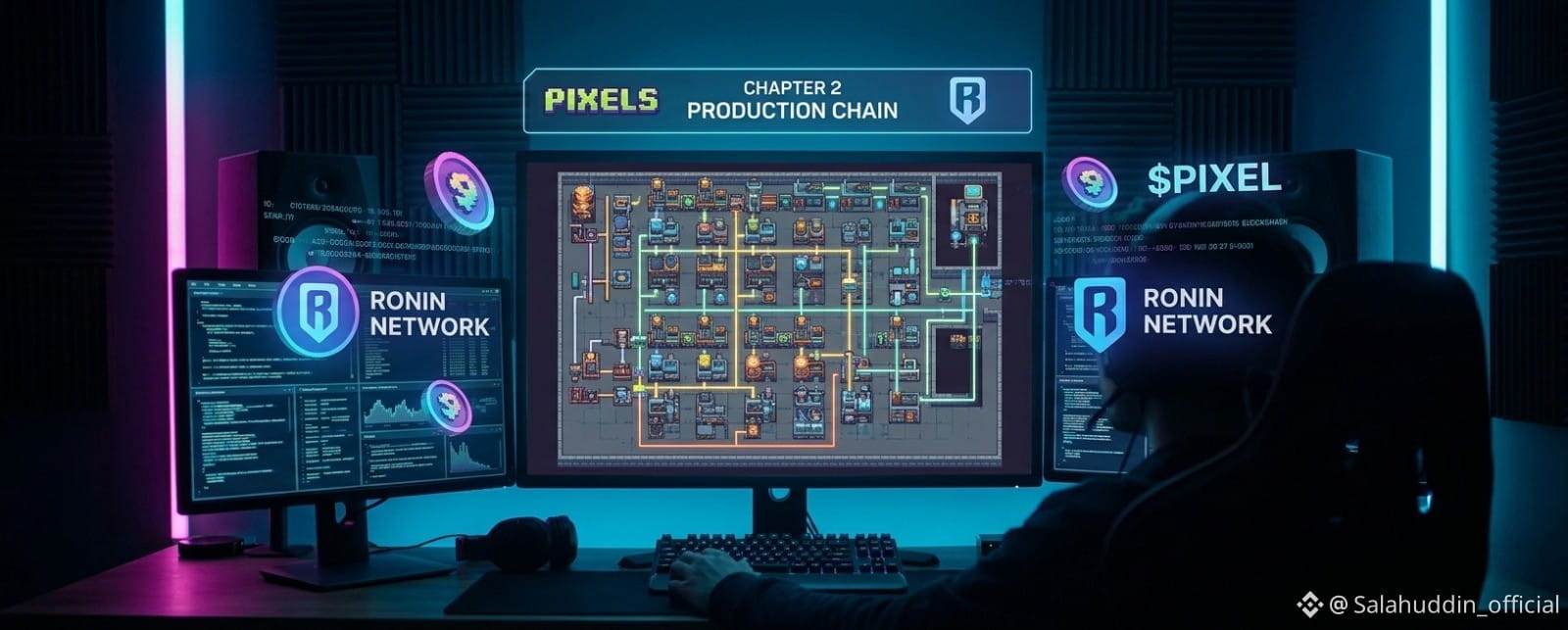
Pixels ewoluował z niszowej gry farmingowej na Polygonie do wiodącej obecności w sieci Ronin—często cytowanej jako historia sukcesu Web3. Chociaż miliony codziennych użytkowników i rosnący $PIXEL token sygnalizują wzrost, podstawowy dylemat pozostaje: Czy Pixels naprawdę buduje metawers, który można zamieszkać, czy tylko z gamifikowaną platformę do zbierania nagród?
Gdy zaczyna się Rozdział 2, istotne jest, aby zapytać: Czy złożony projekt ekonomiczny poprawia rozgrywkę, czy eroduje przyjemność, która przyciągnęła graczy na początku?
1. Migracja Ronin: Podwójnie ostrze miecza
Przejście do Ronin było zdecydowanie strategicznym posunięciem. Dołączając do ekosystemu dostosowanego do graczy, Pixels zmniejszył obciążenie wysokimi opłatami za gaz i powolnymi potwierdzeniami transakcji.
Jednak jest haczyk: wzrost napędzany infrastrukturą nie jest równy wzrostowi organicznemu. Wiele osób przeszło na Ronin nie z pasji do gry, ale dlatego, że ekosystem zapewnił lepszą płynność i prostsze sposoby na wypłatę. Kiedy bariery wejścia są obniżone, przyciągasz większe liczby, ale także przyciągasz "łowców zysków." Jeśli gracze są głównie motywowani łatwością transakcji finansowych, gra staje się usługą, a nie ucieczką.
2. Rozdział 2 i "Pułapka Wydajności."
Dodanie skomplikowanych łańcuchów produkcji i mechanik przemysłowych w Rozdziale 2 miało na celu stworzenie większej głębi. W tradycyjnych grach głębia oznacza oferowanie większej liczby wyborów i kreatywnych opcji. W Web3 często prowadzi to do matematycznej optymalizacji.
W miarę jak rzemiosło staje się coraz bardziej skomplikowane, przeciętni gracze muszą przyjąć rolę analityków danych. Nie chodzi już tylko o sadzenie nasion; to wymaga obliczeń:
Koszt alternatywny używanej ziemi.
Amortyzacja narzędzi.
Zmienność rynku końcowego produktu w porównaniu do surowego zasobu.
Kiedy granie w grę wymaga korzystania z arkusza kalkulacyjnego, przestaje być hobby i zaczyna przypominać zdalną pracę. To niesie ze sobą ryzyko "wypalenia gracza." Jeśli psychiczny ciężar zarządzania wirtualną gospodarką przyćmiewa radość z gry, zatrzymanie graczy ostatecznie spadnie.
3. $PIXEL Token: Serce czy Kajdany?
Użyteczność $PIXEL tokenu jest znaczna, obejmując ulepszanie ziemi po przedmioty premium. Jednak prowadzi to również do "Pętli Zależności." W zdrowej grze waluta jest narzędziem. W hipernacjonalizowanej grze waluta staje się głównym celem. Kiedy całe doświadczenie gry opiera się na tokenie handlowanym na platformach takich jak Binance, zabawa może być związana z ceną tokena. Jeśli $PIXEL rośnie, społeczność się cieszy; jeśli rynek spada, rozgrywka może przypominać pracę bez wynagrodzenia. Aby Pixels pozostał zrównoważony w dłuższej perspektywie, musi stworzyć satysfakcjonujące doświadczenie, nawet gdy wartość tokena jest stagnująca.
4. Równowaga "Cisłej Zabawy" a "Aktywnej Wartości"
Niektóre z najbardziej udanych gier, takie jak Minecraft czy The Sims, prosperują na tym, co można nazwać Bezcelową Zabawa. Te działania nie mają wartości ekonomicznej, ale oferują wysokie emocjonalne zyski.
Gry Web3, szczególnie Pixels, stają przed unikalnym wyzwaniem: Czy można cieszyć się "bezcelową zabawą", gdy każda akcja wiąże się z kosztami? Jeśli spędzę godzinę dekorując swoją farmę, nie zarabiając nic, obecny pogląd Web3 postrzega to jako "stracony czas." Musimy zmienić to myślenie. Pixels musi stać się przestrzenią, w której "Cyfrowe Socjalizowanie" i "Estetyczna Kreatywność" są cenione tak samo jak "Eksploatacja Zasobów."
5. Wyrok: Niepewne Arcydzieło
Pixels to nie tylko gra; działa jako eksperyment społeczny w makroekonomii. Obecnie jest na czołowej pozycji, ponieważ skutecznie łączy "DeFi" z "Grami."
Ale prawdziwe wyzwanie zaczyna się teraz. W miarę jak przemysłowe aspekty Rozdziału 2 nabierają kształtu, deweloperzy muszą zapewnić, że "Gospodarka" wspiera "Grę", a nie odwrotnie. Jeśli będą mogli chronić "Ciszną Zabawę" przy jednoczesnym utrzymaniu "Aktywnej Gospodarki", ustanowią model na następne dziesięciolecie Metawersum.
Ostateczna myśl dla społeczności:
Czy tworzymy cyfrową cywilizację, w której możemy cieszyć się naszym czasem, czy tylko bardziej kolorową wersję platformy handlowej? Odpowiedź określi przyszłość $PIXEL.
Co myślisz? Czy złożoność Rozdziału 2 to postęp, czy prowadzi do pułapki "Pracuj, aby zarobić"?
Zastrzeżenie: "To nie jest porada inwestycyjna. Proszę DYOR (Zrób Własne Badania).
#pixel #web3gaming #RoninNetwork #CryptoAnalysis" #BinanceSquare
