
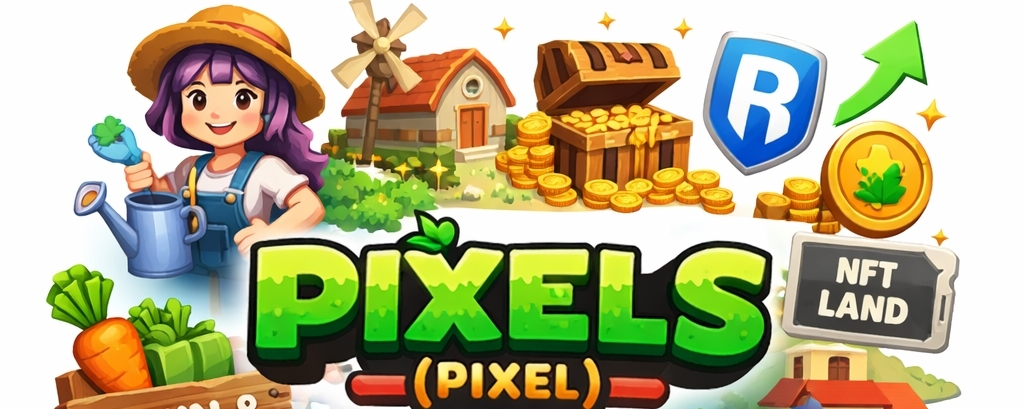

Pixels (PIXEL) feels less like a typical blockchain project and more like a game you’d casually get lost in after a long day. At first glance, it’s a colorful farming and exploration game where you plant crops, gather resources, craft items, and interact with other players. But underneath that simple and relaxing surface, there’s something more meaningful happening. Pixels is built around the idea that your time in a game should actually belong to you.
In most games, no matter how much effort you put in, everything stays locked inside the developer’s system. You can’t take your items elsewhere, and you don’t really “own” anything. Pixels tries to change that. By using blockchain technology, it gives players real ownership of their in-game assets—whether that’s land, items, or currency. So instead of just playing for fun (which is still a big part of it), you’re also building something that has value beyond the game itself.
What makes Pixels stand out is how naturally it introduces these ideas. It doesn’t feel like a finance app disguised as a game—which has been a big problem for many Web3 projects. Instead, it feels familiar. If you’ve ever played farming or life-simulation games, you’ll immediately understand how things work. You grow crops, complete quests, cook food, upgrade your land, and connect with other players. The blockchain part stays mostly in the background, which is exactly how it should be.
That’s also why games like Pixels are becoming more important right now. People spend so much time online—building profiles, collecting digital items, and forming communities—but they rarely have control over what they create. Web3 gaming is trying to fix that by giving players more ownership and a bigger role in the ecosystem. Pixels makes this shift feel less intimidating. It’s not asking players to learn complicated systems; it’s simply offering a better deal in a familiar environment.
Another thing that gives Pixels its charm is the sense of progression and community. It’s not just about farming endlessly. There are guilds to join, reputations to build, land to develop, and social interactions that make the world feel alive. You’re not playing in isolation—you’re part of a growing ecosystem. Over time, that sense of belonging can become just as important as the gameplay itself.
A big reason Pixels works as smoothly as it does is because it runs on the Ronin Network. Instead of dealing with slow transactions or high fees (which are common issues in blockchain), Ronin is built specifically for games. It makes everything faster, cheaper, and easier to use. You don’t need to be a crypto expert to get started, and that’s a huge advantage. It removes a lot of the friction that usually pushes players away from Web3 experiences.
Looking forward, Pixels has the potential to grow into something much bigger than it is today. Right now, it’s already showing that a blockchain game can attract real players without sacrificing fun. If it continues on this path, it could influence how future games are built—not just in Web3, but in gaming as a whole. Imagine more games where your progress actually matters, where your items have real ownership, and where communities help shape the world they’re part of. That’s the direction Pixels is pointing toward.
Of course, getting there won’t be automatic. The game will need to keep improving its technology so everything runs smoothly as more players join. It will also need to protect its community from things like bots or unfair advantages, making sure the environment stays enjoyable and balanced. And most importantly, its economy needs to stay healthy. Rewards should feel meaningful, but not so easy that they lose value over time.
At its heart, Pixels succeeds because it doesn’t try too hard to feel “revolutionary.” It simply focuses on being a good game first—something enjoyable, social, and rewarding. The Web3 elements are there to enhance the experience, not take it over. That balance is rare, and it’s what gives Pixels a real chance to stand out in the long run.