
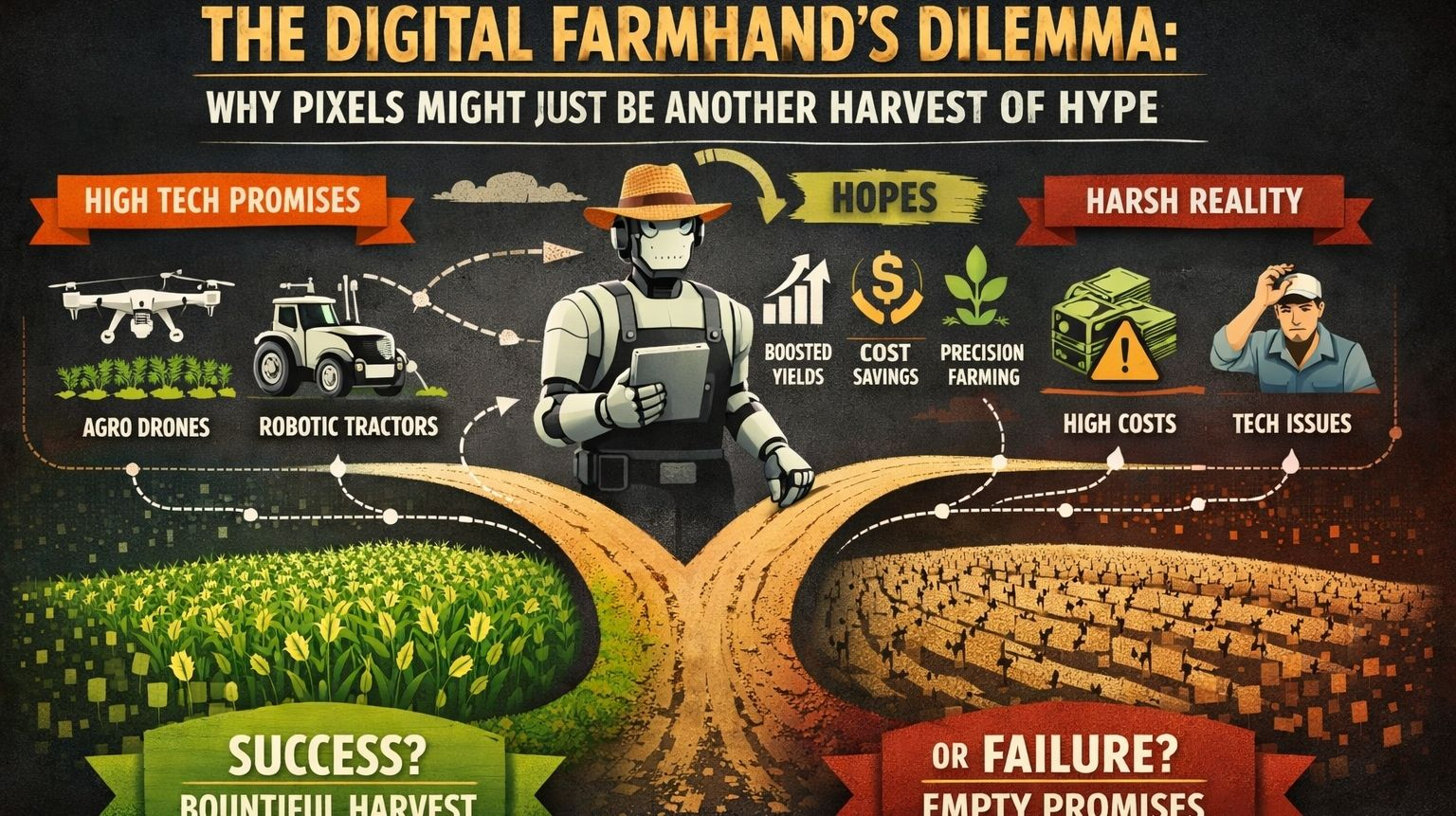
Let’s be honest, we have sat at this coffee table before. We watched the rise of Axie Infinity, saw the promises of a "play-to-earn" utopia, and then watched it all collapse into a heap of unsustainable tokenomics and broken dreams. Now, the conversation has shifted. The buzzwords have softened. We are told it is no longer about greedy earning mechanics but about "social casual" experiences and "open-world" creation. Pixels, the current darling of the Ronin Network, is the latest project demanding our attention. It looks charming, I grant you that. It borrows heavily from the familiar, comforting loops of Stardew Valley and Animal Crossing, wrapping complex blockchain mechanics in a pixel-art aesthetic that feels harmless. But as we sip our coffee and look closer, the question remains: is this actually a new paradigm for gaming, or is it just the same old speculative engine dressed up in overalls?
The core problem Pixels claims to solve is the barrier to entry for Web3 gaming. For years, the space was a walled garden for crypto-natives. If you wanted to play, you needed to understand seed phrases, gas fees, and complex wallet interfaces. Pixels attempts to solve this by hiding the plumbing. They want to make the crypto elements invisible, allowing players to simply farm, explore, and socialise while the blockchain hums quietly in the background. It is a noble goal. The industry desperately needs to move away from the clunky, transaction-heavy interfaces that scare off normal people. However, solving a user interface problem does not necessarily equate to solving an economic one. The friction isn't just about how hard it is to click a button; it is about why you are clicking that button in the first place.
Most casual observers look at Pixels and see a game. They see avatars watering crops and building guild halls. What they miss is the underlying pressure cooker of token emission. This is not just a farming simulator; it is a coordination game designed to manufacture scarcity and demand for the PIXEL token. The "social" aspect is not merely about friendship; it is a retention mechanism. In traditional gaming, you stay because the gameplay is fun or the story is gripping. In Web3 gaming, historically, players stay because they have financial exposure. They have skin in the game. Pixels tries to balance this by making the gameplay loop genuinely engaging, but the shadow of financial incentive looms large. When the fun stops, or when the token price dips, the "social" fabric tends to tear very quickly.
Let’s look at how the system actually works. It runs on the Ronin Network, an Ethereum-linked sidechain built specifically for gaming. The architecture is centralised by the standards of the broader crypto world, which allows for cheaper and faster transactions—essential for a game with frequent micro-interactions. In the game, players manage resources, complete quests, and acquire land. The web3 elements act as a settlement layer. When you earn a resource or buy a cosmetic item, that transaction eventually settles on the blockchain. The genius, or perhaps the trap, lies in the gradual onboarding. Players can start without spending a dime, playing in a web2 environment. Only when they want to trade or own assets do they truly interact with the Web3 layer. It is a clever funnel, reducing friction to almost zero, but it also means the "decentralisation" benefits are an optional extra rather than the core experience.
The economic layer is where my scepticism hardens. The PIXEL token serves multiple functions: governance, in-game currency for premium items, and a reward mechanism. It sounds tidy. On paper, at least. But when you peel back the marketing, the glue starts to melt. The primary driver of value here is the expectation that future players will want to buy tokens to pay for items that current players are earning. This is the classic "reflexivity" problem. The token price relies on continuous growth in the player base to sustain demand. If the hype cycle stalls, if the stream of new "farmers" dries up, the sell pressure from players cashing out their hard-earned pixels will likely outstrip any organic buying pressure. We have seen this movie before. It rarely ends with a happy ending for those who bought in late.
Where the model gets interesting, and admittedly distinct, is the shift from "play-to-earn" to "play-to-own." The developers are trying to build an economy where assets have longevity, where land and cosmetics hold value because they are useful or rare, not just because they generate yield. They are trying to manufacture a digital economy that mimics real-world capitalism, where production and trade drive wealth rather than simple speculation. It is a sophisticated pivot from the crude models of 2021. By focusing on land ownership and guild structures, they are attempting to create a feudal system where value is generated by the labour of the many for the benefit of the few who own the infrastructure. It is honest, in a way, about where the money flows, but it relies heavily on the game remaining entertaining enough to justify that labour.
The hard problem Pixels faces is one of inflation. Not just price inflation, but asset inflation. In a traditional game like World of Warcraft, the developers can tweak drop rates or introduce gold sinks to balance the economy because they have absolute control. In a Web3 game, where players own their assets, throttling the economy is politically fraught. If the developers nerf a farming strategy to control token emissions, the player base often revolts, threatening to abandon the project and tanking the token price. Managing a decentralised economy is like trying to steer a ship with a thousand captains, all pulling in different directions. The Pixels team has to constantly massage the economy, introducing new sinks for resources, hoping that the liquidity pool doesn't run dry. It is a juggling act that requires constant vigilance and an endless stream of content updates.
There is also the unavoidable reality of the Ronin Network itself. It was created by Sky Mavis, the team behind Axie Infinity. While they have experience, they also carry the scars of one of the largest hacks in crypto history. Relying on a specific sidechain creates a single point of failure. If Ronin suffers another bridge exploit or a consensus failure, Pixels goes dark. You are not just betting on the game developers; you are betting on the infrastructure layer, which is far more centralised than Ethereum mainnet. This centralisation allows for the smooth user experience Pixels enjoys, but it introduces a counterparty risk that true decentralisation maximalists would run a mile from.
So, as we finish our coffee, let’s look at the cold reality. Pixels might be the most polished attempt at a Web3 game we have seen so far. It has user experience, art direction, and a slightly more mature economic thesis than its predecessors. But it is still fighting the same gravitational pull that drags down all tokenised economies. It needs constant growth. It needs players to care about digital scarcity in a world full of free, high-quality games. It asks players to work—because let's be honest, farming in a game is often work—for rewards that have no value outside the closed loop of the ecosystem. The marketing speaks of freedom and ownership. The reality is a system built on the hope that the next person through the door will pay more for the harvest than you did.