I didn’t really take Pixels seriously at first. Like many others, it looked like just another simple farming game with a token attached. But over time, that perception started to change. It began to feel less like a basic play-to-earn setup and more like an evolving digital economy trying to solve a much deeper challenge—keeping players engaged even after rewards slow down.
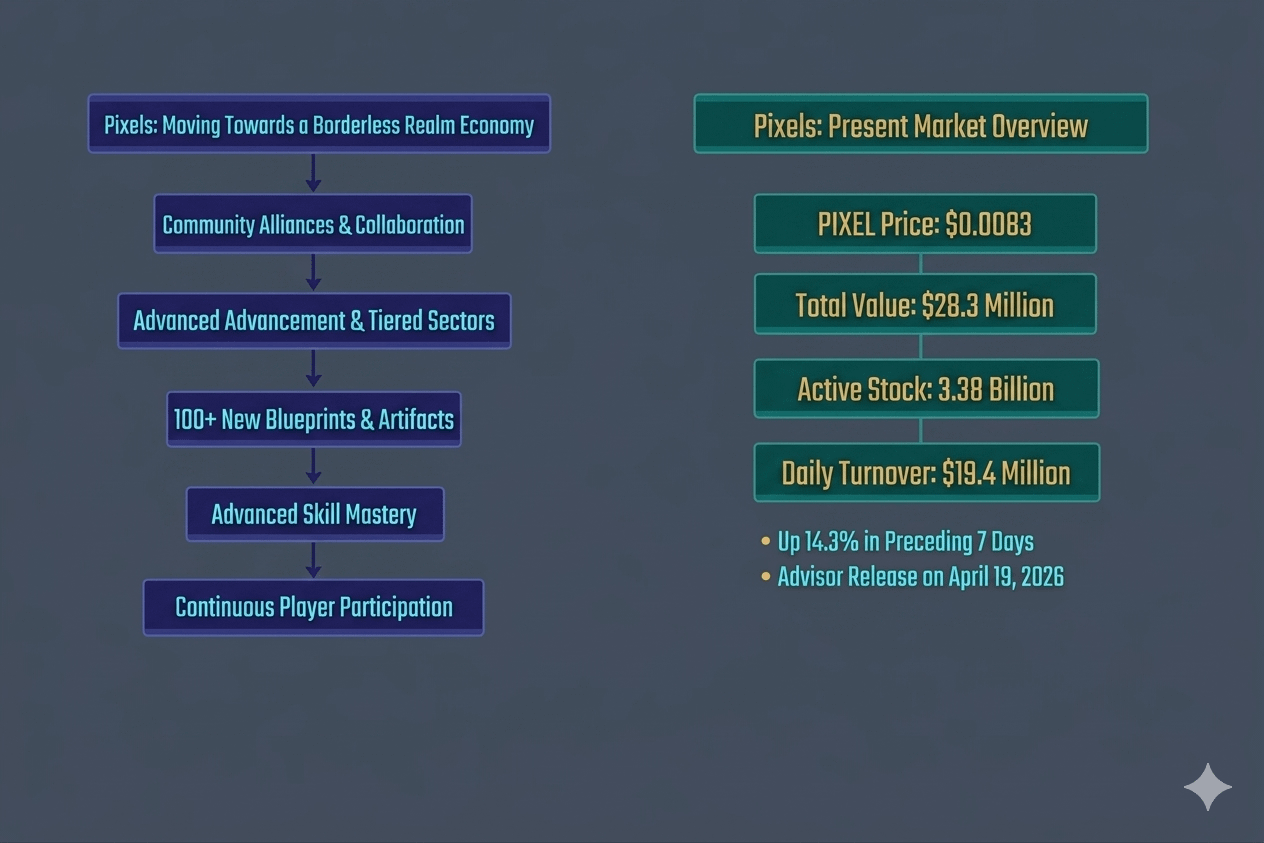
That shift is what makes Pixels interesting. A lot of Web3 games can attract users through incentives, but very few manage to keep them once those incentives fade. Pixels seems to be working toward solving that exact problem. Beneath the surface, the game has been expanding into something much broader—introducing guild systems, more complex progression paths, expanded crafting with new recipes, upgraded mechanics, and layered industry structures. Instead of just repetitive gameplay, it’s moving toward something closer to an open-world routine where players have multiple roles and long-term goals.
According to the project itself, Chapter 2 was designed to push players toward strategy and cooperation. And looking at the updates, these weren’t just surface-level changes. The addition of over 100 new items, restructured industry tiers, and deeper progression systems shows a clear effort to build a more sustainable in-game economy. Guild participation becoming more central is also a key move, as social engagement often plays a big role in retention.
From a trading perspective, this matters more than it might seem. Open-world design isn’t just about gameplay—it directly impacts how long users stay active. The longer players remain engaged, the stronger the chances of consistent demand forming around the token instead of short bursts followed by selling pressure. Pixels appears to be shifting toward rewarding meaningful participation rather than simply distributing tokens, which is a healthier long-term approach compared to traditional GameFi models.
Looking at the numbers, as of April 2026, PIXEL is trading in a relatively low price range with a modest market cap and decent daily volume. That combination tells an important story. On one hand, liquidity is still strong enough for active trading. On the other, the market is no longer pricing it as a high-growth narrative. Instead, it reflects a project that still needs to prove its ability to convert users into long-term value.
Tokenomics also play a critical role here. With a large maximum supply and ongoing unlock schedules extending into the future, supply pressure remains a factor traders can’t ignore. Even if the game improves, consistent token releases can limit upside if demand doesn’t keep pace. This is where many projects struggle—better gameplay doesn’t always translate into stronger price action.
The real question comes down to retention. Pixels has already shown it can attract a large audience, even reaching significant daily player numbers at its peak. But attracting users is only half the battle. The real test is whether those players stay because the experience itself is worth returning to, not just because of rewards.
The team seems aware of this challenge. Changes like requiring more strategy for earning rewards and adjusting parts of the in-game economy suggest they’re trying to reduce unnecessary sell pressure and create a more balanced system. Still, recognizing a problem and fully solving it are two different things.
There’s also a potential downside to consider. While deeper systems can improve engagement, they can also make the game more complex. If it becomes too complicated for casual players, it risks losing accessibility, which can hurt long-term growth. If that happens, the token may once again depend heavily on speculation rather than real usage.
For now, Pixels looks like a project worth watching—but not just from a price perspective. It’s more about whether the ecosystem can build strong player habits and sustained engagement. The fundamentals are evolving, the direction seems more thoughtful, and the potential is there. But everything depends on whether players actually stay and participate in the long run.
At this stage, it’s less about chasing hype and more about observing behavior. If the in-game world becomes something players genuinely return to, the token could find stronger footing. If not, it may end up following the same cycle seen in many GameFi projects.
So for now, it stays on my radar—not just as a token, but as a test of whether this kind of model can truly work.