

I didn’t really notice retention mechanics when I first came back to Pixels.
I just felt something wasn’t breaking the way it usually does.
Normally when you leave a game for a while, the system forgets you. Your loop resets. Your timing is off. The economy doesn’t wait. When you come back, you’re either behind or irrelevant. Most Web3 games don’t even try to fix that. They just keep emitting and hope new players replace the ones who left.
But this didn’t feel like that.
I came back late, expecting friction, expecting that “dead loop” feeling and instead, something was still aligned. Not perfectly. But enough that I didn’t bounce.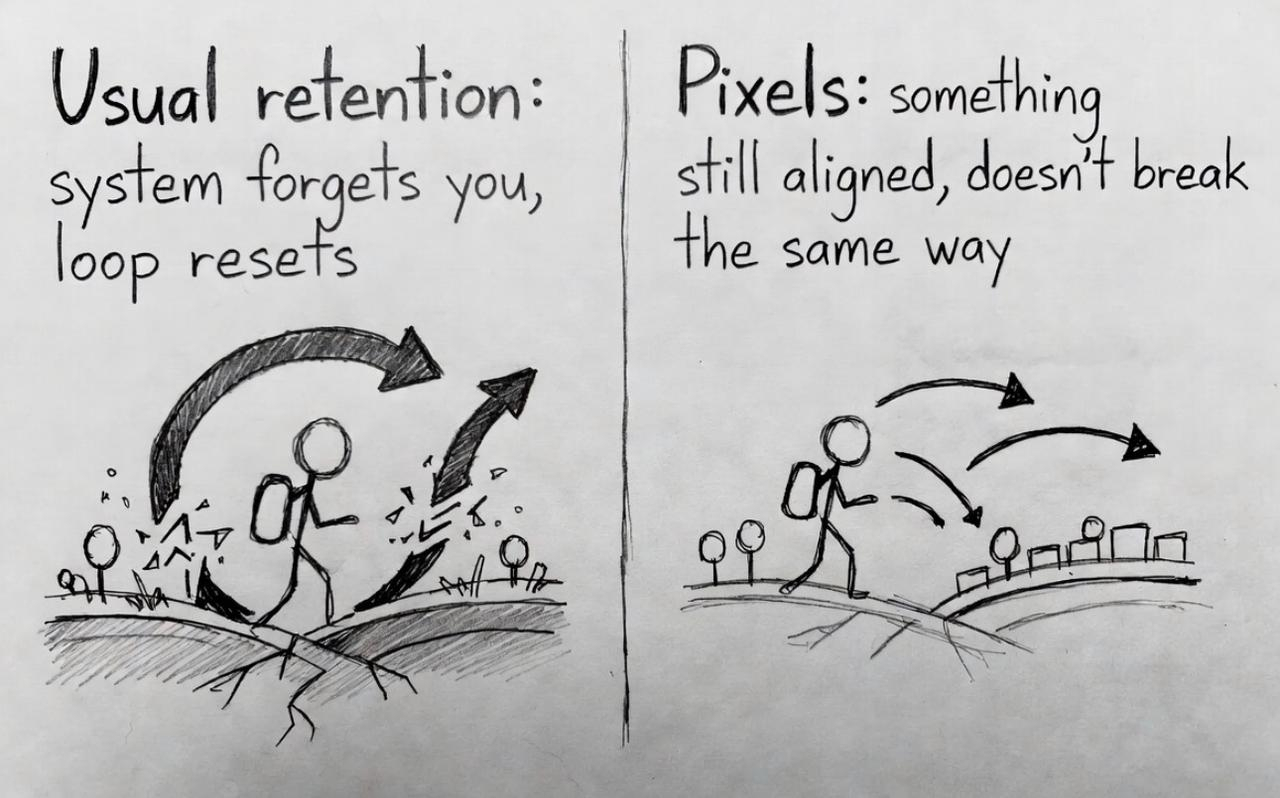
That’s when I started looking closer at what was actually happening underneath.
It’s not just retention in the usual sense. It’s not daily streaks or login rewards. It’s how value is being measured and returned over time.
The core shift is quiet but structural: rewards aren’t just tied to actions anymore. They’re tied to outcomes across cohorts.
You don’t just earn because you farmed.
You earn based on how your behavior fits into a larger distribution of players moving through the same system.
That changes everything.
Because now the system isn’t asking “did you play?”
It’s asking “did your participation generate return inside the economy?”
That’s where LTV starts to feel real here.
Not as a metric on a dashboard, but as a constraint inside the game loop.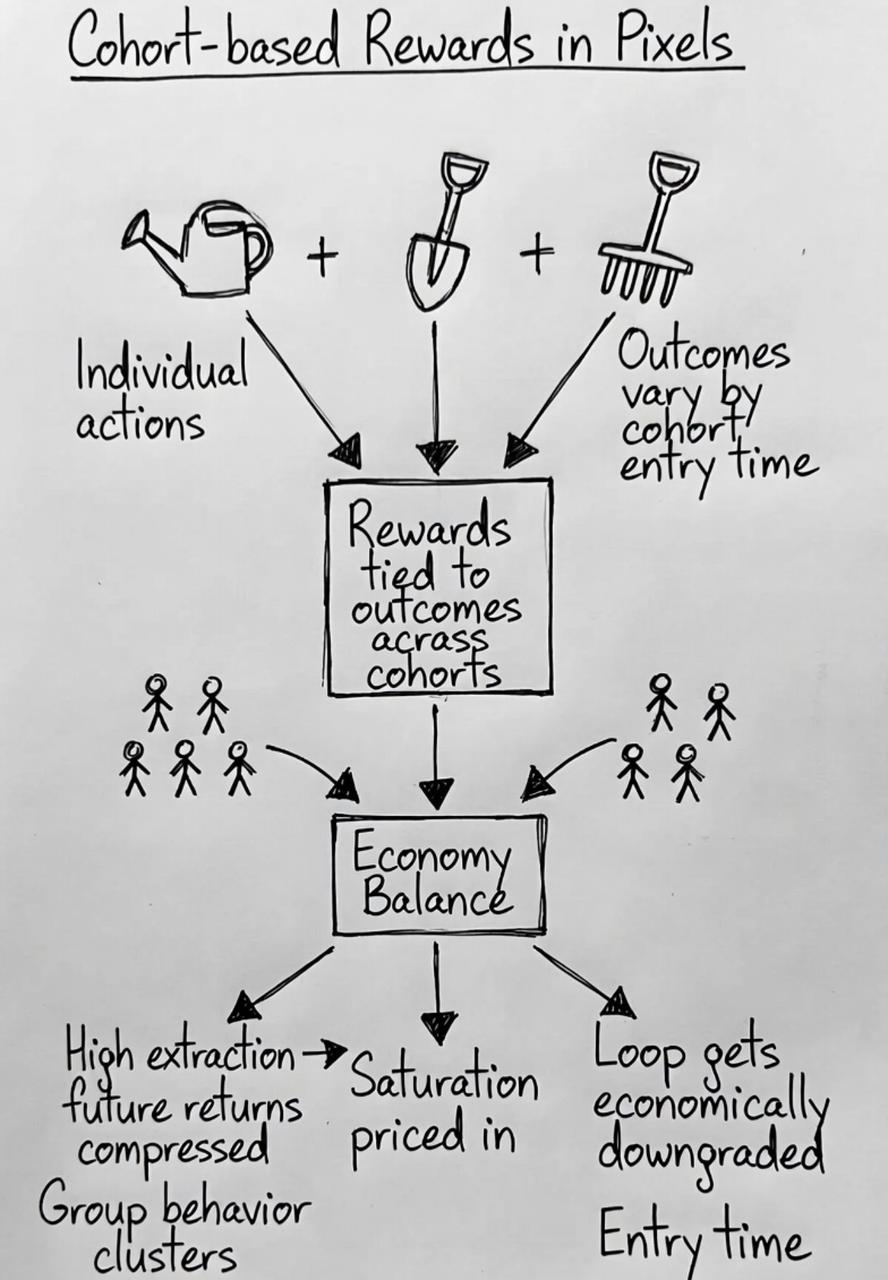
If a player extracts more than they contribute over time, the system compresses their future returns. Not directly, not visibly, but through how rewards get distributed across cohorts.
You start noticing it in small ways.
Certain loops stop scaling the way they used to. High-traffic actions feel crowded faster. Marginal gains shrink earlier than expected. At first it feels like randomness. But it’s not.
It’s saturation being priced in.
And it’s not happening per player. It’s happening per group behaviour.
That’s the part most people miss.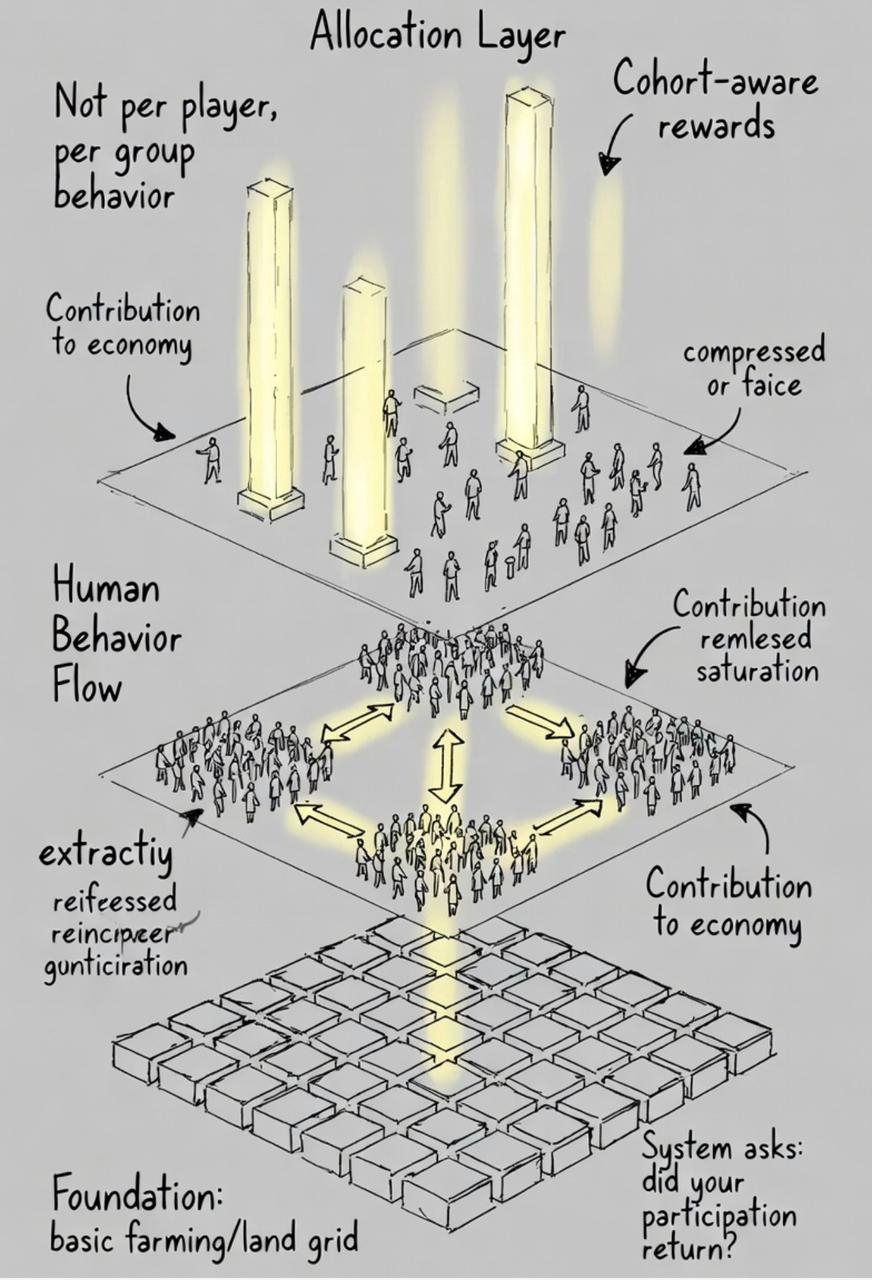
Cohort-based reward systems don’t treat players individually. They treat them as part of moving clusters. Entry time, activity patterns, extraction behavior all of it feeds into how rewards flow back.
So if too many players follow the same profitable loop, that loop doesn’t just get competitive. It gets economically downgraded.
Returns compress because the system is protecting long-term balance.
That’s retention, but not in the way it’s usually designed.
It’s not trying to keep you playing through incentives.
It’s trying to keep the economy stable enough that playing still makes sense later.
And that’s where LTV connects back into retention.
If the system overpays early cohorts, later players won’t stay.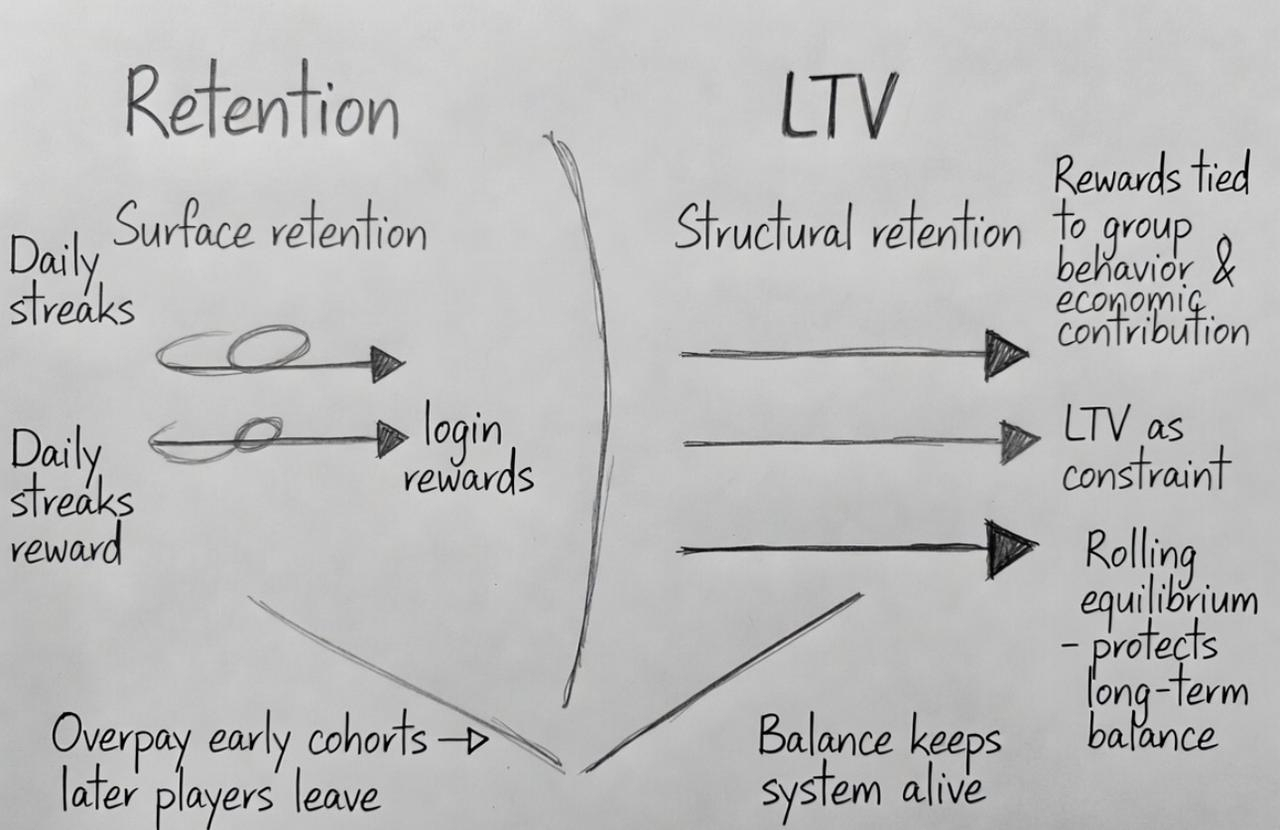
If it underpays, nobody stays.
So instead of fixing retention at the surface level, Pixels is adjusting the reward layer itself to maintain a kind of rolling equilibrium.
You can feel it when you stay long enough.
Early advantages don’t disappear but they don’t dominate forever either. New players aren’t completely priced out, but they’re not given free upside.
Everything sits somewhere in between.
That balance isn’t clean. It’s constantly shifting.
And that’s probably the point.
Because once rewards become cohort-aware, retention stops being about keeping you.
It becomes about keeping the system from breaking under everyone.
