



$PIXEL EVOLUTION — FROM PLAY-TO-EARN FAILURE TO REAL GAME ECONOMY SHIFT
Last night, while going through charts with friends, one thing became clear — most Web3 games didn’t die because of the market. They failed because their reward systems were broken from the start.
Early play-to-earn models looked attractive on the surface. Everyone could earn. But that was the problem. Rewards were distributed without understanding who was actually playing and who was just extracting value. Over time, bots and farming systems took control. Activity increased, but real engagement disappeared.
Data from platforms like DappRadar showed a consistent pattern. Retention dropped sharply because the system rewarded behavior, not intention. When rewards attract the wrong participants, the entire economy becomes unstable.
This is where the real damage started.
Once bots dominate, they scale. A single user controlling multiple wallets turns rewards into leakage instead of incentives. Reports from industry research groups highlighted how Sybil attacks became one of the biggest structural weaknesses in Web3 gaming. What looked like growth was actually dilution.
At the same time, most projects had no feedback system. Tokens were emitted continuously, but there was no clear way to measure if those rewards were creating value. Unlike traditional gaming, where every mechanic is tested and optimized, Web3 rewards were often left unadjusted.
This led to inflation.
The example of Axie Infinity is still one of the clearest cases. At its peak, it defined the entire sector. But once emissions exceeded actual demand, the system collapsed under its own weight. Trading volume dropped dramatically, not because players suddenly left, but because the economy could no longer sustain itself.
And this wasn’t an isolated case.
By 2025, hundreds of Web3 games had either shut down or faded away. The pattern was always the same. Growth driven by rewards instead of gameplay is never stable. Once new users stop entering, the system breaks.
Instead of increasing rewards, it focuses on precision. The token is no longer just something to farm and sell. It becomes part of access, progression, and in-game economy. Upcoming NFTs like Pets and Land being minted exclusively through @Pixels create real demand rather than artificial hype.
This shifts the structure.
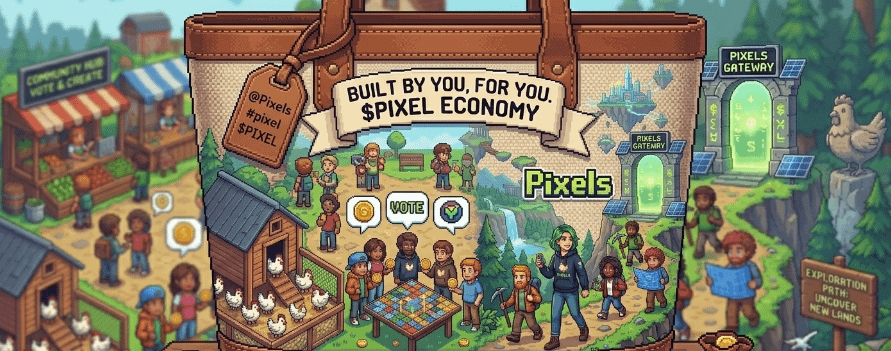
Rewards are no longer just distribution. They become controlled incentives tied to meaningful participation. Systems like behavior tracking and targeted rewards aim to separate real players from bots. If this works, it reduces unnecessary token emission and strengthens the economy.