
The evolution of blockchain gaming has reached a critical inflection point. For years, the industry struggled with the "extractive" nature of play-to-earn models, where token inflation often outpaced actual player engagement. However, @Pixels 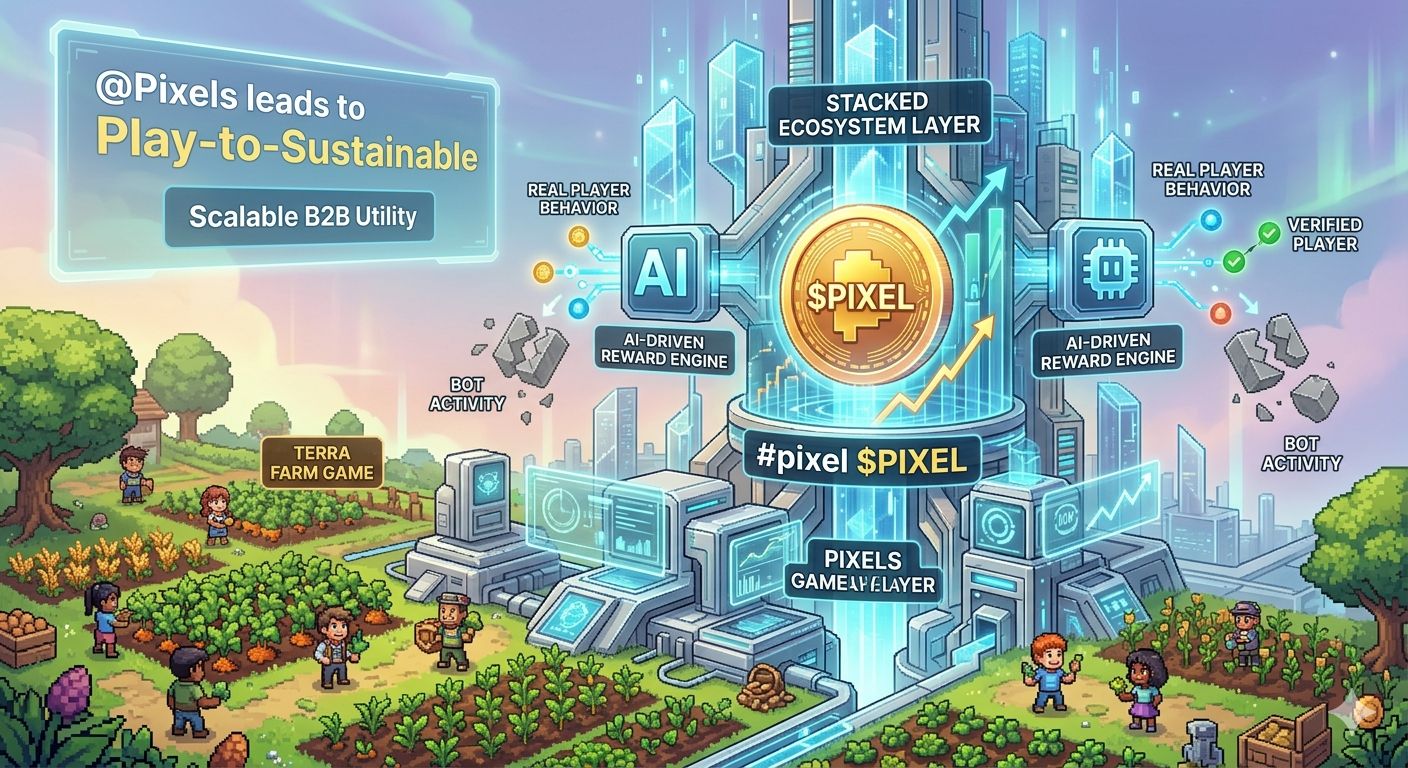 is currently orchestrating a masterclass in economic pivot through its ambitious Stacked ecosystem.
From Pixels to Infrastructure
While many still view Pixels as a charming pixel-art farming simulator, the project has quietly transformed into a robust infrastructure layer. The introduction of the Stacked framework represents a shift from being a single destination to becoming a foundational engine for the next generation of Web3 titles. By leveraging the token at the core of this ecosystem, the team is solving the biggest hurdle in crypto gaming: Sustainability.
The Power of the Stacked Ecosystem
The Stacked ecosystem isn't just about farming crops; it's about verifiable engagement. Key features that are setting a new standard include:
B2B Reward Engines: Allowing other developers to tap into the proven Pixels reward distribution model.
AI-Driven Anti-Botting: Ensuring that rewards go to genuine human participants, preserving the value for the community.
Cross-Game Utility: Creating a universe where assets and progress aren't siloed but flow through a unified infrastructure layer.
Why the $PIXEL Economy Matters
In 2026, the success of a token is measured by its "velocity of utility" rather than just speculation. Within the Stacked layer, $PIXEL functions as the lifeblood of a B2B network, moving beyond simple in-game purchases to become a requirement for ecosystem-wide participation and governance.
As we look toward the future of the #pixel movement, it is clear that the project has outgrown the "game" label. It is now a digital sovereignty engine, proving that when you stack community, infrastructure, and smart economics, you create a platform that can thrive regardless of market cycles.