
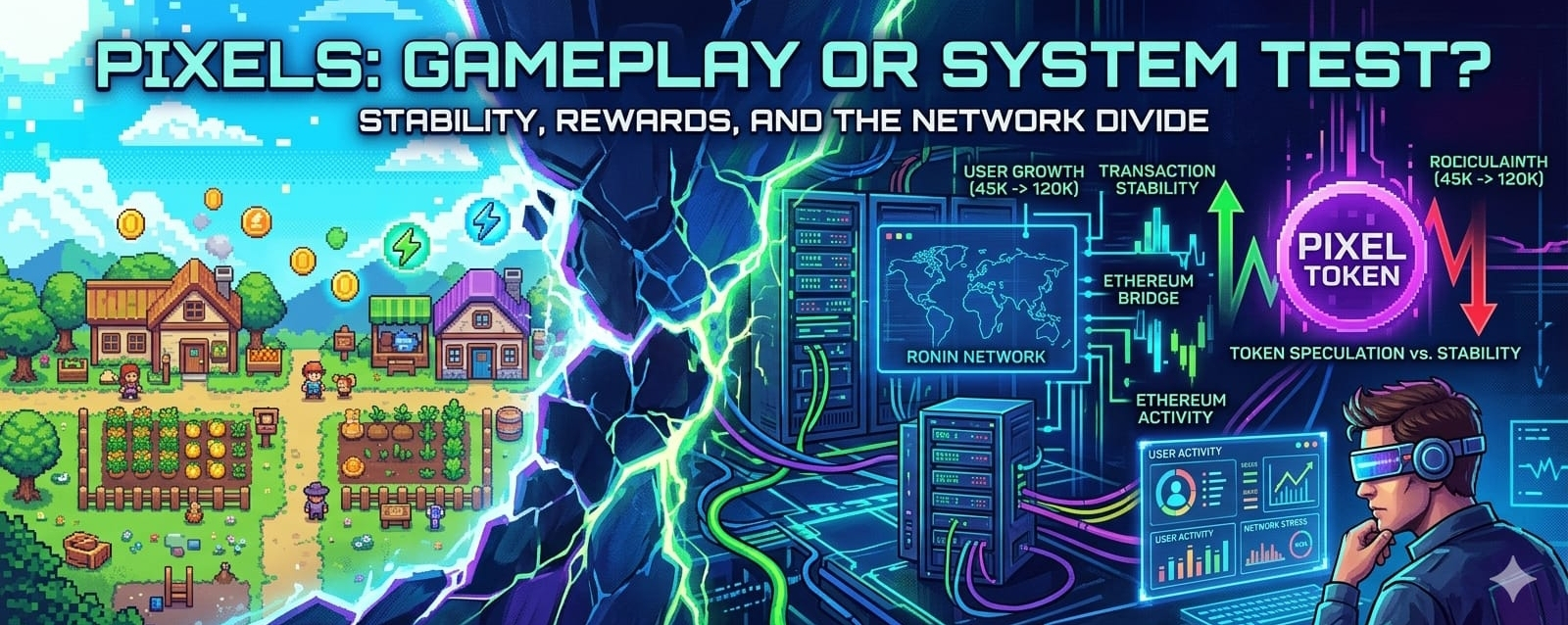
Coming back to Pixels after a few weeks didn’t feel like returning to a normal game. I expected small updates, maybe a new feature added to the same loop. But what stood out wasn’t inside the game—it was everything around it. The network, the rewards, the structure behind it all… that’s what has really changed.
So I’m not just asking if Pixels is getting better. I’m asking if the system behind it is becoming strong enough to handle real users, or just more complicated without being more stable.
The biggest shift comes from the Ronin Network. Its move toward becoming closer to Ethereum feels important. If it works, it could make everything smoother—fewer failed transactions, easier wallet use, less frustration. That’s what separates a “crypto game” from something that just feels like a normal game.
But there’s risk too. Ronin used to work well because it was controlled and focused. Opening it up is a big bet, and it hasn’t been fully tested yet.
Rewards are changing as well. Instead of passive earning, the system now pushes for real activity. That sounds better, but it also means games like Pixels must keep users active—not just attract them for a short time.
The PIXEL token still feels unstable. Big price swings don’t look like real progress—they feel like speculation. Right now, gameplay and token value don’t fully connect, and that creates uncertainty for both players and developers.
User growth looks strong, jumping from around 45,000 to over 120,000. But numbers alone don’t mean stability. The real question is simple: are people playing for fun, or just for profit?
Pixels feels stuck between those two.
The direction looks right. The ideas make sense. But confidence comes from consistency—and that’s still missing.
Right now, it doesn’t feel like I’m just playing a game. It feels like I’m watching a system being tested in real time.