
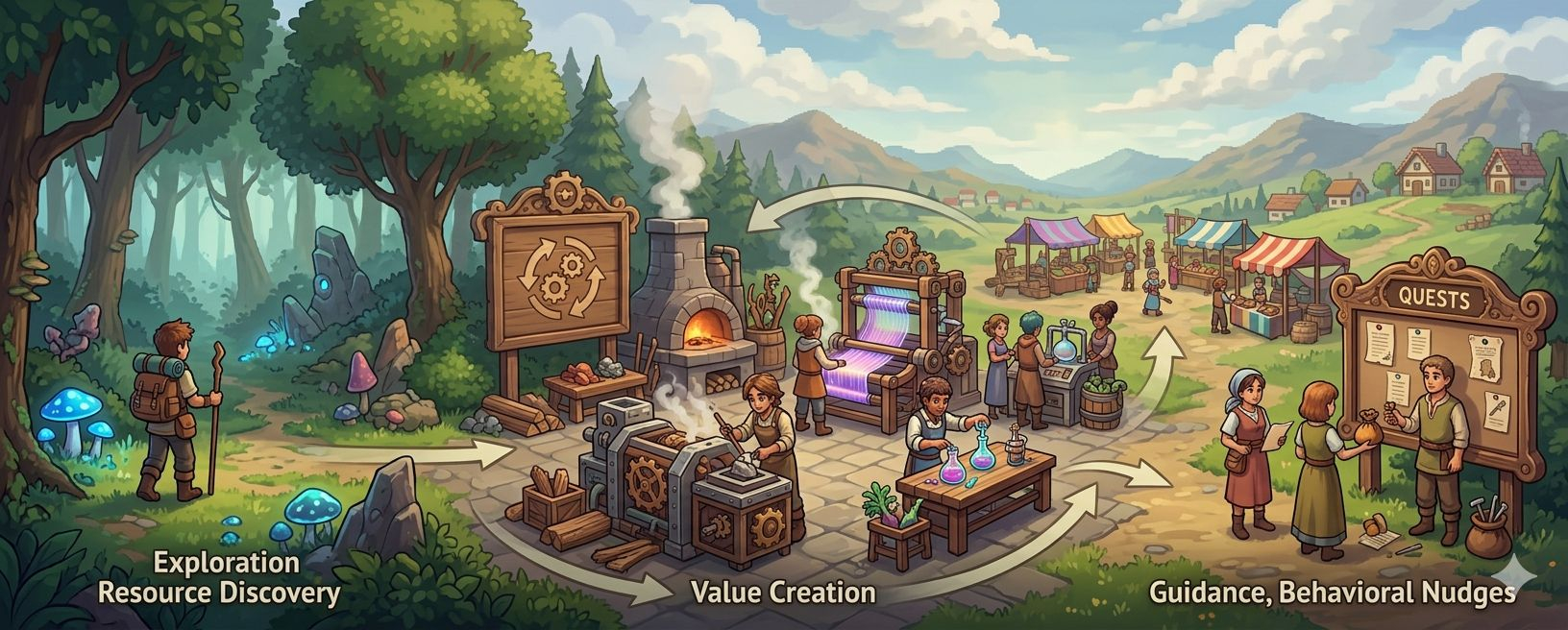


Honestly? I been sitting with @Pixels gameplay loops again, and the more I look at it, the more it feels like progression isn’t really about “playing more”… it’s about understanding the system 😂
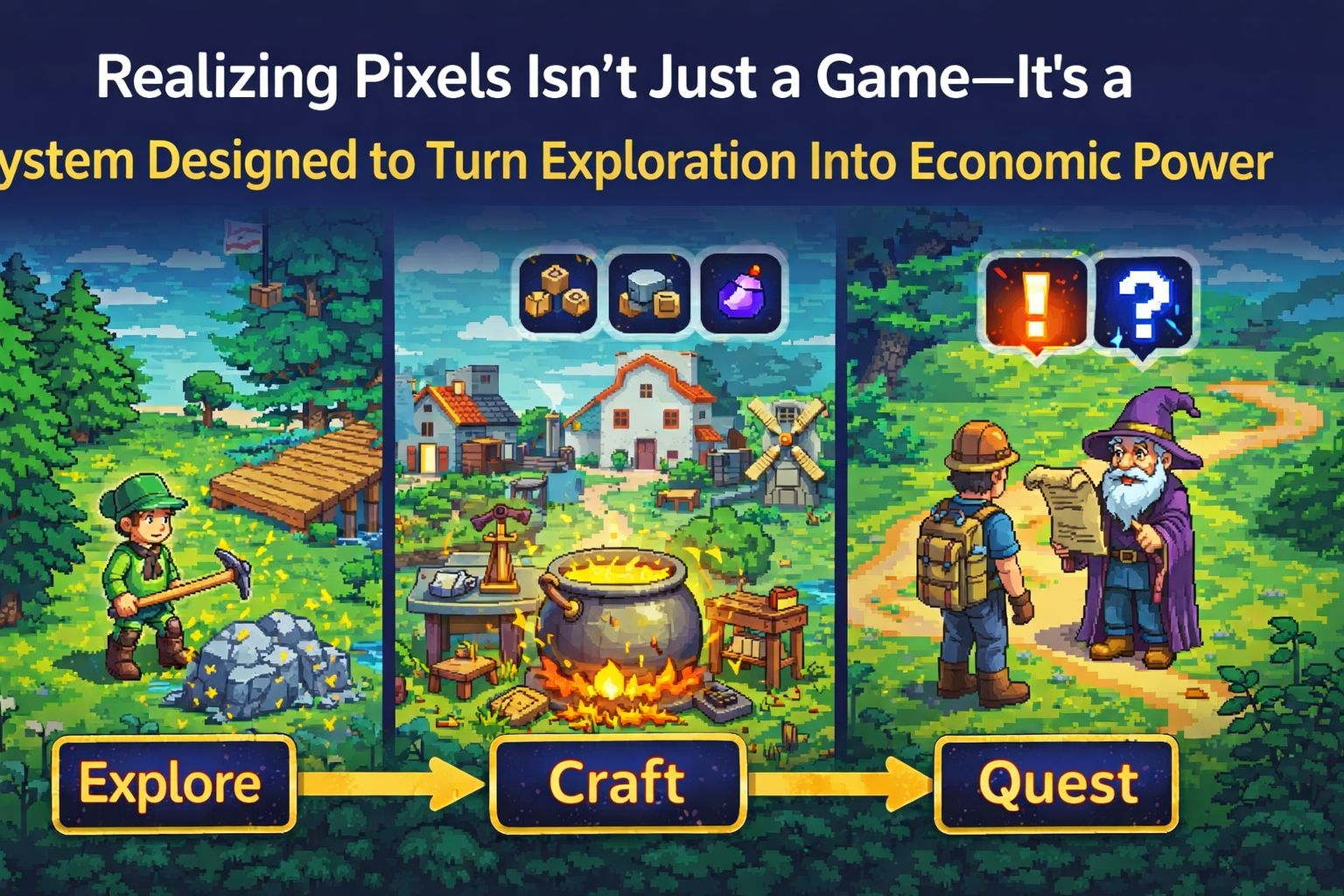
Most people think exploration is just moving around the map, unlocking areas, maybe finding resources. But what it actually does is shape progression itself. New zones introduce different resource types, different mechanics, and sometimes entirely new economic opportunities. Exploration isn’t cosmetic. it’s how players expand their role inside the economy. What I kept coming back to is that if you don’t explore, you’re basically limiting your earning and crafting potential without even realizing it.
Crafting is where things start to connect. It’s not just a feature. it’s the engine of value creation. Raw resources gathered through exploration get transformed into higher-value items, which then feed back into the economy. Tools, upgrades, consumables everything flows through crafting. The system quietly pushes players to move from simple gathering into production roles. But the tension here is efficiency. Once players figure out optimal crafting loops, it can reduce diversity in gameplay.
Then there’s quests, which on the surface feel like guidance for new players. But when I ran through them more carefully, they act more like behavioral nudges. They introduce mechanics step by step, reward participation, and subtly guide players into the core loops explore, gather, craft, repeat. It’s less about storytelling and more about onboarding into the economy.
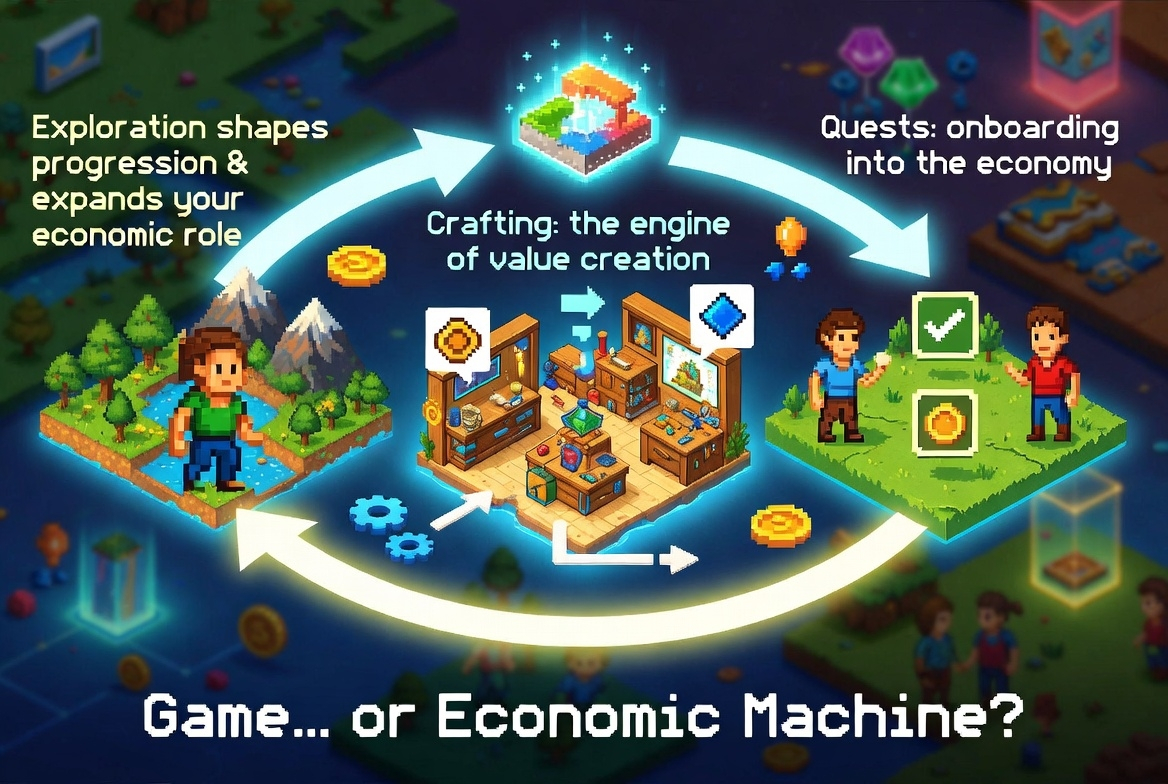
Still, what I find interesting is how all three systems exploration, crafting, and quests aren’t isolated. They’re tightly connected, almost like a feedback loop designed to keep players engaged and productive.
But I keep wondering when players fully optimize these loops, does the game still feel like a game, or does it just become an economic machine?
