
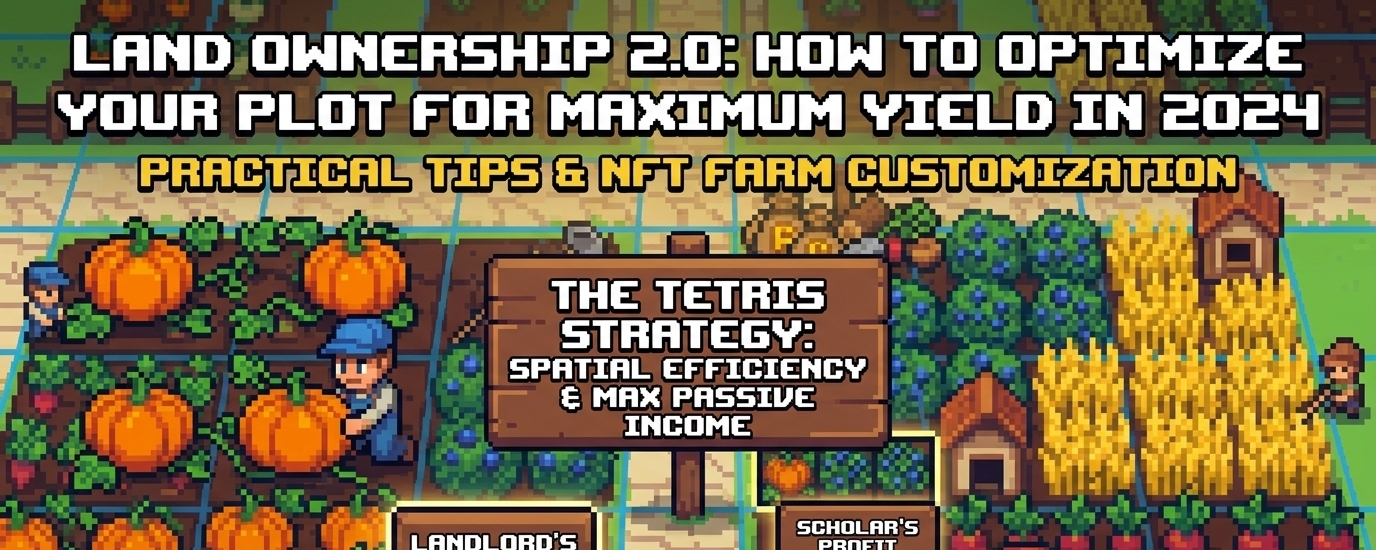

The era of "set it and forget it" NFT land ownership is over. In 2024, the digital real estate market has shifted from speculative flipping to a high-stakes simulation of resource management. Whether you are tending a 2x2 plot in Pixels, managing a complex estate in The Sandbox, or mining a planet in Alien Worlds, "Land Ownership 2.0" is about one thing: Yield Optimization
To treat your NFT land as a productive asset rather than a digital trophy, you need to master three core pillars: **spatial efficiency, resource cycles, and guild-level synergy
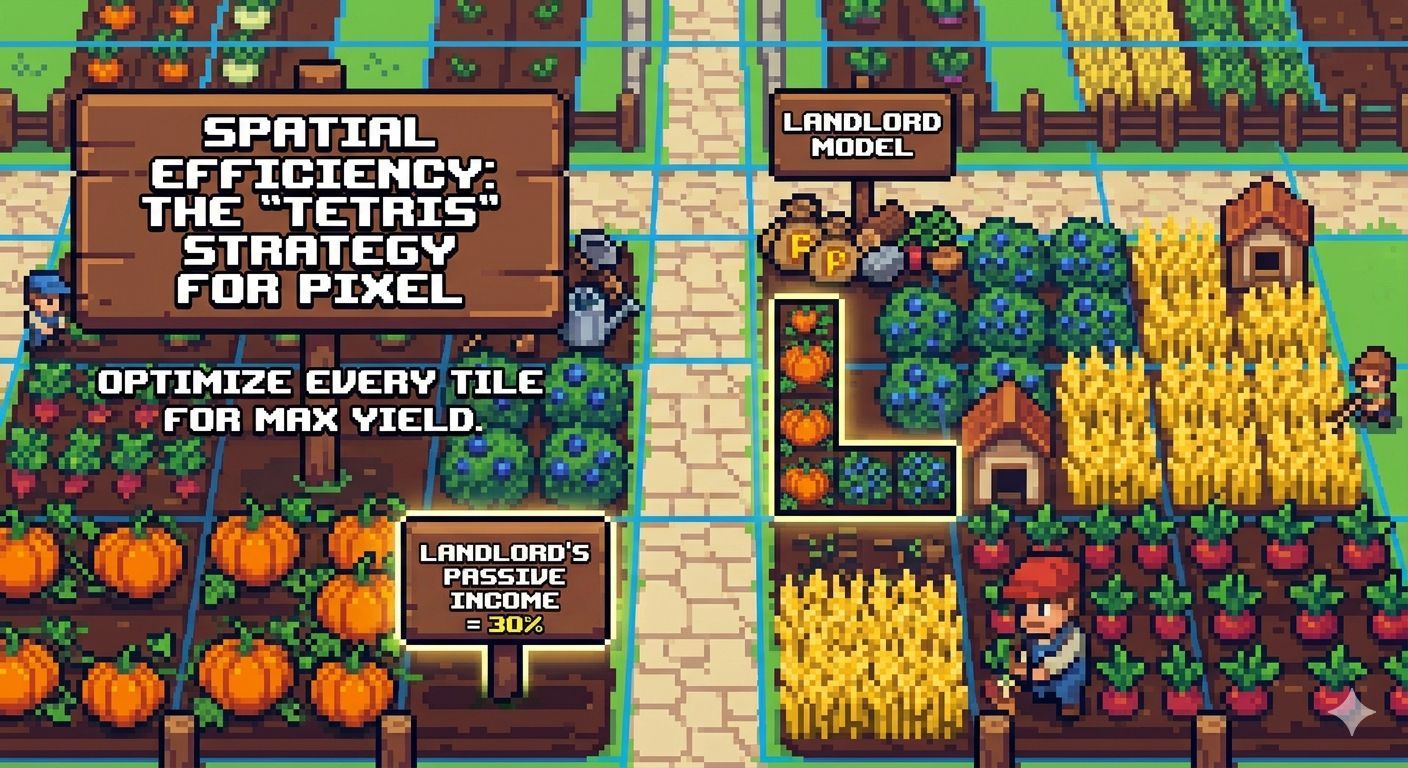
Spatial Efficiency: The "Tetris" Strategy
In modern Web3 gaming, every tile of your NFT land has a potential ROI. Leaving empty space is essentially burning tokens. Optimization begins with how you "dress" your plot.
Vertical Integration
Many platforms now allow for multi-layered utility. If your land supports both surface crops and underground mining (or atmospheric harvesting), ensure you aren't neglecting one for the other.
The Proximity Rule: In games like Town Star or Pixels, the distance between a resource source (like a well) and the processing station (like a mill) can be the difference between a 5% and 15% daily yield
Aesthetic vs. Utility
While a decorative fountain looks great, in 2024, top-tier players are swapping cosmetics for "Stat-Boost" NFTs. Look for items that provide a global multiplier to growth speed or resource regeneration.
Resource Management & The "Secondary Loop"
Yield isn't just about what you harvest; it’s about what you do with the waste. The most profitable landowners in 2024 are Harvest during "low-gas" or "off-peak" server hours. | Reduced Overhead |
The Power of "Land Buffs"
Most NFT land parcels now feature innate traits (e.g., +10% Fertility, Proximity to Water). Don't fight the land’s nature. If your plot has a "Volcanic" trait, stop trying to grow wheat; pivot to Rare Ore extraction or Geothermal Energy production. Optimization means aligning your customization with the land's metadata.
Customization for Passive Income (The "Landlord" Model)
If you don't have 10 hours a day to click on digital corn, you need to customize your land Player-Traffic In metaverses like Decentraland or The Sandbox, your "yield" isn't crops—it's attention and foot traffic.
Public Utility Build a "Teleport Hub" or a "Repair Station" on your land. By providing a necessary service for other players, you can charge a small transaction fee (micro-tax) in the game’s native token.
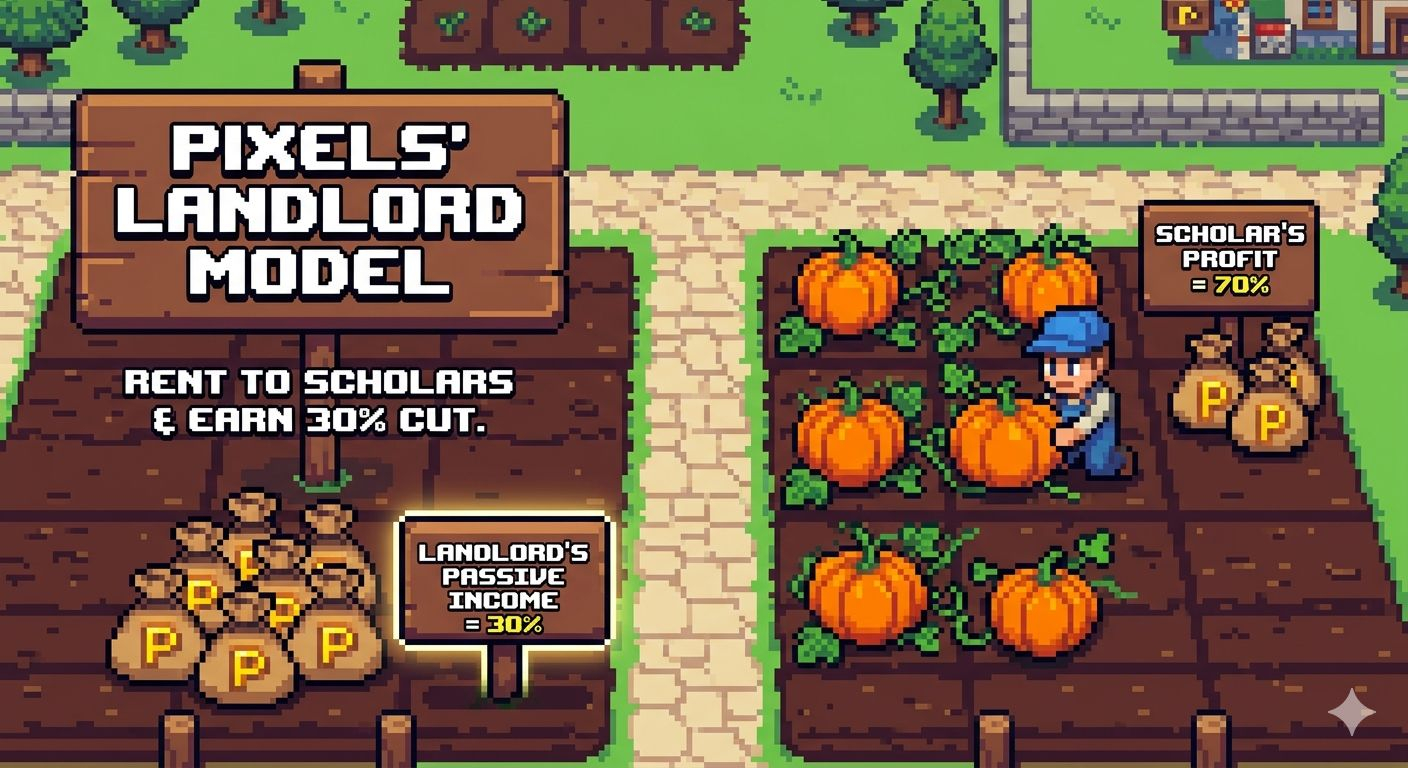
Sharecropping 2024 is the year of the "Digital Sharecropper." Customize your land with high-tier tools and then lease the usage rights to "Scholars" or players who have the time but not the capital. You take a 30% cut of their manual labor, turning your NFT into a truly passive yield engine.
The 2024 Tech Stack: Yield Aggregators
Don't do it all manually. The "2.0" player uses third-party dashboards (like NFTGo or DappRadar) to track the "Floor-to-Yield" ratio.
Keep an eye on the Emissions Schedule of the game's utility token. If the game is about to enter a "halving" or a reduction in rewards, it’s time to pivot your land customization from "Max Production" to "Max Storage," waiting for the supply shock to drive prices up.
The Bottom Line
Land Ownership 2.0 is no longer about holding; it’s about operating. Your NFT is a factory, and you are the floor manager. By tightening your resource loops, leveraging your land's innate metadata, and opening your borders to the wider player economy, you can squeeze every drop of value out of your digital arts.