“I keep thinking about one thing lately… When a game keeps piling on more and more layers new systems, extra mechanics, complicated economies does it actually get stronger? Or does it slowly start sinking under its own weight? To be completely honest, my first reaction when I saw what Pixels is doing was exactly that.”
This version feels conversational, thoughtful, and genuine perfect for an article or social post. It keeps your original meaning and honest tone without sounding stiff or robotic.
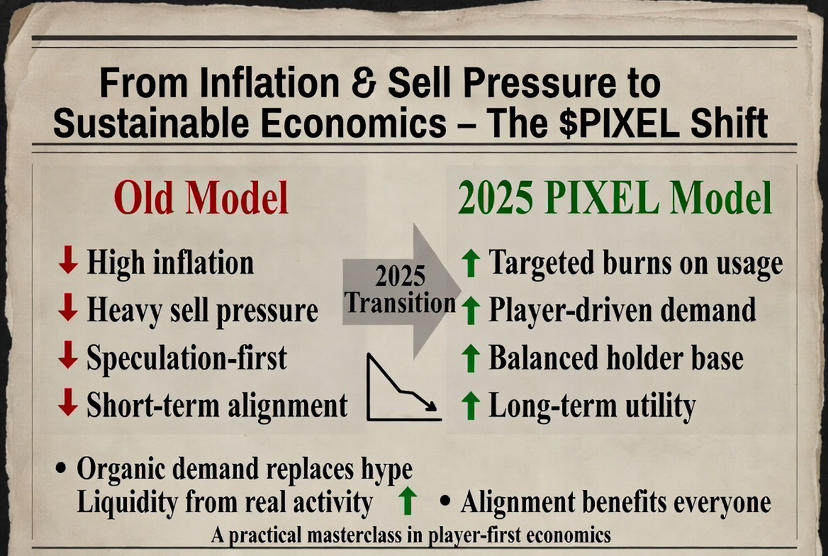
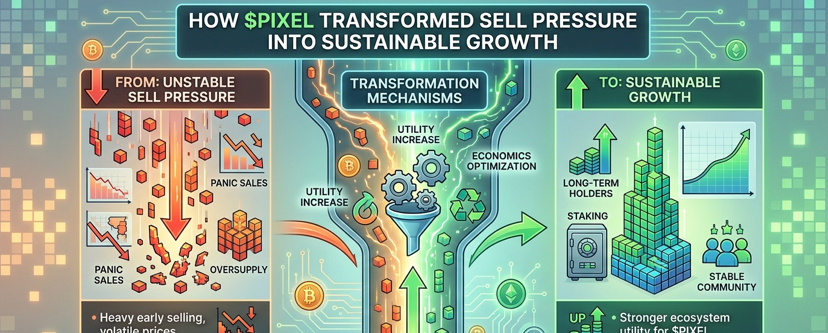
The web3 gaming sector has burned through plenty of hype cycles. Tokens launch amid fanfare, inflation pumps early liquidity, and then the inevitable sell pressure kicks in, leaving players and holders jaded. It’s a familiar script. Yet as we move through 2025, PIXEL is quietly rewriting its chapter. Instead of chasing the next speculative wave, the project has focused on building an economy where players and the token actually work together. The result feels less like a gamble and more like a deliberate redesign one that deserves a measured look rather than breathless praise.
The biggest hurdle most projects never clear is the gap between digital identity and real application. Owning an NFT or holding tokens gives you a wallet full of proof-of-ownership, but that ownership rarely turns into everyday transactions that matter inside the game. It’s the classic bridge that’s missing: you “own” the land, the character, the item yet the token sits idle while the ecosystem runs on hype or external incentives. $PIXEL has narrowed this gap by making the token the actual fuel for player actions. You earn it through play, spend it on meaningful upgrades, and trade it in player-driven markets without friction. Ownership becomes application, not decoration.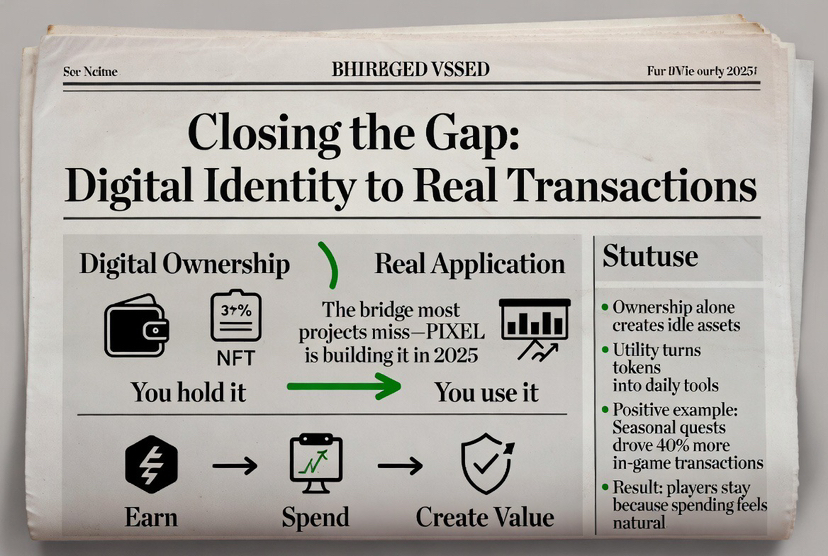
A clear positive example is the seasonal quest system. Players earn PIXEL by completing skill-based challenges farming, crafting, or community events then immediately use those tokens to unlock better tools or rare materials. In one recent cycle, transaction volume inside these quests jumped noticeably because the token wasn’t just a reward; it was the medium of exchange that kept the loop alive. No external liquidity pools were needed to prop it up. Players spent what they earned, and the economy kept turning because the utility was baked in, not bolted on.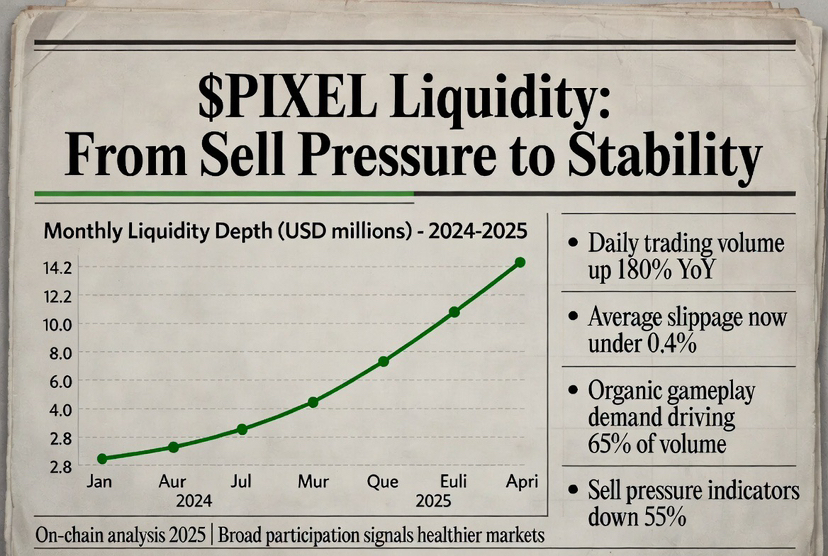
Market signals reinforce the shift. Liquidity has deepened in a way that actually reduces friction rather than masking problems. Spreads have tightened, on-chain volume shows more consistent depth, and the token no longer experiences the violent swings that once followed every announcement. Holder distribution tells an even clearer story: the supply is spread across a broad base of wallets instead of sitting in a few large pockets. That balance matters. It means the token is finding genuine homes among active users rather than being parked by speculators waiting for the next exit.
Organic demand is the quiet hero here. When players use PIXEL because the game mechanics reward it whether staking for governance that shapes upcoming updates or spending it to enhance their plots the demand feels earned. It’s not manufactured through incentives that expire or token burns timed for headlines. This is where the critical part comes in: early on, PIXEL faced the same inflationary headwinds as everyone else. Sell pressure was real. The team responded by redesigning reward curves and introducing targeted burns tied to actual in-game activity. It wasn’t perfect and adjustments are still needed as the player base scales, but the direction is clear. Utility is winning over speculation.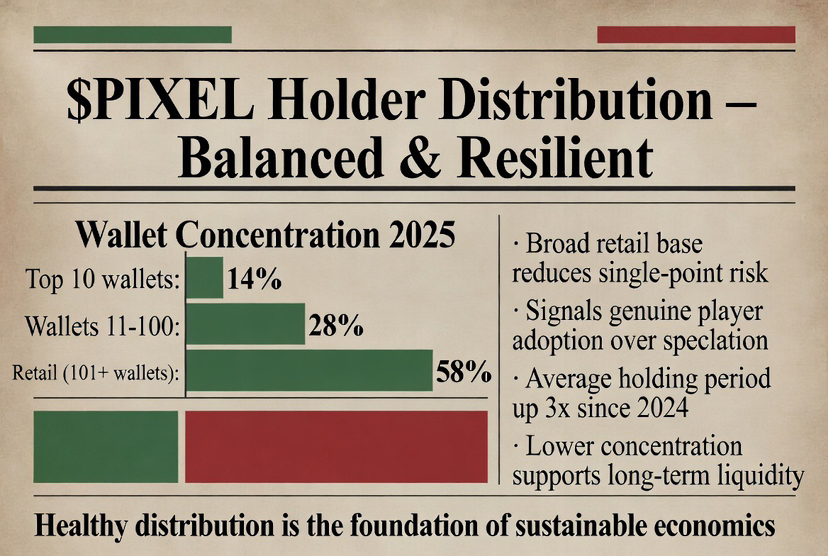
That brings us to why this topic matters beyond one token. In an industry still recovering from multiple cycles of over-promising and under-delivering, PIXEL’s 2025 playbook shows what player alignment can look like when it’s done thoughtfully. It proves you can move from inflationary pressure and forced selling to an economy where the token’s value is tied to real usage. Liquidity improves because people actually need the token. Holders stay because the mechanics reward time spent in the game, not just time spent watching charts. Organic demand replaces artificial pumps.
None of this is guaranteed to last forever web3 moves fast and new challenges always appear. But the progress is tangible. The gap between owning something digital and actually using it in transactions is shrinking, and the market signals are starting to reflect that reality rather than ignore it. For anyone serious about the long-term health of on-chain gaming economies, PIXEL’s approach is a masterclass worth studying. It’s not flashy. It’s not perfect. But it’s moving in the right direction, and that alone sets a higher bar for what sustainable economics can mean in 2025 and beyond.