The first generation of play-to-earn (P2E) games proved one thing clearly: users love ownership and rewards—but unsustainable token economies can destroy even the most popular ecosystems.
Projects like Axie Infinity introduced millions to Web3 gaming, but they also exposed core weaknesses: inflationary rewards, extractive player behavior, dependence on new entrants, and weak long-term gameplay retention. Once token prices dropped, many ecosystems collapsed under their own incentives.
Now a newer title, Pixels, may be one of the first serious attempts to solve those structural flaws rather than repeat them.
Built on Ronin Network, Pixels combines browser-based farming gameplay with crypto ownership—but its real innovation may be economic design, not graphics.
 Why Most P2E Games Failed
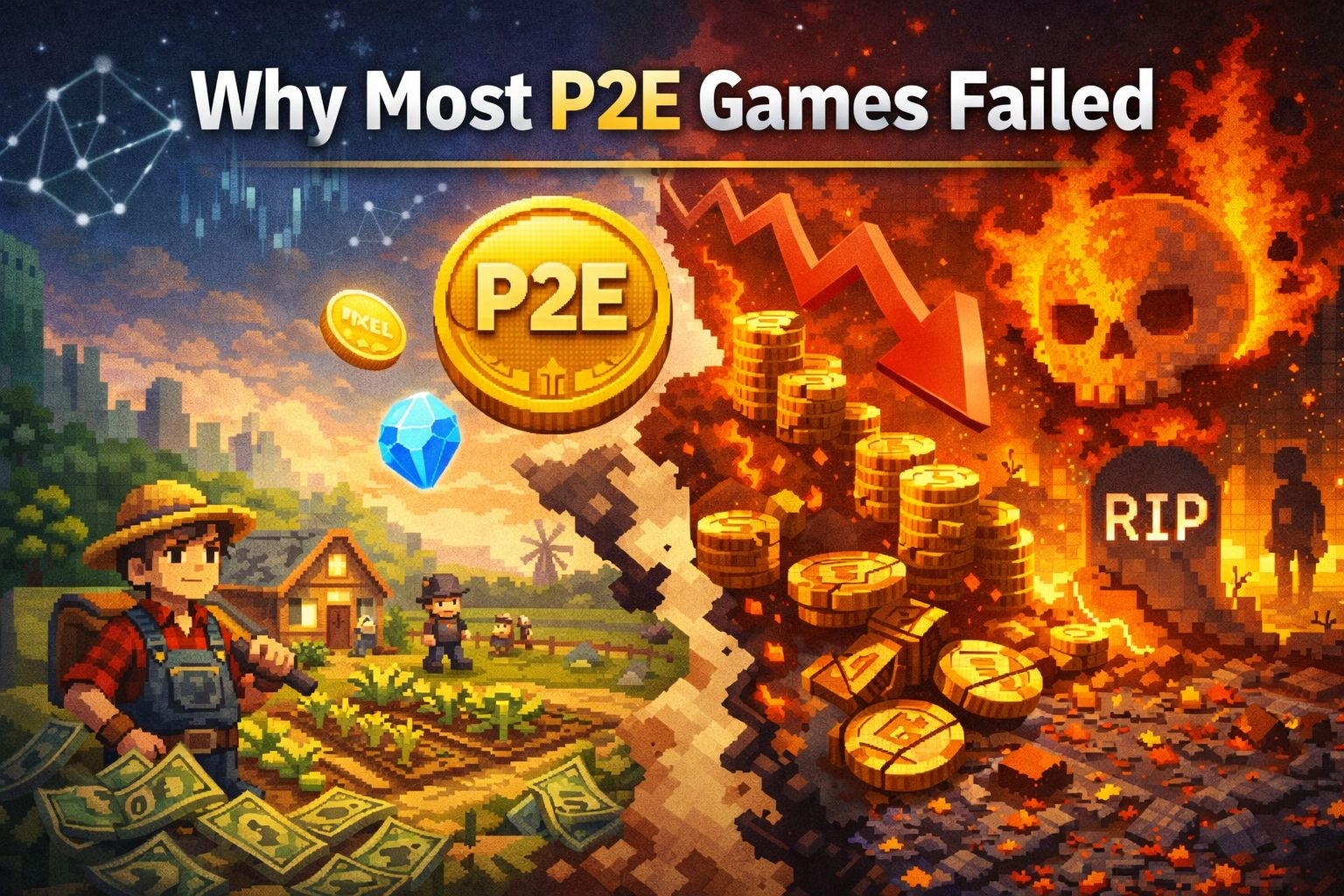
Traditional P2E models often followed a predictable pattern:
Launch token rewards
Attract players seeking income
Increase user growth rapidly
Reward emissions outpace demand
Selling pressure crushes token price
Players leave
This created a circular economy where many users played primarily to extract value, not enjoy the game.
That model turns users into sellers rather than customers.
For any gaming economy to survive, a meaningful portion of users must spend because they enjoy the experience, not simply farm tokens.
That distinction matters.
 What Pixels Is Doing Differently
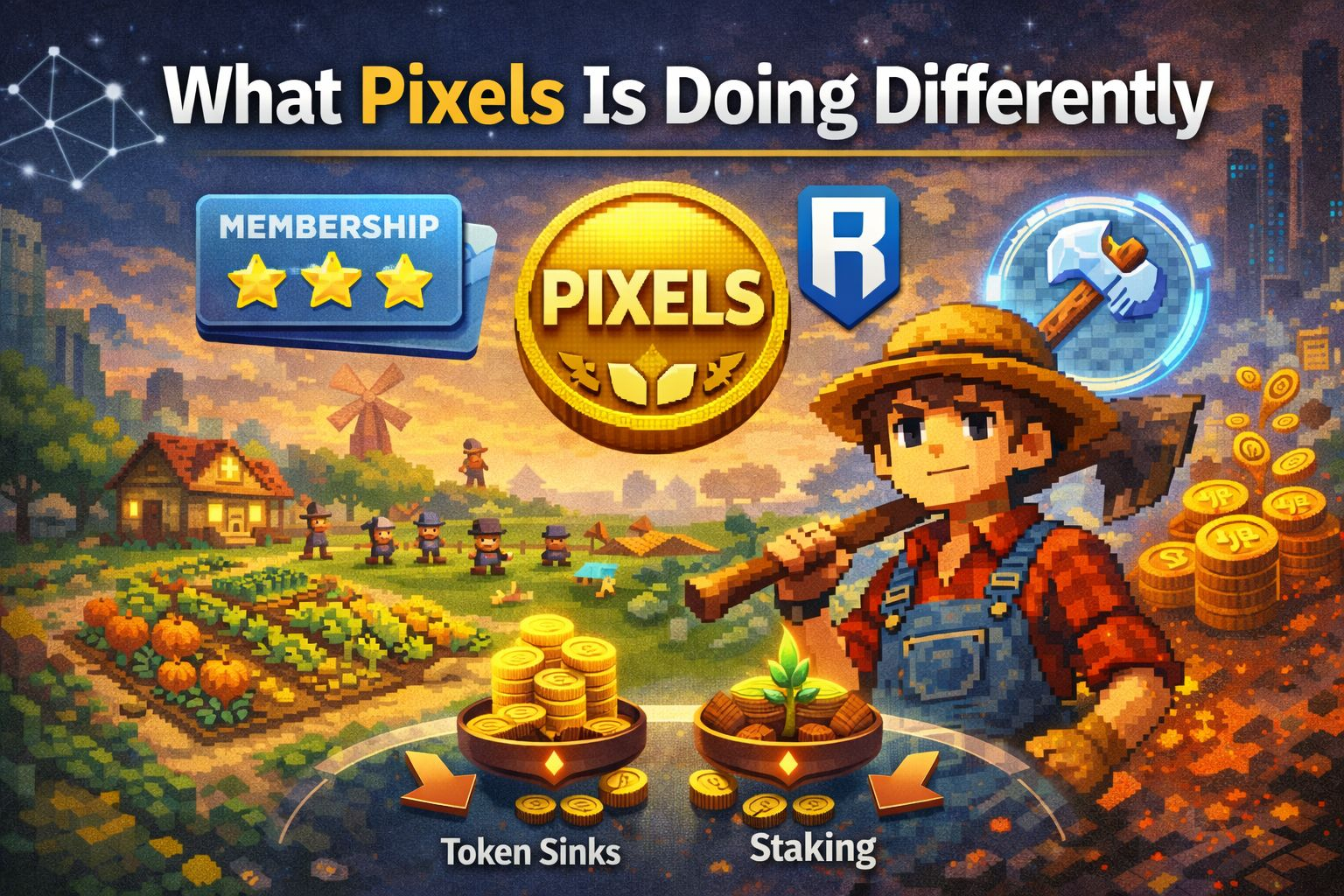
Pixels positions itself closer to a “play-and-own” model than a pure play-to-earn model. According to project materials, the game emphasizes free-to-play access, social gameplay, land systems, crafting, and progression loops while integrating blockchain ownership and token utility.
Instead of relying only on reward emissions, Pixels uses multiple token sinks and optional premium mechanics such as:
Membership perks
Cosmetic or convenience upgrades
Land-related systems
Guild mechanics
Staking layers
Resource progression systems
That matters because sustainable economies need circulation, not one-way emissions.
If users earn tokens but also spend tokens inside a functioning game loop, token pressure can become more balanced.
Why Ronin Gives Pixels an Edge
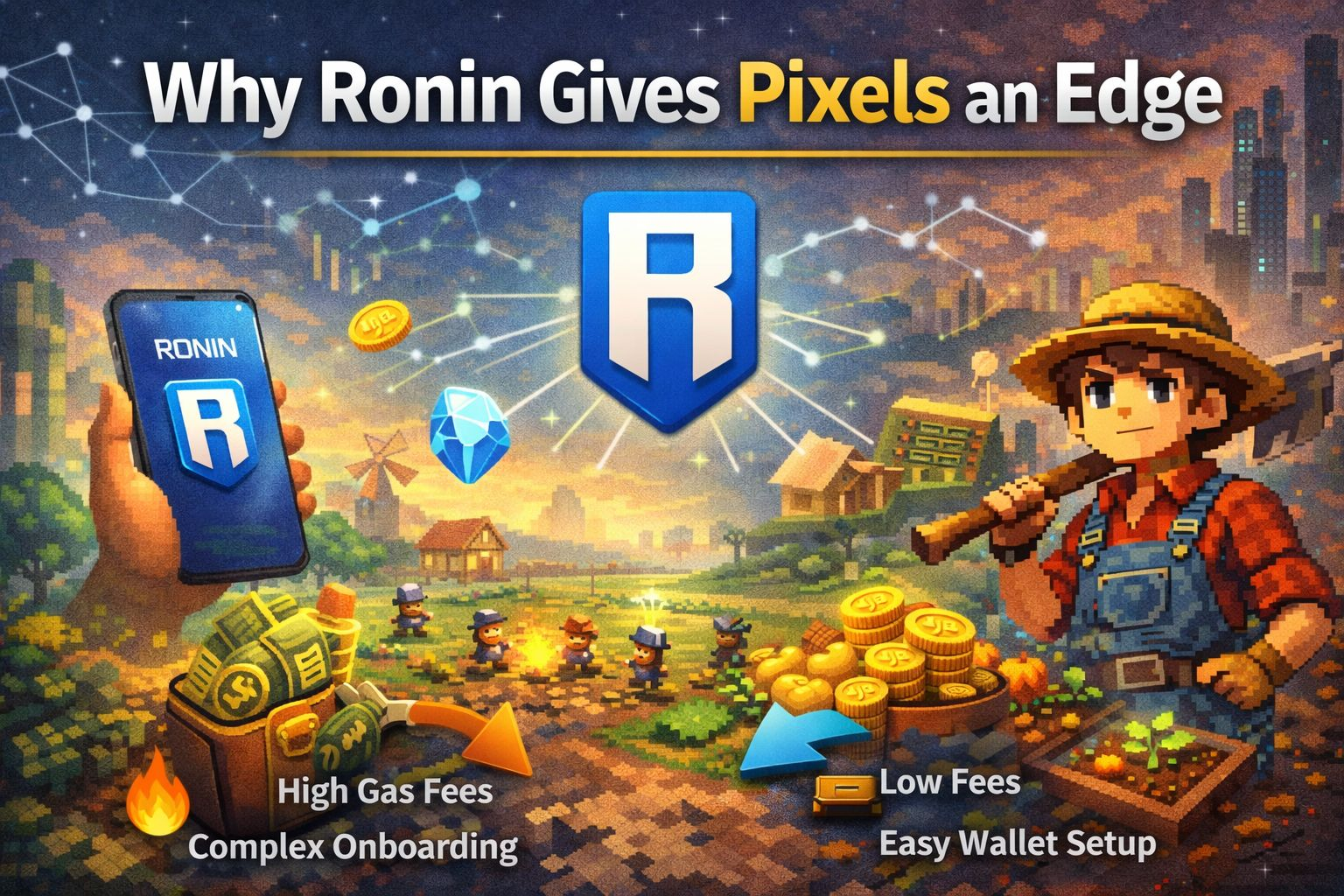
Pixels also benefits from launching on Ronin, a chain already associated with gaming users and low-friction onboarding.
This reduces two common Web3 barriers:
High gas fees
Complex wallet setup
For mass adoption, user experience matters as much as tokenomics.
Most mainstream players do not care about blockchains—they care about convenience, fun, and progression.
Pixels appears to understand this better than many earlier GameFi projects.
The Real Test: Are Players Staying for Gameplay?
This is where Pixels becomes interesting.
Many crypto games attract wallets. Few attract real gamers.
If Pixels can retain users because:
The gameplay loop is enjoyable
Social interaction feels organic
Progression feels rewarding
Ownership adds value rather than friction
...then it may represent a major shift for Web3 gaming.
Because sustainable GameFi is not built on yield—it is built on entertainment.
 Risks Investors and Players Should Still Watch
Despite promising design choices, Pixels is not risk-free.
1. Token Speculation Risk
If too much market attention focuses on PIXEL price rather than gameplay, volatility can distort the ecosystem.
2. User Retention Risk
Crypto-native launches often generate hype. Long-term daily active users are the real metric.
3. Balance Risk
Too many rewards = inflation.
Too few rewards = low engagement.
Finding equilibrium is difficult.
4. Competition Risk
Traditional studios and Web2 games may adopt digital ownership models with stronger production quality.
What Smart Readers Should Understand
Pixels should be viewed less as “the next moonshot token” and more as a live experiment in GameFi evolution.
The bigger question is not:
Will PIXEL pump?
The better question is:
Can a blockchain game build a healthy economy where users want to play first and earn second?
If the answer becomes yes, Pixels may matter far beyond one token cycle.
Final Takeaway
The first wave of P2E showed what happens when finance replaces fun.
Pixels may be one of the earliest serious projects trying to reverse that formula—putting gameplay, retention, and circular economics ahead of pure emissions.
That does not guarantee success.But if Web3 gaming is going to mature, it will likely look more like Pixels than the reward farms of the last cycle.That alone makes it worth watching.