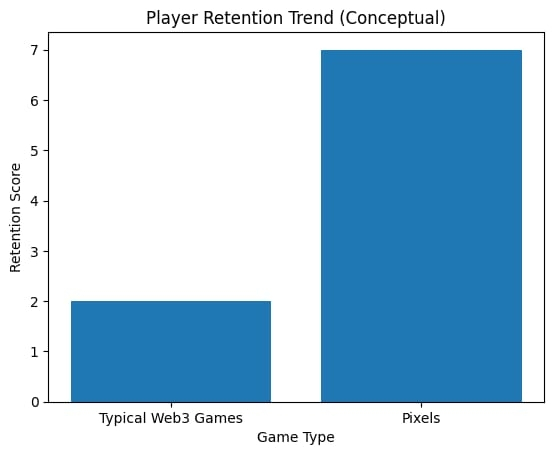

Not because it is perfect. It is not. Not because it has solved digital ownership, token design, or online economies. It has not. I pay attention to it because it looks like a team that understood a basic systems problem early: if the product is weak, the infrastructure does not save you. I have seen this fail over and over. A polished token model, a marketplace, a chain migration, a wallet integration, and a glossy roadmap do not create a world people care about. They just make the failure more expensi.
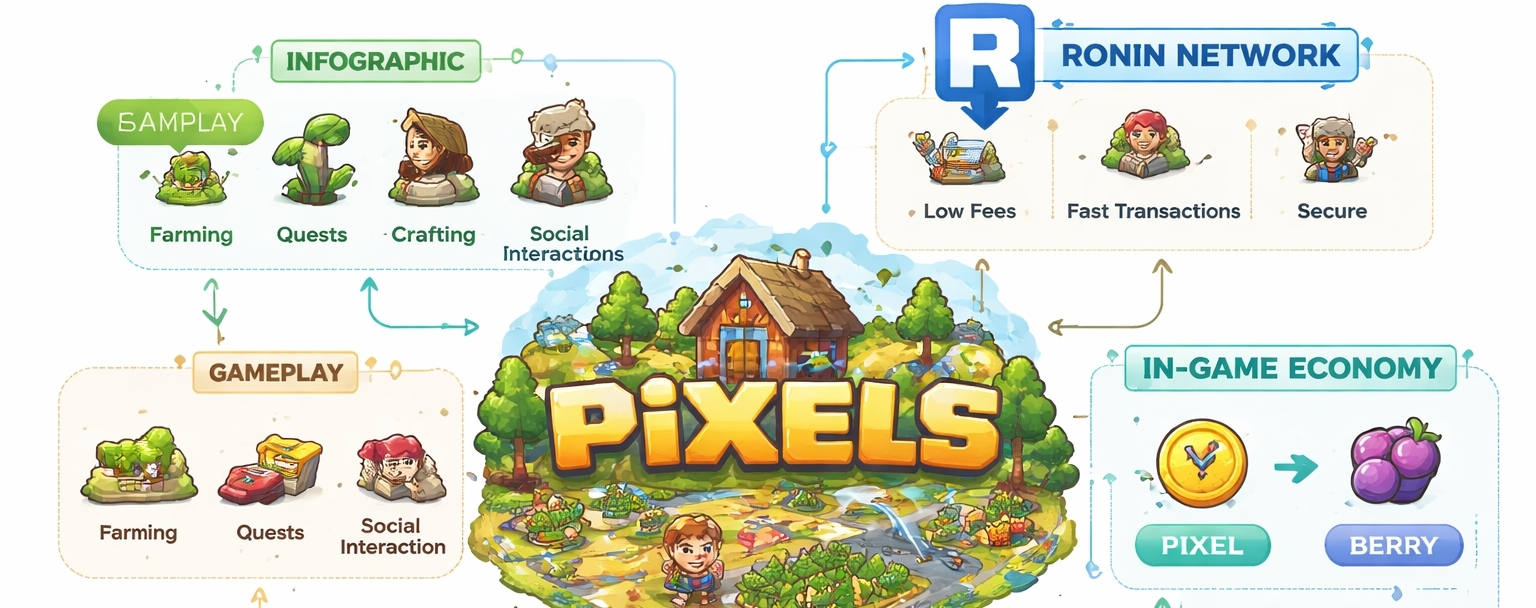
Pixels matters because it started with a game loop that people could actually understand. Farming. Gathering. Crafting. Wandering around a shared map. Talking to other players. Repeating small actions until a routine forms. That sounds almost too ordinary to mention, but ordinary is underrated. Especially in a space that spent years trying to package financial speculation as game design
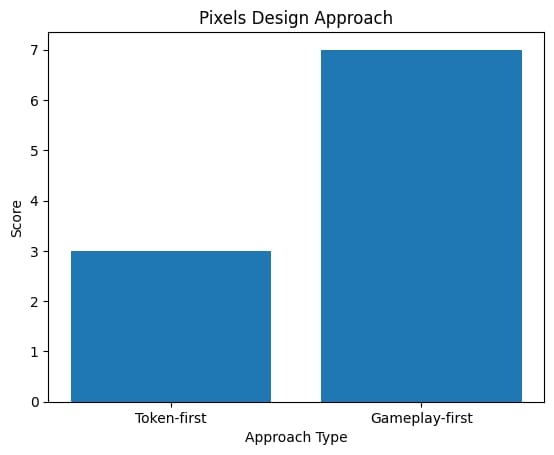
That is what caught my attention. The game does not lead with ideology. It does not ask the player to care about tokenomics before they care about the world. It gives them a job to do, a place to move through, and enough structure to make returning feel natural. From an architecture perspective, that is the right order of operations. Experience first. @Pixels Systems second. Markets third, if they have to exist at all
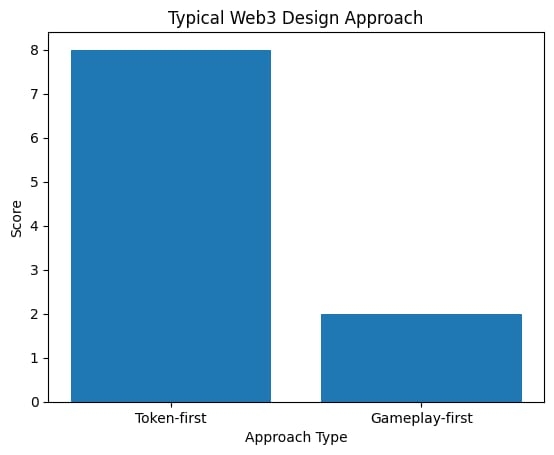
A lot of Web3 projects got that sequence backward
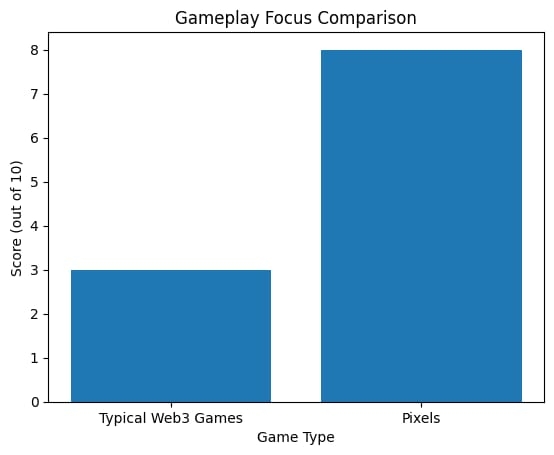
The usual pattern is familiar by now. Start with ownership. Add scarcity. Promise interoperability. Bolt on incentives. Then hope the resulting mechanics somehow produce a community. I have seen that story enough times to know how it ends. Most of the time, it ends with a spreadsheet disguised as a game. Users show up because there is money on the table, not because the environment has any staying power. Once the emissions cool or the token drops, the whole thing hollows out fast
Pixels at least appears to understand that risk. The farming, questing, and social structure are not revolutionary, but they are functional in the way good systems often are. They give the player a stable loop. That matters more than people admit. If you are building persistent software, whether it is a game, a platform, or a collaboration tool, habitual use is not a side effect. It is the product. You do not get durable engagement by shouting about the underlying stack. You get it by making the system legible, low-friction, and worth revisiting
That is one reason the project’s move to Ronin made sense to me
Ronin needed something beyond its original identity. Any infrastructure platform tied too closely to one breakout success eventually runs into the same constraint: growth becomes narrative debt. Everything new is compared to the first big win, and the ecosystem starts to feel narrower than it is. Pixels gave Ronin a different kind of anchor. Less intense. More approachable. Easier to explain. Browser-based, socially oriented, and visually simple enough that a user could understand what they were looking at in seconds
That should not be dismissed as branding. It is architecture, too
Approachable systems scale differently. Not always faster, but more cleanly. If the mental model is simple, onboarding costs drop. If the interaction loop is predictable, the platform has more room to absorb complexity behind the scenes. In gaming, that might mean wallets, asset ownership, or token-based purchases. In other domains, it might be @Pixels authentication layers, data pipelines, or permissions models. Same principle. A user will tolerate sophisticated infrastructure if the surface area stays calm. The minute the surface becomes noisy, they leave
Pixels seems to benefit from that discipline. At least more than most of its peers
That said, none of this makes the economics clean. They are not clean. They never are. Once a project has a public token, a second product appears next to the first one. The game is one product. The market story is another. Those two things are related, but they are not aligned as often as people pretend. Players want continuity, progression, fairness, and some sense that effort maps to reward. Markets want volatility, narrative catalysts, liquidity, and timing. Put both in the same container and things get messy fast
I have seen teams underestimate that collision. They think a token extends the product. Sometimes it does. Often it distorts it.
Pixels has run into that same reality. Of course it has. The moment PIXEL became a tradable asset, the conversation widened beyond players. Now you have speculators, short-term holders, airdrop hunters, bot operators, and every other class of participant that shows up when value becomes portable and liquid. None of that is unique to Pixels. It is just the cost of exposing an internal game economy to external markets. The problem is that external markets do not care whether your world feels balanced, only whether your asset feels tradeable
That is where many Web3 games break.
The internal economy is designed around progression and retention. The external economy is driven by timing and extraction. Those are not the same goals, and pretending they are the same leads to bad design decisions. Reward too aggressively and you attract the wrong behavior. Lock down too much and you kill participation. Open the doors wide and botting becomes a feature of the system rather than a bug around its edges. It is a mess. Not because the teams are careless, necessarily, but because the constraints are genuinely hard
Pixels has had to deal with exactly that class of problem: scale, automation, reward farming, and the constant difficulty of separating actual engagement from synthetic activity. Any system that attaches measurable value to repetitive actions will be pushed to its limits. If the action can be scripted, it will be scripted. If the reward can be arbitraged, it will be arbitraged. If a metric can be inflated, someone will inflate it. This is not cynicism. It is normal systems behavior under incentive pressure
That is why I tend to ignore headline user numbers in projects like this unless there is stronger context behind them. High activity is interesting, but it is not self-explanatory. A million daily users might signal product-market fit. It might also signal an economy being farmed at scale. Usually it is some combination of both, and the reality is messier than the dashboard suggests@Pixels
What I find more useful is looking at whether the project behaves like it understands this. Pixels seems to. Its design direction suggests a team that knows broad emissions and easy incentives do not produce stable communities. They produce traffic. Sometimes impressive traffic. But traffic is not the same thing as durable use. Durable use comes from loops that remain meaningful after the reward gradient flattens out
That is a much harder problem to solve than token distribution, and much less glamorous
Ownership is another area where Pixels is at least trying to be more disciplined than the first wave of blockchain games. I say “trying” on purpose. I am skeptical of grand claims here. Digital ownership only matters when the underlying system gives the owned object ongoing relevance. Land, items, currencies, pets, boosts, cosmetic assets, whatever the category happens to be—none of it matters simply because it is on-chain. I have seen too many teams confuse database portability with player value
Pixels works better on this front because ownership appears tied to participation rather than treated as the entire point of the product. Land matters because the world itself has recurring activity. Assets matter because they influence progression, efficiency, or identity inside a system people already use. That is the right direction. Still risky. Still easy to get wrong. But directionally correct
Just as important, the project does not seem to require ownership as a prerequisite for entry. That is one of the few lessons the industry should have learned by now. If the first thing a new user encounters is a financial barrier, you have already limited the system to a narrow class of participants. That may create scarcity. It does not create a healthy environment. Open systems need gradients of commitment. Casual users, mid-core users, power users, traders, collectors. If every path starts with purchase, the whole structure becomes brittle
Pixels looks stronger because it leaves room for different levels of involvement. That is not a small design choice. It is the difference between a world that can accumulate culture and one that remains trapped as a premium asset wrapper
I also think the social layer matters more here than many write-ups acknowledge
A lot of blockchain games have technically had multiplayer features while still feeling socially dead. Shared coordinates are not the same thing as community. Presence alone does not produce atmosphere. You need visible routines, repeated encounters, enough softness in the design that people can hang around without needing a reason every second. That is hard to fake. Most systems either support it at the structural level or they do not.
Pixels seems to support it. The art style helps. The pace helps. The lack of constant intensity helps. People underestimate the operational value of a calm interface and a low-pressure environment. Those qualities are not just aesthetic. They reduce cognitive cost. They widen the set of users who can remain in the system without fatigue. In technical terms, the product surface is forgiving. That matters
This is why I keep circling back to the project. Not because it confirms the usual talking points about Web3, but because it cuts against them. It suggests that blockchain infrastructure has a chance of being useful precisely when it stops demanding center stage. When it behaves like infrastructure. Quiet. Supportive. Necessary in some places, invisible in most
That is how mature systems win.
Nobody gets excited about plumbing until the plumbing fails. Same rule applies here. Wallet rails, asset custody, transaction settlement, interoperable identity, ownership records—these can all be real advantages. But only if they sit underneath an experience that earns the right to exist without them. Otherwise you are not building a stronger product. You are just wrapping fragile design in expensive infrastructure
Pixels has not escaped that risk. I do not think any Web3 game has. The category is still trying to reconcile incompatible pressures: open economies versus fair play, portable value versus stable balance, public markets versus coherent design. That tension is not going away. Anyone presenting a clean solution probably has not lived with the operational consequences long enough
Still, I am more interested in teams that treat infrastructure as support rather than spectacle. Pixels, from the outside, looks closer to that camp than most. It is not selling a fantasy of technological inevitability. It is building a world and testing whether the infrastructure underneath can make that world more durable, more flexible and maybe more player-owned over time
That is a better question than most of the industry has been asking
And honestly, it is the only one worth asking