There’s a strange silence that settles in a digital world when the rewards stop. It doesn’t happen instantly. At first, everything looks the same. The same landscapes, the same mechanics, the same routines. But something subtle shifts. Fewer footsteps echo through the world. Fewer actions repeat. And slowly, you begin to notice that what once felt busy now feels… optional.
This is the question most Web3 games eventually face, though few design for it from the beginning. What happens when the incentive fades, when the numbers no longer pull you back in, when the logic of earning gives way to the feeling of staying. It’s an uncomfortable question because it reveals something deeper than token design. It reveals whether the world itself has weight.
In many systems, rewards act like gravity. They hold everything together, pulling players into predictable loops. When that gravity weakens, the structure begins to drift. Not because the mechanics break, but because the meaning behind them was never fully formed. Actions that once felt purposeful suddenly feel repetitive. Progress feels thinner. Time feels measured again.
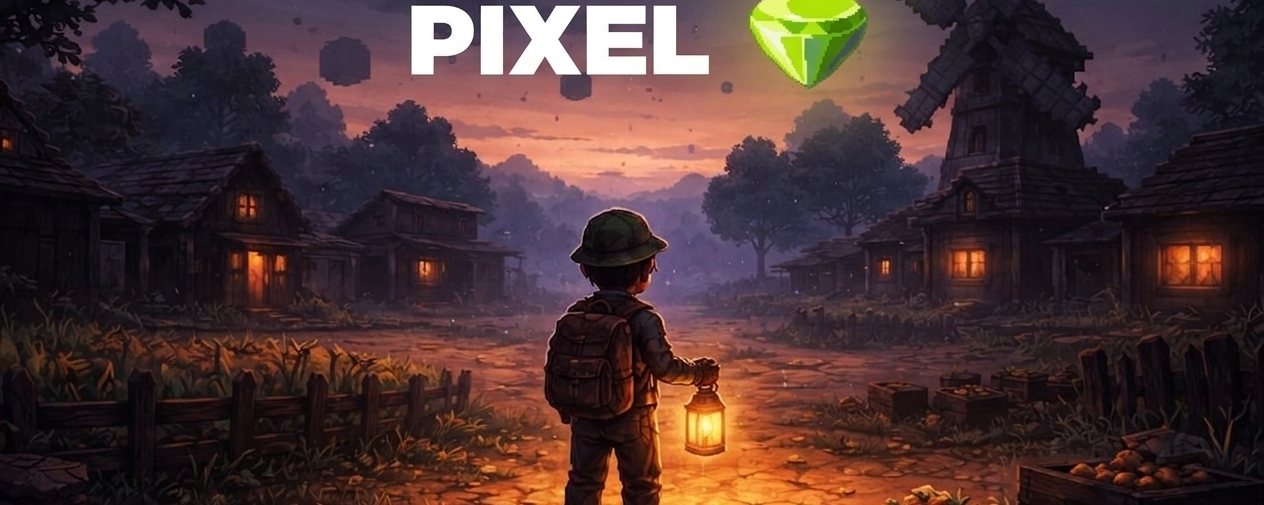
What makes Pixels an interesting case is that it seems quietly aware of this moment, as if it was designed not just for the peak of attention, but for the silence that follows. The game does not rely entirely on the idea that players will always be rewarded. Instead, it builds a rhythm that can exist even when rewards are less visible.
When you spend time in it, you start to notice that the loops are not aggressive. They don’t push you to optimize every second. You plant, you wait, you return. It feels closer to a routine than a strategy. And routines have a different kind of strength. They don’t depend on constant excitement. They depend on familiarity.
Underneath this experience is the infrastructure of the Ronin Network, but it doesn’t demand your attention. The system handles ownership, transactions, and persistence quietly, allowing the surface experience to remain simple. This matters because when technology becomes invisible, the player begins to focus on the world itself rather than the mechanics behind it.
The economy inside Pixels also feels less like a pressure system and more like a background current. There are rewards, yes, and there is value, but they are not the only reason to act. There is space for actions that do not immediately translate into gain. This creates a different relationship between the player and the game. You are not constantly asking what you will get, but rather what you will do next.
And that shift becomes important when rewards slow down. Because when they do, the question changes. It is no longer about efficiency or output. It becomes something quieter. Do you still enjoy being here. Do you still care about the space you’ve shaped, the small progress you’ve made, the patterns you’ve formed.
In many ways, this mirrors something beyond gaming. In real life, the most meaningful systems are not the ones that constantly reward you, but the ones that give you a sense of continuity. A place you return to. A routine that grounds you. A process that feels worth doing even when no one is measuring it. Pixels seems to lean into this idea, whether intentionally or not.
There is also a social layer that begins to matter more once rewards fade. When incentives are high, interactions can feel transactional. But when they slow, what remains are the connections that were built without urgency. Familiar names, shared spaces, overlapping routines. These are the elements that give a digital world texture.
Of course, none of this eliminates the challenges. Economies still need balance. Tokens still fluctuate. Attention still shifts. The risk is always there that without enough incentive, players will drift away. But perhaps the goal is not to eliminate that risk, but to soften its impact. To build something that does not collapse the moment rewards change.
What Pixels seems to suggest is that sustainability in Web3 is not just about designing better rewards, but about designing experiences that can survive without them. That might sound simple, but it requires a different mindset. It requires treating the game not as a system to extract value from, but as a place where value can emerge naturally over time.
And maybe that is the real shift happening quietly beneath the surface of projects like this. A movement away from short-term attraction toward long-term presence. A recognition that attention can be bought, but belonging cannot.
When the rewards stop, what remains is the truth of the world you’ve built. Not the numbers, not the tokens, but the feeling of whether it was ever worth being there in the first place. And in that moment, the question is no longer about the system, but about you. Were you playing for the reward, or were you staying for something you couldn’t quite measure.