
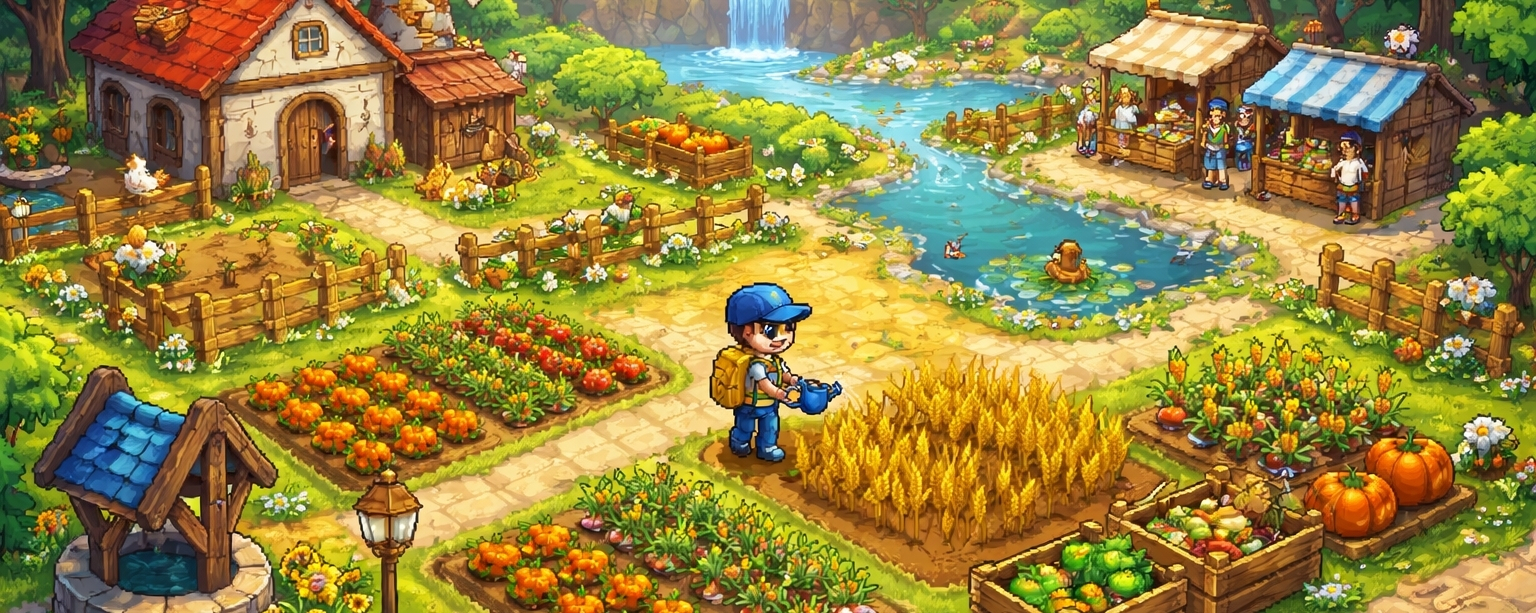
Coming back to Pixels after a break feels a bit strange in a good way. It’s not like jumping back into a game where you remember everything and just continue. It feels more like returning to something you didn’t fully figure out the first time.
At first, it still looks the same. You’ve got your land, your crops, your usual routine. Nothing really screams “this is different now.” But after a few minutes, you start noticing small things. The way you move feels more intentional. You’re not just clicking around anymore—you’re thinking, even if it’s just a little.
Before, it was simple. Plant, wait, harvest. That was enough. Now, you catch yourself wondering if you’re doing it the best way. Not because anyone told you to, but because you’ve seen just enough to know there’s more going on underneath.
That’s where the feeling changes.
You stop treating it like something to pass time and start treating it like something you can improve at. You log in with a bit more purpose. You think ahead without even trying. “If I do this now, it’ll be ready later.” Small thoughts like that start stacking up.
And the funny thing is, the game never forces this on you. It stays quiet. It lets you play however you want. But if you pay attention, it quietly rewards you for being smarter with your time.
That’s when it starts to feel less like a game.
You begin to notice patterns. Some crops feel more worth it than others. Some actions feel like they slow you down. You try something different just to see what happens. Sometimes it works, sometimes it doesn’t—but either way, you learn something.
Even mistakes don’t feel that bad. They feel like part of figuring things out.
Time also starts to feel different. Before, waiting was just waiting. Now, it feels like part of the process. You start timing things better, checking in at the right moments. Not because you have to, but because you want to. You see the difference it makes.
From the outside, nothing has really changed. If someone watches you play, it still looks slow and simple. But in your head, there’s a lot more going on. You’re making small decisions constantly. You’re adjusting, testing, improving without even thinking too hard about it.
And when you step away and come back again, that feeling gets stronger. You notice things you missed before. Stuff that felt normal earlier now feels inefficient. You don’t restart—you just come back a little sharper.
That’s what makes it different every time.
There’s also no real “end” waiting for you, which is probably why it sticks. You’re not rushing to finish anything. You’re just trying to get better at how you play. Smoother routines, better timing, smarter choices.
It’s a quiet kind of progress. No big moments, no loud rewards. Just that small feeling that things are working better because you understand them more now.
But there’s a line you have to watch.
If you go too deep into optimizing everything, it can start to feel heavy. Like something you have to keep up with instead of something you enjoy. And that’s where people either step back or burn out.
The ones who keep coming back are usually the ones who find their own pace. They don’t try to be perfect. They just play in a way that feels right for them.
At the end of the day, Pixels doesn’t try to control how you play. It just gives you the space to figure things out on your own.
And that’s probably why coming back feels the way it does.
Because it’s not really about starting again—it’s about seeing the same world with a slightly different mindset. You understand a bit more, you notice a bit more, and that changes everything.
So yeah, it still looks like a simple farming game.
But once you’ve spent enough time with it, it starts to feel like something else entirely something you slowly learn, test, and shape in your own way.
