
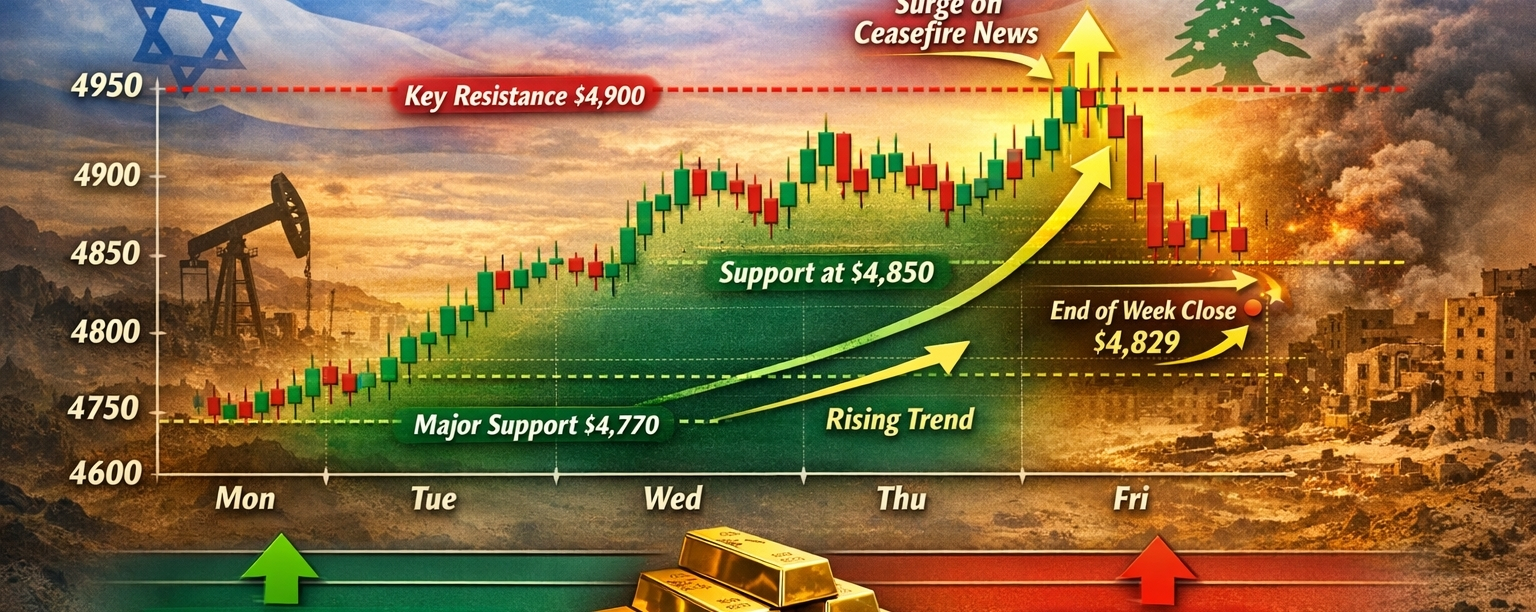
Globalny rynek złota przedłużył swoją zwycięską passę do czwartego kolejnego tygodnia, głównie dzięki łagodzeniu napięć geopolitycznych na Bliskim Wschodzie. Ogłoszenie zawarcia rozejmu między Izraelem a Libanem, wraz z ponownym otwarciem Cieśniny Ormuz, wprowadziło pewność na rynki finansowe i zmniejszyło obawy o ryzyko w krótkim okresie.
Pomimo tego optymizmu, złoto początkowo cofnęło się, aby przetestować wsparcie w pobliżu 4 800 $, wchodząc w krótką fazę konsolidacji między 4 790 $ a 4 835 $ podczas handlu w środku tygodnia. Ta przerwa odzwierciedlała równoważenie rynku pomiędzy realizacją zysków a odnowionym optymizmem.
Punktem zwrotnym był poranek w piątek, kiedy zaczęły krążyć wiadomości o stabilności regionu. W ciągu kilku godzin złoto wzrosło gwałtownie — z około $4,786 do powyżej $4,890 — oznaczając najbardziej agresywny rajd tygodnia. Ten wzrost zbiegał się z oficjalnym potwierdzeniem, że cieśnina została otwarta, a następnie poparciem politycznym dla umowy o zawieszeniu broni.
Jednak momentum napotkało opór w okolicach poziomu $4,900. Traderzy wielokrotnie testowali wsparcie w okolicach $4,850, ale nie zdołali utrzymać wybicia. Gdy tydzień handlowy zbliżał się do końca, realizacja zysków ściągnęła ceny w dół, a złoto osiedliło się w okolicach $4,829 za uncję.
Patrząc wstecz, tydzień rozpoczął się od około $4,676, z wczesnym spadkiem, zanim przeszedł w stabilny trend wzrostowy. Silne zainteresowanie zakupami ustaliło solidne poziomy wsparcia w okolicach $4,700, a później $4,770. W połowie tygodnia złoto pewnie przekroczyło $4,800 i osiągnęło powyżej $4,850, utrzymując ten poziom do piątkowej zmienności.
Sentyment rynkowy pozostaje w dużej mierze pozytywny. Wiele analizatorów uważa, że zmniejszenie napięć geopolitycznych może wspierać dalsze zyski, szczególnie jeśli zawieszenia broni się utrzymają. Złoto i srebro pokazały ostatnio wzór wzrostu podczas rozwoju pokojowego i spadku w czasie eskalacji konfliktów, co czyni stabilność polityczną kluczowym czynnikiem.
Jednocześnie niektórzy eksperci wzywają do ostrożności. Wskaźniki techniczne sugerują, że rynek może być w krótkim okresie przewartościowany, a poziomy oporu ograniczają natychmiastowy potencjał wzrostu. To tworzy niepewność co do tego, czy złoto będzie kontynuować wzrost, czy napotka tymczasową korektę.
Szersze sygnały finansowe również odgrywają rolę. Spadające rentowności obligacji, stabilizujące się rynki energetyczne i silne wyniki akcji wskazują na przesunięcie w kierunku sentymentu „risk-on”. W takich warunkach inwestorzy często preferują akcje nad aktywami bezpiecznymi, takimi jak złoto, co zmniejsza jego krótkoterminową atrakcyjność.
Niemniej jednak, nie sygnalizuje to słabości w długoterminowej perspektywie dla złota. Zamiast tego podkreśla to fazę przejściową, w której kapitał rotuje między rynkami. Jeśli zmienność powróci lub niepewność gospodarcza wzrośnie, złoto szybko może odzyskać swoją pozycję jako preferowana inwestycja.
Dane z ankiet potwierdzają ten mieszany, ale optymistyczny obraz. Silna większość analityków instytucjonalnych i inwestorów detalicznych oczekuje dalszego wzrostu cen, co odzwierciedla zaufanie w kontynuację odbicia. Tylko niewielka część przewiduje spadki, podczas gdy niektórzy przewidują ruch boczny, gdy rynek przetwarza ostatnie zyski.
Podsumowując, złoto znajduje się w krytycznym punkcie — wspierane przez poprawiające się warunki geopolityczne, ale wyzwane przez opór techniczny i zmieniające się priorytety inwestorów. Nadchodzące tygodnie zdecydują, czy metal przełamie nowe szczyty, czy skonsoliduje przed swoim następnym dużym ruchem.
#RynekZłota
#CenyZłota
#AnalizaZłota
#TrendyRynkowe
#GospodarkaGlobalna
#InwestujMądrze
#HandelZłotem
#BezpiecznaPrzystań
#PerspektywyGospodarcze
#RynkiFinansowe
#ByczeZłoto
#ZmiennośćRynku
#Geopolityka
#StrategiaInwestycyjna
#MetaleSzlachetne
#OchronaMajątku
#WnioskiHandlowe