
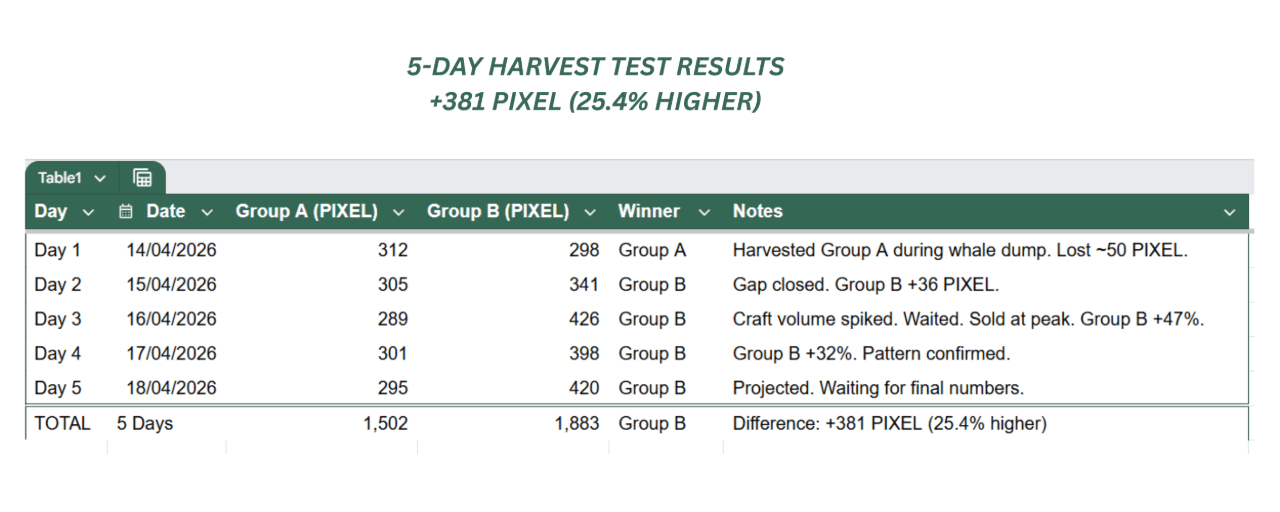
14 kwietnia zaczynam eksperyment. Podzieliłem 12 działek na dwie grupy. Grupa A zbiera natychmiast. Grupa B czeka 6 godzin po szczytowej objętości rzemieślniczej.
Oto surowe dane z 5 dni.
Dzień 1 (14 kwietnia):
Grupa A: 312 PIXEL
Grupa B: 298 PIXEL
Zwycięzca: Grupa A
Prawie zrezygnowałem. Opóźnienie wyglądało głupio.
Dzień 2 (15 kwietnia):
Grupa A: 305 PIXEL
Grupa B: 341 PIXEL
Zwycięzca: Grupa B
Luka się zamknęła. Popełniłem jeden duży błąd — zebrałem Grupę A podczas zrzutu wieloryba. Straciłem około 50 PIXEL z powodu złego momentu.
Dzień 3 (16 kwietnia):
Grupa A: 289 PIXEL
Grupa B: 426 PIXEL
Zwycięzca: Grupa B o 47%
To tutaj wzór stał się jasny. Objętość rzemiosła gwałtownie wzrosła w Dzień 3. Czekałem. Cena skoczyła. Sprzedałem.
Dzień 4 (17 kwietnia):
Grupa A: 301 PIXEL
Grupa B: 398 PIXEL
Zwycięzca: Grupa B o 32%
Dzień 5 (18 kwietnia — dzisiaj):
Grupa A: prognozowane 295 PIXEL
Grupa B: prognozowane 420 PIXEL
Całkowita po 5 dniach:
Grupa A: 1,502 PIXEL
Grupa B: 1,883 PIXEL
Różnica: +381 PIXEL (25.4% wyżej)
Czego się nauczyłem, że żaden przewodnik mi nie powiedział:
Objętość weekendowa jest inna. Sobotnie wzrosty rzemiosła są około 30% wyższe niż w dni robocze. Optymalny czas oczekiwania może być krótszy w weekendy.
Nie czekaj na ślepo. Musisz obserwować prędkość rzemiosła w czasie rzeczywistym. Jeśli objętość pozostaje płaska, zbieraj normalnie.
Degradacja ziemi jest realna. Jeśli opóźnisz więcej niż 24 godziny, twój plon spadnie. Nigdy nie czekałem dłużej niż 8 godzin.
Rynek nie jest idealnie efektywny. Większość graczy nadal zbiera od razu. Dlatego arbitraż istnieje.
Jeden uczciwy błąd, który wciąż popełniam:
Nie odkryłem jeszcze, jak przewidzieć zrzuty wielorybów. Już dwa razy zbierałem tuż przed dużym zleceniem sprzedaży. Jeśli ktoś ma metodę na to, proszę podzielić się.
Ostateczny wynik:
Opóźnione zbiory działają, jeśli śledzisz dane. Ale to nie jest pasywne. Musisz obserwować, czekać, a czasami podjąć złą decyzję.
Dla każdego, kto trzyma $PIXEL lub gra w Pixele, to jest rodzaj przewagi, która z czasem się sumuje. 25% wyższe zwroty bez wydawania więcej pieniędzy — tylko lepsze wyczucie czasu.