
There’s a certain rhythm to most Web3 projects. You can almost predict it. A new launch comes in loud, timelines fill up with excitement, early users rush in, and for a while, everything feels like it’s moving fast. Numbers go up, activity spikes, and the entire experience is driven by momentum. But then, just as quickly, things begin to slow down. The excitement fades, users drift away, and what looked like a thriving ecosystem starts to feel empty.
That cycle has repeated so many times that people have started to expect it. It’s almost baked into how Web3 operates today. But every once in a while, something comes along that doesn’t follow that script. @Pixels is one of those rare cases where the approach feels intentionally different, not just in design, but in mindset.
What stands out immediately is the pace. Pixels doesn’t rush you. There’s no overwhelming onboarding process, no flood of features thrown at you all at once, and no pressure to optimize everything from day one. You enter, you look around, and you start small. Maybe you plant something. Maybe you explore a bit. Nothing feels urgent, and that lack of urgency is surprisingly refreshing.
At first, it might even feel too simple. Especially if you’re coming from more intense gaming environments or fast-moving DeFi platforms. But that simplicity is deliberate. It gives you room to understand what’s happening without forcing you into decisions you don’t fully grasp yet. And over time, that understanding starts to deepen.
You begin to notice patterns. Certain crops perform better at different times. Some actions connect in ways that aren’t obvious at first. You realize that how you use your land, how you spend your time, and how you interact with others all start to shape your experience in subtle ways. It’s not a game that explains everything upfront. It’s one you grow into.
That idea, growing into the system, is what gives Pixels its staying power. Instead of front-loading complexity, it lets complexity reveal itself gradually. And because of that, the learning curve doesn’t feel like a barrier. It feels like a process.
Another thing that becomes clear over time is how much the game values consistency. Not intensity, not speed, but consistency. You don’t need to grind endlessly to feel progress. You just need to show up, make a few decisions, and keep going. The system rewards presence, but only when that presence is intentional.
That’s a very different approach from most Web3 environments, where rewards are often tied to how quickly you can act or how much you can invest upfront. Here, it’s less about rushing and more about settling in. You’re not trying to extract value as fast as possible. You’re learning how to exist within the system in a way that works for you.
The role of pixel becomes clearer once you reach that point. Early on, it might just seem like another token, something you earn, spend, or trade. But as you spend more time in the ecosystem, you start to see how it moves. It flows through different layers of activity. It connects actions. It reflects participation.
It’s not just sitting there waiting to be claimed. It’s circulating.
And that circulation matters. Because it changes how you think about value. Instead of asking how much you can earn in a single session, you start to think about how value builds over time. How your decisions today might affect your position tomorrow. How small optimizations can compound into something meaningful if you stick with them.
That shift in perspective is subtle, but important. It moves you away from short-term thinking and into something more sustainable. You’re no longer chasing spikes. You’re building a baseline.
One of the most interesting aspects of Pixels is how it handles progression. There’s no single moment where everything clicks and you suddenly feel “ahead.” Progress is layered. You improve your setup. You refine your routines. You learn what works for you. And each of those improvements adds a little more efficiency, a little more clarity, a little more control.
It’s not flashy. It’s not dramatic. But it’s real.
And because it’s real, it sticks. You don’t lose everything overnight. You don’t feel like you’re starting from zero every time you log back in. There’s a sense of continuity that carries through your experience, and that continuity is what keeps you connected.
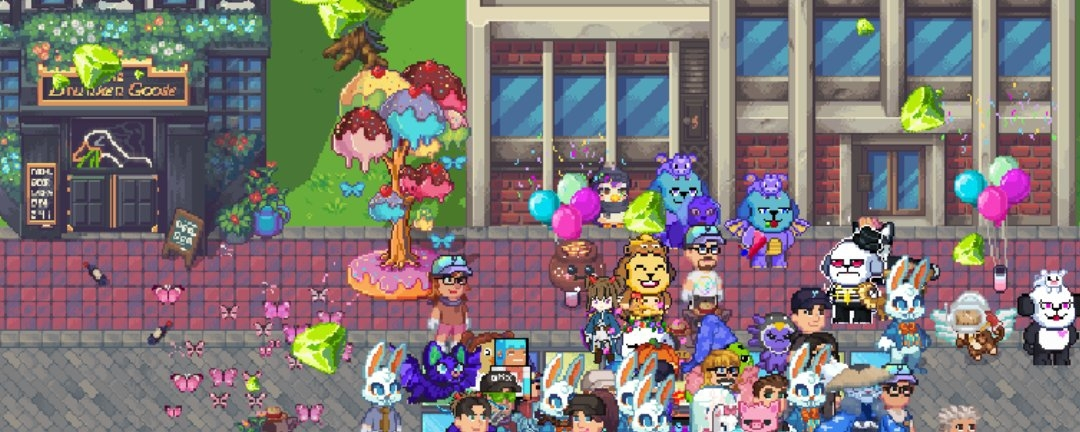
Another layer that becomes more apparent over time is the social aspect. At first, you might play mostly on your own, just figuring things out. But eventually, you start to notice other players. You see how they’re approaching the game. You learn from them, sometimes directly, sometimes just by observation.
Trading becomes more meaningful. Not just as a transaction, but as an interaction. You’re not just exchanging items. You’re participating in a shared environment where everyone’s actions contribute to the overall flow of the economy.
That shared environment is what gives Pixels its sense of life. It’s not just a collection of individual players doing isolated tasks. It’s a network. And like any network, its strength comes from how those connections form and evolve over time.
What’s also worth noting is how the game handles pressure, or rather, how it avoids creating unnecessary pressure. There’s no constant reminder that you’re falling behind. No aggressive push to maximize every second. No sense that you’re missing out if you don’t log in at a specific time.
You can step away and come back without feeling disconnected. The system doesn’t punish you for having a life outside of it. And in a space where many platforms rely on urgency to keep users engaged, that approach feels almost radical.
It creates a healthier relationship between the player and the system. You’re not tied to it. You’re choosing to engage with it.
That choice is important. Because it means your engagement is more likely to last. You’re not there because you feel forced to be. You’re there because it makes sense for you.
Over time, you start to develop your own rhythm. Maybe you log in at certain times. Maybe you focus on specific activities. Maybe you experiment with different strategies. Whatever it is, it becomes personal.
And that personal connection is what turns a game into something more. It’s what makes you care.
From a broader perspective, Pixels seems to be operating on a different philosophy than most Web3 projects. Instead of chasing rapid growth, it’s building for stability. Instead of maximizing short-term metrics, it’s focusing on long-term behavior.
That doesn’t mean it’s perfect. No system is. There are still questions around scalability, balance, and how the economy will evolve as more users join. There are always risks when you’re dealing with open systems where value is constantly moving.
But what matters is the direction. And right now, the direction feels thoughtful.
The team isn’t trying to solve everything at once. They’re iterating. Adjusting. Paying attention to how players interact with the system and making changes based on that. It’s a slower process, but it’s also a more grounded one.
You can feel that in the updates. They don’t come with unnecessary hype. They’re not framed as game-changing events every time. They’re improvements. Refinements. Steps forward.
And those steps add up.
There’s also something to be said about accessibility. Pixels doesn’t require you to be an expert in crypto to get started. It doesn’t overwhelm you with technical complexity. It meets you where you are.
That accessibility is key if the goal is to build something that lasts. Because the more people who can understand and participate in the system, the more resilient that system becomes.
At the same time, it doesn’t sacrifice depth. As you spend more time with it, you realize there’s more beneath the surface. More to learn, more to optimize, more to explore.
That balance between accessibility and depth is hard to get right. Lean too far in one direction, and you either alienate new users or bore experienced ones. Pixels seems to be finding a middle ground.
It’s easy to start, but not trivial to master.
Another angle that often gets overlooked is how the game aligns time with value. In many Web3 systems, time can feel disconnected from outcome. You might spend hours doing something, only to see diminishing returns or sudden changes that wipe out your progress.
Here, time feels more stable. Not necessarily more profitable in the short term, but more meaningful in the long term. The effort you put in doesn’t feel wasted. It contributes to something that persists.
That persistence is what creates trust. And trust is what keeps people around.
Without it, everything starts to feel temporary. And when things feel temporary, people don’t invest themselves fully. They stay on the surface, ready to leave at any moment.
Pixels, on the other hand, encourages you to stay. Not through pressure, but through structure. It gives you reasons to come back that aren’t purely financial.
You come back because you’re building something. Because you want to see how your setup evolves. Because you’re curious about what happens next.
That curiosity is powerful. It’s what drives long-term engagement in any system, not just games.
Looking ahead, the biggest question is how Pixels will scale. As more players join, the dynamics will change. The economy will become more complex. New challenges will emerge.
But if the core philosophy remains the same, focus on consistency, reward thoughtful participation, and avoid unnecessary pressure, there’s a good chance it can handle that growth without losing its identity.
That’s ultimately what sets it apart. Not any single feature or mechanic, but the way everything fits together. The way it respects the player’s time. The way it builds gradually instead of all at once.
In a space that often feels rushed, that kind of patience stands out.
And sometimes, patience is exactly what’s needed to build something that lasts.
At the end of the day, Pixels isn’t trying to be the loudest project in the room. It’s not chasing attention for the sake of it. It’s focused on creating an environment where players can find their own pace, make their own decisions, and build something that feels real to them.
That approach might not generate instant headlines. But over time, it creates something more valuable, a system people actually want to stay in.
And in Web3, that’s still one of the hardest things to achieve.
